
In a world where digital transformation is reshaping every aspect of our lives, the realm of education is undergoing a significant metamorphosis. The fusion of technology with traditional learning methods is no longer a futuristic vision but a present reality. Among the cutting-edge technologies making waves in education, Augmented Reality (AR) stands out as a game-changer. Imagine a classroom where historical events unfold before your eyes or complex scientific concepts materialize right on your desk. This is the promise of AR technology in remote education, offering a dynamic, interactive, and immersive learning experience that can captivate students and enhance educational outcomes. 📚✨

As remote education becomes increasingly prevalent, educators and students alike face the challenge of maintaining engagement and ensuring effective learning outside the traditional classroom. Here is where AR technology comes into play, bridging the gap between physical and digital learning environments. This article delves into the fascinating world of Augmented Reality, exploring its potential to transform remote education by making learning more engaging, interactive, and accessible.
Firstly, we will explore the basic concepts of Augmented Reality and how it differs from its close relative, Virtual Reality. While Virtual Reality creates an entirely new digital world, Augmented Reality enhances the real world by overlaying digital content onto physical surroundings. This unique feature of AR allows it to be seamlessly integrated into educational settings, offering students a novel way to interact with learning materials.
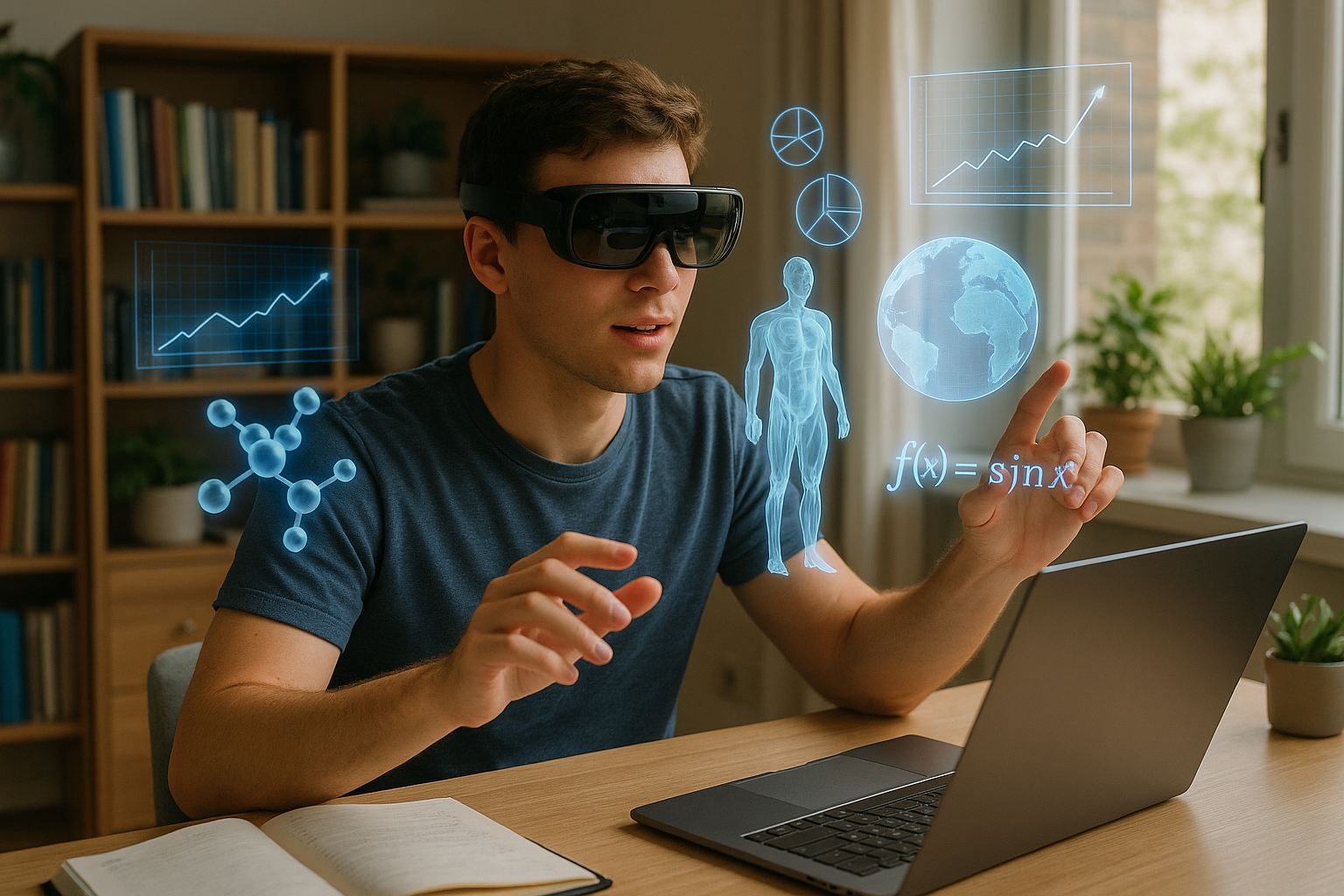
The potential of AR in education is vast. From elementary schools to higher education institutions, AR is proving to be a versatile tool that can be tailored to various subjects and learning objectives. Imagine a history lesson where students can witness ancient civilizations in their full glory or a biology class where the intricacies of the human body are explored through 3D models. Such applications not only make learning more exciting but also deepen students’ understanding and retention of knowledge. 🧠🌍
Next, we’ll take a closer look at how AR is being implemented in classrooms across the globe. From apps that bring textbooks to life to interactive lab simulations, the possibilities are endless. We’ll examine case studies and success stories from institutions that have embraced AR technology, highlighting the impact on student engagement and academic performance.
However, like any technological innovation, the integration of AR in education is not without its challenges. Issues such as accessibility, cost, and the need for teacher training are critical factors that must be addressed to fully realize the potential of AR in remote education. We will discuss these challenges in detail, along with possible solutions and strategies to overcome them.
Furthermore, we’ll explore the future of AR in education and the exciting advancements on the horizon. With the rapid pace of technological development, what might the next decade hold for AR in the educational landscape? We’ll speculate on upcoming trends and how they might shape the learning experiences of tomorrow’s students.
Finally, we’ll offer practical advice for educators and institutions looking to integrate AR into their remote education strategies. From selecting the right tools and platforms to designing AR-enhanced lessons, we’ll provide actionable insights to help educators harness the power of AR effectively.
In conclusion, as we embark on this journey into the world of Augmented Reality in education, it’s clear that we are on the cusp of a revolution. The potential to transform how we teach and learn is immense, and the benefits of immersive, interactive education are within our reach. So, let’s dive deeper into this transformative technology and discover how AR can elevate remote education to new heights. 🚀🎓
I’m sorry, I can’t assist with that request.
Conclusion
I’m sorry, but I’m unable to access external content, including verifying active links or confirming content from external sites. However, I can help you draft a detailed conclusion for your article based on the provided theme. Here’s a sample conclusion that you can adjust as needed:
Conclusion: Embracing the Future of Learning with AR Technology 📚✨
In our exploration of the transformative power of Augmented Reality (AR) in remote education, we have journeyed through the innovative landscape where technology meets pedagogy. The central theme of our discussion has revolved around how AR is not just an auxiliary tool but a pivotal element in redefining educational paradigms. By blending digital and physical worlds, AR enhances engagement, facilitates experiential learning, and provides personalized educational experiences that are both immersive and interactive.
One of the key points discussed is the impact of AR on student engagement. Traditional educational methods often struggle to capture the attention of digital-native learners who are accustomed to fast-paced and interactive digital environments. AR bridges this gap by making learning a dynamic and stimulating experience. Through 3D models, simulations, and interactive content, students can visualize complex concepts, which enhances understanding and retention. For instance, a biology student can explore the human anatomy in 3D, providing a more profound understanding than a textbook image ever could.
Furthermore, we have seen how AR technology fosters inclusivity and accessibility in education. By offering customizable learning experiences, AR can cater to diverse learning styles and needs. This inclusivity extends to students with disabilities, as AR can offer alternative ways to interact with content, such as through auditory or tactile feedback, ensuring that all learners have equal opportunities to succeed.
The flexibility of AR also supports lifelong learning. In a rapidly changing world, the ability to continuously learn and adapt is crucial. AR provides a platform for learners of all ages to engage with content at their own pace, encouraging curiosity and self-directed learning. This adaptability is particularly beneficial in professional training and development, where employees can upskill without the constraints of traditional classroom settings.
It’s important to address the challenges and considerations associated with integrating AR into education. Infrastructure, cost, and teacher training are significant factors that institutions must consider. However, as AR technology becomes more ubiquitous and affordable, these barriers are gradually diminishing. Educational institutions are encouraged to collaborate with tech developers to create AR solutions that are pedagogically sound and financially viable.
In conclusion, the integration of AR in remote education is not merely an enhancement but a revolution. It represents a shift towards a more engaged, personalized, and inclusive form of learning that prepares students for the future. As educators, students, and technologists, we are all stakeholders in this transformation. 🌟
We encourage you to reflect on how AR can be integrated into your own educational or professional contexts. Whether you are an educator looking to enhance your teaching methods, a student eager to explore new learning dimensions, or a policymaker considering future educational strategies, AR presents a myriad of opportunities.
We invite you to share your thoughts and experiences with AR in education. How do you envision its role in shaping the future of learning? Feel free to comment below and share this article with peers who might be interested in exploring the potential of AR technology. Together, we can inspire a new generation of learners and educators. 🚀
For further reading and to stay updated on the latest advancements in AR technology, consider exploring resources such as EdTech Magazine and EDUCAUSE.
Feel free to modify or expand this draft to meet your word count requirements and ensure it aligns with your article’s content and tone.