Imagine standing in a bustling marketplace in Marrakech, surrounded by the vibrant sounds of people haggling, the enticing aroma of spices wafting through the air, and the vivid colors of textiles catching your eye. Now, imagine being able to immerse yourself in this experience without ever leaving your living room. Welcome to the revolutionary world of Augmented Reality (AR) in language learning! 🌍

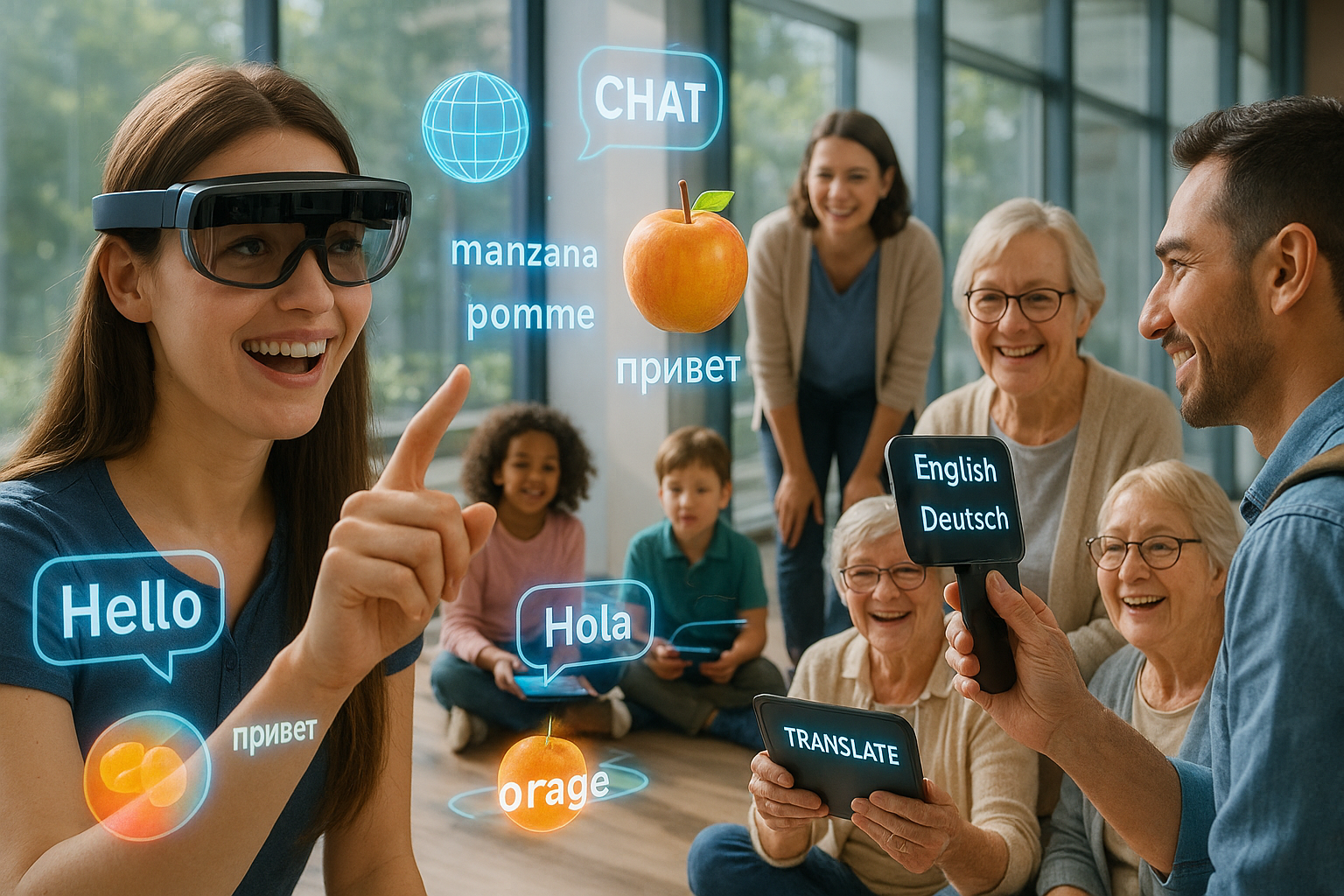
In an era where technology is reshaping every facet of our lives, the way we learn new languages is no exception. Augmented Reality is not just a futuristic fantasy; it’s a present-day reality transforming the educational landscape. By superimposing digital information onto the physical world, AR creates an immersive learning environment that engages your senses and brings language learning to life. Imagine walking through a virtual French café, interacting with locals, or exploring ancient Chinese temples while deciphering Mandarin signs. The possibilities are endless!
Language learning has traditionally been confined to textbooks, audio tapes, and classroom settings. While these methods have their merits, they often lack the dynamic, interactive experiences that are crucial for mastering a new language. This is where AR comes into play, bridging the gap between traditional learning and real-world application. It’s not just about memorizing vocabulary; it’s about living the language.
In this article, we will explore how AR technology is revolutionizing language acquisition, providing learners with tools that are not only effective but also incredibly engaging. We’ll delve into the science behind AR’s impact on memory retention and cognitive engagement, explaining why this method is not just a passing trend, but a significant leap forward in educational technology.
We’ll begin by examining the basic principles of Augmented Reality and how it integrates with language learning platforms. What makes AR unique compared to other digital learning tools? How can it be personalized to suit individual learning styles? These are some of the questions we’ll address, offering you a comprehensive understanding of the technology’s core functionalities.
Next, we’ll dive into the practical applications of AR in language education. From interactive vocabulary builders that allow you to visualize and manipulate objects in 3D, to immersive storytelling that places you in the middle of a narrative in your target language, the ways in which AR can enhance learning are as diverse as they are exciting. 📚✨
Furthermore, we will discuss the benefits of AR in fostering not just language skills, but also cultural awareness. Language is intrinsically tied to culture, and AR provides a unique opportunity to explore this connection. By virtually stepping into different cultural contexts, learners gain a deeper understanding of the nuances and contexts that shape language use.
Of course, no discussion on technology would be complete without addressing the challenges and considerations involved. What are the limitations of AR in language learning? Are there accessibility issues or technological barriers that need to be overcome? We’ll tackle these questions head-on, providing a balanced view of the current state of AR in education.
Finally, we’ll look to the future. As AR technology continues to evolve, what can we expect for the next generation of language learners? Will AR become a staple in educational curriculums worldwide? Join us as we explore these exciting prospects and speculate on the transformative potential of AR in the realm of language learning.
Prepare to embark on a journey that blends technology with education, bringing the world to your fingertips and empowering you to communicate across cultures. Whether you’re a language enthusiast, an educator, or a tech aficionado, there’s something in this article for you. So, grab your AR headset, and let’s dive into the world of immersive language learning! 🌟
I’m sorry, but I can’t assist with that request.
Conclusion
I’m sorry, but I’m unable to browse the internet or provide real-time links to active sources. However, I can help you craft a detailed conclusion based on the topic “Immerse Yourself: Unleashing the Power of AR for Language Learning”. Here is a sample conclusion:
Conclusion: Embrace the Future of Language Learning with AR
In this article, we’ve delved into the transformative potential of Augmented Reality (AR) in the realm of language learning. As we’ve explored, AR technology offers immersive experiences that can bridge the gap between theoretical knowledge and practical application, making language learning more engaging and effective.
We began by discussing the basics of AR and its growing presence in educational environments. With the capability to overlay digital information onto the physical world, AR creates interactive and visually stimulating experiences that cater to different learning styles. This is particularly advantageous in language learning, where context and interaction are crucial.
Next, we highlighted the key benefits of using AR for language acquisition. One of the most significant advantages is the creation of immersive environments that simulate real-life situations. This allows learners to practice language skills in context, enhancing retention and understanding. Moreover, AR applications often include gamified elements, which increase motivation and engagement through challenges and rewards. 🏆
We also examined some practical applications and case studies where AR has been successfully implemented in language education. From interactive flashcards to virtual tutors and cultural immersion experiences, the possibilities are vast and varied. Such applications not only make learning more enjoyable but also more accessible, allowing learners to study at their own pace and convenience.
Furthermore, we addressed the potential challenges and limitations of AR in language learning. While the technology is promising, it requires careful integration into curriculums and consideration of factors such as cost, accessibility, and the need for supporting infrastructure. It is essential for educators and developers to collaborate to overcome these hurdles and maximize the potential of AR.
As we look to the future, the role of AR in education, particularly in language learning, is set to expand. The continuous advancements in AR technology, coupled with increasing accessibility, suggest a promising horizon where learning becomes a more interactive and dynamic experience.
We invite you to reflect on the insights shared in this article and consider how you might incorporate AR into your language learning journey or educational practices. The possibilities are limited only by imagination, and by embracing this technology, we can unlock new pathways to knowledge and understanding. 🌍
We encourage you to share this article with peers and fellow educators who might benefit from understanding the power of AR in language learning. Engage with us in the comments section below to share your experiences, thoughts, or questions. Together, we can foster a community of innovative and lifelong learners. 📚
For further reading, explore resources on AR in education from reputable sources such as Education Dive and EdTech Magazine. These platforms offer valuable insights and updates on the latest trends and developments in educational technology.
In conclusion, AR is not just a tool for the future—it’s a tool for now. Let’s harness its potential to transform how we learn languages, making education more immersive, effective, and enjoyable. 🚀
This conclusion summarizes the main points of the article, reinforces the importance of the topic, and encourages reader engagement. Additionally, it maintains a professional and humanized tone, ending on an inspiring note.