
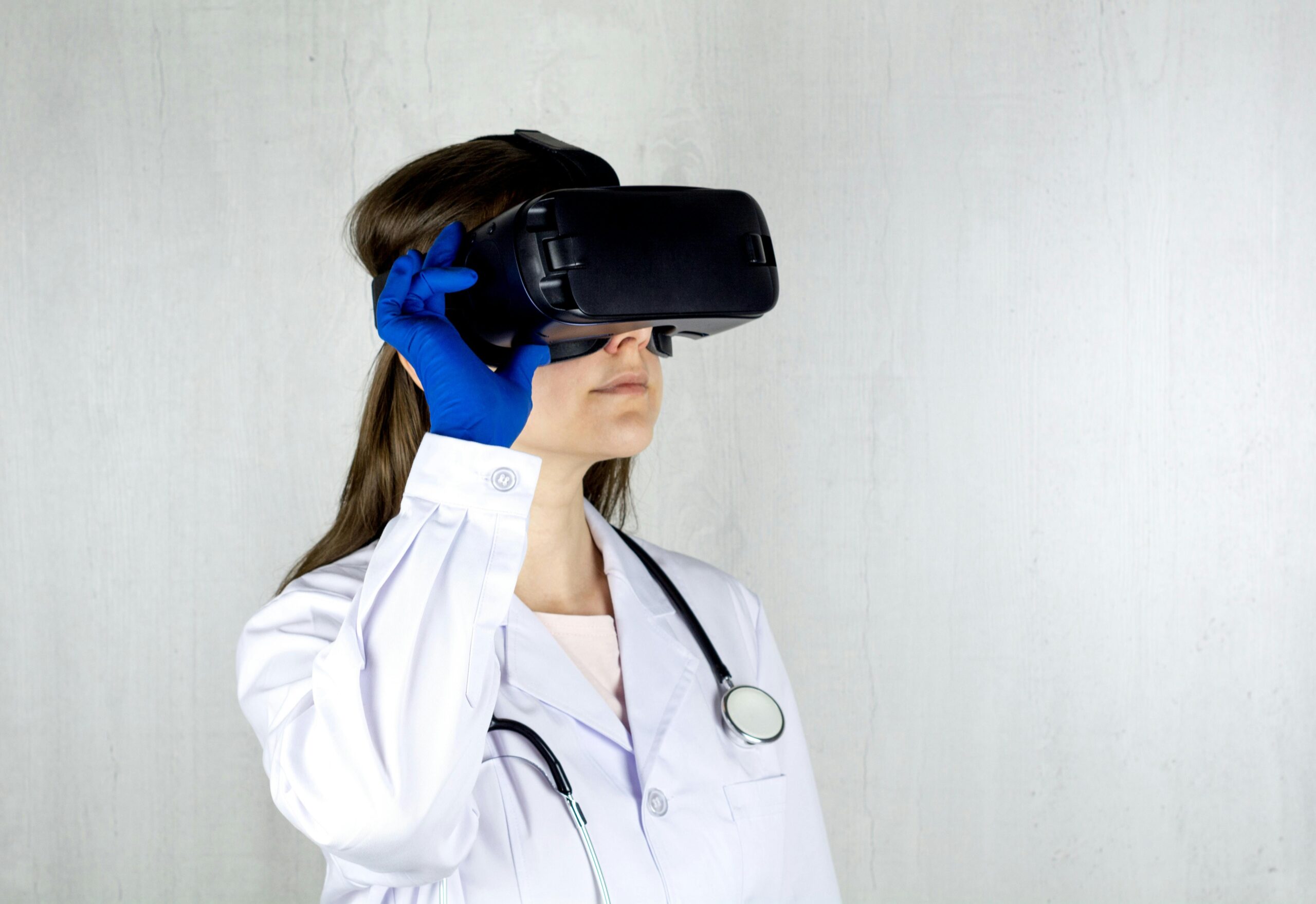
Augmented reality is transforming modern medicine by bridging the gap between digital innovation and hands-on patient care, creating unprecedented opportunities for clinical excellence.

The healthcare industry stands at a pivotal crossroads where technological advancement meets the pressing need for improved patient outcomes, reduced medical errors, and streamlined clinical processes. Augmented reality (AR) has emerged as a game-changing technology that overlays digital information onto the physical world, empowering healthcare professionals with real-time data, enhanced visualization capabilities, and precision-guided interventions that were unimaginable just a decade ago.
As hospitals and medical institutions worldwide grapple with increasing patient volumes, complex procedures, and the demand for personalized care, augmented reality offers a powerful solution that addresses these challenges head-on. From surgical navigation to medical education, AR technology is reshaping how clinicians interact with patient data, anatomical structures, and treatment protocols, ultimately revolutionizing the entire healthcare delivery system.
🏥 The Current State of Augmented Reality in Medical Settings
Healthcare providers are increasingly adopting augmented reality solutions across various departments and specialties. The technology has moved beyond experimental phases into practical, everyday applications that deliver measurable improvements in clinical workflows. Major medical centers around the globe are investing heavily in AR infrastructure, recognizing its potential to enhance both the quality and efficiency of care delivery.
The integration of AR into clinical environments addresses several critical pain points that have long plagued healthcare systems. These include information overload, the need for hands-free access to patient data during procedures, difficulty in visualizing complex anatomical structures, and the challenge of maintaining surgical precision during minimally invasive operations.
Current AR applications in healthcare span a remarkable range of use cases. Surgeons use AR headsets to visualize patient anatomy beneath the skin during operations, emergency room physicians access vital signs and medical histories without looking away from patients, and medical students practice procedures on virtual patients that respond realistically to interventions.
Transforming Surgical Precision Through Visual Augmentation 🔬
Perhaps nowhere is the impact of augmented reality more dramatic than in the operating room. Surgical AR systems combine preoperative imaging data with real-time video feeds, creating a composite view that helps surgeons navigate complex procedures with unprecedented accuracy. This technology effectively gives surgeons “X-ray vision,” allowing them to see tumors, blood vessels, and critical structures that would otherwise be hidden from view.
Neurosurgeons, for instance, use AR to visualize brain tumors and vascular structures during delicate operations, reducing the risk of damaging healthy tissue. Orthopedic surgeons employ AR guidance systems for joint replacements, ensuring optimal implant positioning and alignment. Vascular surgeons benefit from real-time visualization of blood vessels during catheter-based procedures, minimizing radiation exposure and contrast agent use.
The precision gains are not merely incremental—studies have documented significant reductions in surgical time, decreased complication rates, and improved patient outcomes when AR-assisted navigation is employed. These improvements translate directly into reduced healthcare costs, shorter hospital stays, and better quality of life for patients recovering from complex procedures.
Key Surgical Applications of AR Technology
- Tumor localization: Real-time overlay of MRI or CT imaging data onto the surgical field helps surgeons identify and remove cancerous tissue while preserving healthy structures
- Vascular navigation: Visualization of blood vessel networks reduces the risk of accidental damage during operations
- Implant placement: AR guides ensure optimal positioning of prosthetics, screws, and other surgical hardware
- Minimally invasive procedures: Enhanced visualization compensates for limited direct vision in laparoscopic and endoscopic surgeries
- Surgical planning: Preoperative AR simulations allow surgeons to rehearse complex procedures and identify potential challenges
Streamlining Emergency Care and Critical Decision-Making ⚡
In emergency medicine, every second counts. Augmented reality systems are revolutionizing how emergency department staff access and process critical patient information during high-pressure situations. AR headsets and displays can present vital signs, medication allergies, recent test results, and treatment protocols directly in a clinician’s field of vision, eliminating the need to turn away from the patient or search through electronic health records.
This hands-free access to information is particularly valuable during trauma resuscitation, where team members must simultaneously perform multiple interventions while tracking changing vital signs and laboratory values. AR systems can also provide real-time guidance for emergency procedures like intubation, central line placement, and chest tube insertion, reducing errors and improving success rates among less experienced providers.
Furthermore, AR technology facilitates remote expert consultation during emergencies. A specialist located elsewhere can see exactly what the on-site clinician sees and provide guidance by drawing annotations or highlighting specific anatomical landmarks that appear in the local provider’s AR display. This capability is especially valuable for rural or underserved facilities that lack immediate access to subspecialty expertise.
Enhancing Medical Education and Training Programs 📚
The traditional medical education model, which relies heavily on textbooks, cadaver dissection, and observational learning, is being supplemented and enhanced by augmented reality training platforms. Medical students and residents can now practice procedures on AR-generated virtual patients that offer realistic anatomy, tissue responses, and complications without any risk to actual patients.
These AR training systems provide immediate feedback on technique, allow unlimited repetition of challenging procedures, and can simulate rare conditions or emergency scenarios that trainees might not encounter during their regular rotations. The technology also enables standardized assessment of clinical skills, ensuring that all graduates meet consistent competency standards before treating real patients.
Continuing medical education for practicing physicians has also been transformed by AR technology. Surgeons can review upcoming cases using AR visualizations of patient-specific anatomy, practice new techniques in virtual environments, and even participate in remote surgical workshops where an expert surgeon’s movements are overlaid onto their own AR view during practice procedures.
Benefits of AR in Medical Training
- Risk-free practice environment: Trainees can make mistakes and learn from them without endangering patients
- Unlimited repetition: Complex procedures can be practiced as many times as needed to achieve proficiency
- Standardized assessment: Objective metrics track performance and identify areas needing improvement
- Rare case exposure: Students can experience conditions they might never see during traditional training
- Remote learning opportunities: AR enables high-quality training even in geographically isolated locations
Improving Patient Engagement and Understanding 🤝
Augmented reality is not just transforming clinical practice—it’s also changing how patients understand their conditions and participate in treatment decisions. AR applications can display three-dimensional anatomical models that help patients visualize their specific pathology, understand proposed treatments, and make more informed decisions about their care.
For example, a patient considering spinal surgery can use AR to see exactly where their herniated disc is located, how it’s compressing neural structures, and what the surgery will accomplish. Cancer patients can visualize their tumor and understand why certain margins need to be achieved during resection. This enhanced understanding leads to better informed consent, reduced anxiety, and improved adherence to treatment plans.
AR technology also supports patient rehabilitation by providing engaging, gamified exercises that encourage compliance with physical therapy protocols. Patients can see their movements overlaid with corrective guidance, receive real-time feedback on form and technique, and track their progress through interactive visualizations that make recovery less tedious and more motivating.
Addressing Implementation Challenges and Technical Barriers 🔧
Despite its tremendous potential, the widespread adoption of augmented reality in healthcare faces several significant challenges. The initial investment in AR hardware and software can be substantial, particularly for smaller practices and resource-constrained facilities. Healthcare organizations must carefully evaluate the return on investment and prioritize applications that deliver the greatest clinical value.
Integration with existing electronic health record systems and medical imaging platforms requires careful planning and technical expertise. Healthcare IT departments must ensure that AR systems can seamlessly access relevant patient data while maintaining strict compliance with privacy regulations like HIPAA. Interoperability standards are still evolving, and different AR platforms may not communicate effectively with one another.
Clinician training represents another important consideration. Healthcare professionals must learn not only how to operate AR devices but also how to interpret augmented information correctly and integrate it into their clinical decision-making processes. This requires dedicated training time and ongoing support, which can be challenging to provide in busy clinical environments.
| Challenge | Impact | Potential Solutions |
|---|---|---|
| High initial costs | Limits adoption in smaller facilities | Shared resources, leasing models, focused deployment in high-value areas |
| Integration complexity | Difficulty accessing patient data | Standard APIs, vendor partnerships, phased implementation |
| Training requirements | Slow adoption rates | Intuitive interfaces, peer champions, ongoing education programs |
| Device ergonomics | User fatigue and discomfort | Lighter hardware, improved designs, scheduled breaks |
| Privacy concerns | Regulatory compliance issues | Robust encryption, access controls, clear policies |
The Future Landscape of AR-Enhanced Healthcare 🚀
As augmented reality technology continues to evolve, its applications in healthcare will expand and mature. Artificial intelligence integration will enable AR systems to not only display information but also provide intelligent decision support, suggesting diagnoses, alerting clinicians to potential complications, and recommending optimal treatment approaches based on the latest evidence.
The next generation of AR devices will be lighter, more comfortable, and offer higher resolution displays with wider fields of view. Battery life will improve, eliminating concerns about devices failing during lengthy procedures. Voice control and gesture recognition will make interactions more natural and intuitive, reducing the learning curve for new users.
5G and future wireless technologies will enable truly seamless remote collaboration, allowing specialists anywhere in the world to guide procedures in real-time without latency issues. Cloud-based processing will offload computational demands from individual devices, making sophisticated AR applications accessible even on modest hardware.
The convergence of AR with other emerging technologies like robotics, Internet of Medical Things devices, and blockchain-based health records will create comprehensive digital ecosystems that transform healthcare delivery from reactive sick care to proactive wellness management. Patients may eventually use consumer-grade AR devices to monitor their own health parameters, receive personalized health coaching, and detect potential problems before they require emergency intervention.
Measuring Success and Clinical Outcomes 📊
Healthcare organizations implementing augmented reality solutions must establish clear metrics for success and continuously evaluate whether AR investments are delivering the promised benefits. Key performance indicators might include surgical complication rates, procedure times, diagnostic accuracy, patient satisfaction scores, and overall cost-effectiveness.
Early evidence is encouraging. Studies have documented 20-30% reductions in surgical time for certain AR-guided procedures, significant decreases in radiation exposure during fluoroscopy-guided interventions, and improved accuracy in tumor resection margins. Patient satisfaction surveys consistently show that AR-enhanced consultations improve understanding and reduce pre-procedure anxiety.
However, more rigorous, long-term research is needed to fully validate the clinical and economic benefits of AR technology across different specialties and settings. Healthcare institutions should participate in multi-center studies and contribute data to registries that track AR-related outcomes. This collaborative approach will build the evidence base needed to justify broader adoption and secure reimbursement from payers.
Building an AR-Ready Healthcare Organization 💡
Healthcare leaders considering AR implementation should begin with a comprehensive needs assessment that identifies specific pain points and opportunities within their organization. Rather than attempting to deploy AR across all departments simultaneously, a phased approach focusing on high-impact use cases is more likely to succeed.
Engaging clinicians early in the selection and implementation process is critical. Physician champions who understand both the clinical workflows and the technology can bridge the gap between IT departments and end users, ensuring that chosen solutions actually address real-world needs. Pilot projects allow organizations to test AR systems on a small scale, gather feedback, and refine approaches before broader rollout.
Infrastructure investments in robust wireless networks, upgraded imaging systems, and integrated data platforms will create the foundation for successful AR deployment. Organizations should also develop clear governance policies addressing data security, patient privacy, device maintenance, and clinical protocols for AR use.
The journey toward AR-enhanced healthcare is not a destination but an ongoing evolution. As the technology matures and new applications emerge, healthcare organizations must remain agile, continuously reassessing their approaches and adapting to leverage new capabilities. Those that embrace this transformation thoughtfully and strategically will be well-positioned to deliver superior care in an increasingly competitive and demanding healthcare landscape.
Augmented reality represents far more than just another technological tool in the healthcare arsenal—it fundamentally reimagines how clinicians interact with information, how procedures are performed, and how patients experience care. By overlaying digital intelligence onto the physical world of medicine, AR creates synergies that enhance human capabilities rather than replacing them. The result is a healthcare system that is more precise, more efficient, and more responsive to the unique needs of each patient, ultimately fulfilling medicine’s fundamental promise: to heal, to comfort, and to improve the human condition.