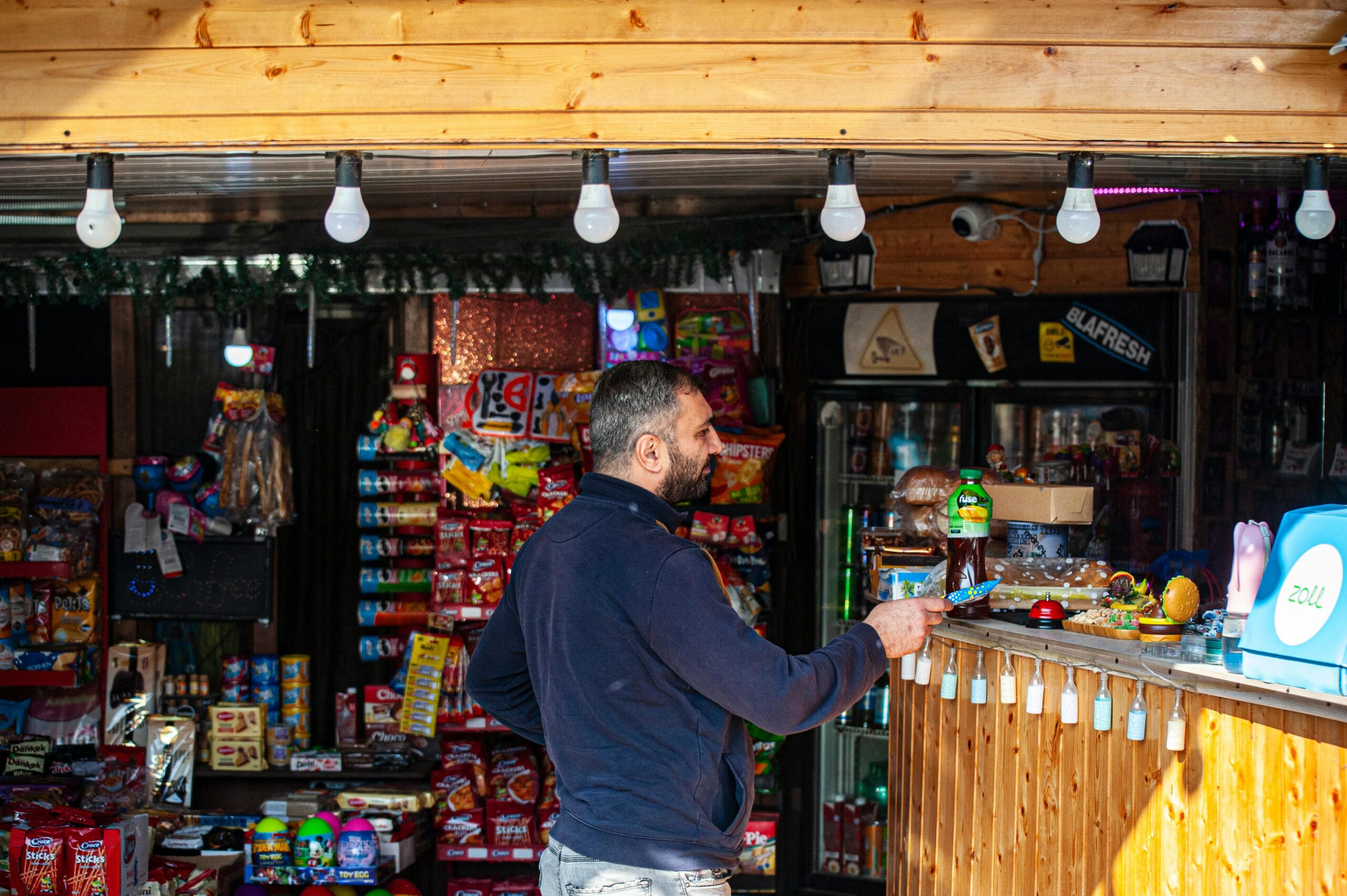
Augmented reality is transforming retail by allowing shoppers to visualize products on themselves before purchasing, creating immersive experiences that bridge digital and physical shopping worlds.

🛍️ The Dawn of a New Shopping Era
The retail landscape is experiencing a seismic shift, and augmented reality (AR) virtual try-on technology stands at the forefront of this revolution. Gone are the days when shopping meant physically visiting stores, trying on countless items, and hoping for the best. Today’s consumers demand convenience, personalization, and confidence in their purchasing decisions. AR-powered virtual try-on experiences deliver all three, fundamentally changing how we shop for everything from eyewear to furniture.
This technology isn’t just a futuristic concept anymore—it’s here, it’s practical, and it’s rapidly becoming an expectation rather than a novelty. Major brands and retailers have embraced AR try-on solutions, recognizing that customers who can visualize products in their real environment or on their bodies are significantly more likely to complete purchases and feel satisfied with their choices.
Understanding Augmented Reality in Retail Context
Augmented reality in shopping contexts refers to technology that overlays digital information—such as product visualizations—onto the real world through smartphone cameras, tablets, or specialized AR glasses. Unlike virtual reality, which creates entirely artificial environments, AR enhances our existing reality by adding digital elements that interact with physical spaces and objects.
For virtual try-on specifically, AR technology uses sophisticated algorithms to map facial features, body measurements, or room dimensions, then accurately places virtual products in real-time. The result is remarkably realistic representations that help shoppers make informed decisions without physical contact with merchandise.
The Technology Behind the Magic ✨
Several technological components work together to create seamless AR try-on experiences. Computer vision algorithms analyze images from device cameras to identify reference points—whether facial landmarks, hand positions, or floor planes. Machine learning models have been trained on millions of images to accurately render products with proper scaling, lighting, and perspective.
3D modeling plays a crucial role, as products must be digitally recreated with photorealistic detail. These models account for how materials behave under different lighting conditions, how fabrics drape, and how accessories sit on various face shapes. The computational power required has become accessible through modern smartphones, making these experiences available to millions of consumers worldwide.
Fashion and Accessories: Leading the AR Revolution
The fashion industry has emerged as the primary beneficiary and driver of AR try-on technology. Eyewear companies were among the first movers, recognizing that customers hesitated to purchase glasses online without knowing how frames would look on their faces. Virtual try-on eliminated this barrier, dramatically increasing online conversion rates.
Major eyewear retailers now offer AR experiences that allow customers to see themselves wearing hundreds of frame styles instantly. The technology accounts for face width, bridge fit, and even provides side profile views. This innovation has been particularly valuable during periods when physical store visits were limited or impossible.
Cosmetics and Beauty Products 💄
Beauty brands have embraced AR with remarkable enthusiasm, creating virtual makeup try-on experiences that rival professional application. Customers can experiment with lipstick shades, eyeshadow combinations, foundation tones, and complete looks without opening a single product.
These applications use facial recognition to accurately apply virtual cosmetics, accounting for skin tone, facial contours, and lighting conditions. Some advanced systems even simulate how makeup will appear throughout the day or under different lighting scenarios. This technology has transformed beauty shopping from a messy, time-consuming process into an engaging, creative experience.
Jewelry and Watches
High-value accessories like jewelry and luxury watches present unique challenges for online retail. Customers want to see how these items complement their style and proportions. AR try-on solutions for jewelry overlay rings on fingers, bracelets on wrists, and necklaces appropriately positioned on the chest, all while accounting for proper sizing and proportional accuracy.
Watch retailers have developed particularly sophisticated AR experiences that show timepieces from multiple angles, demonstrate how bands fit various wrist sizes, and even animate watch functions like chronographs or moon phase complications. This level of detail builds confidence in expensive purchases made without physical examination.
Beyond Apparel: Expanding AR Applications
While fashion leads AR adoption, other retail categories are quickly catching up with innovative applications that solve specific customer pain points.
Furniture and Home Decor 🏡
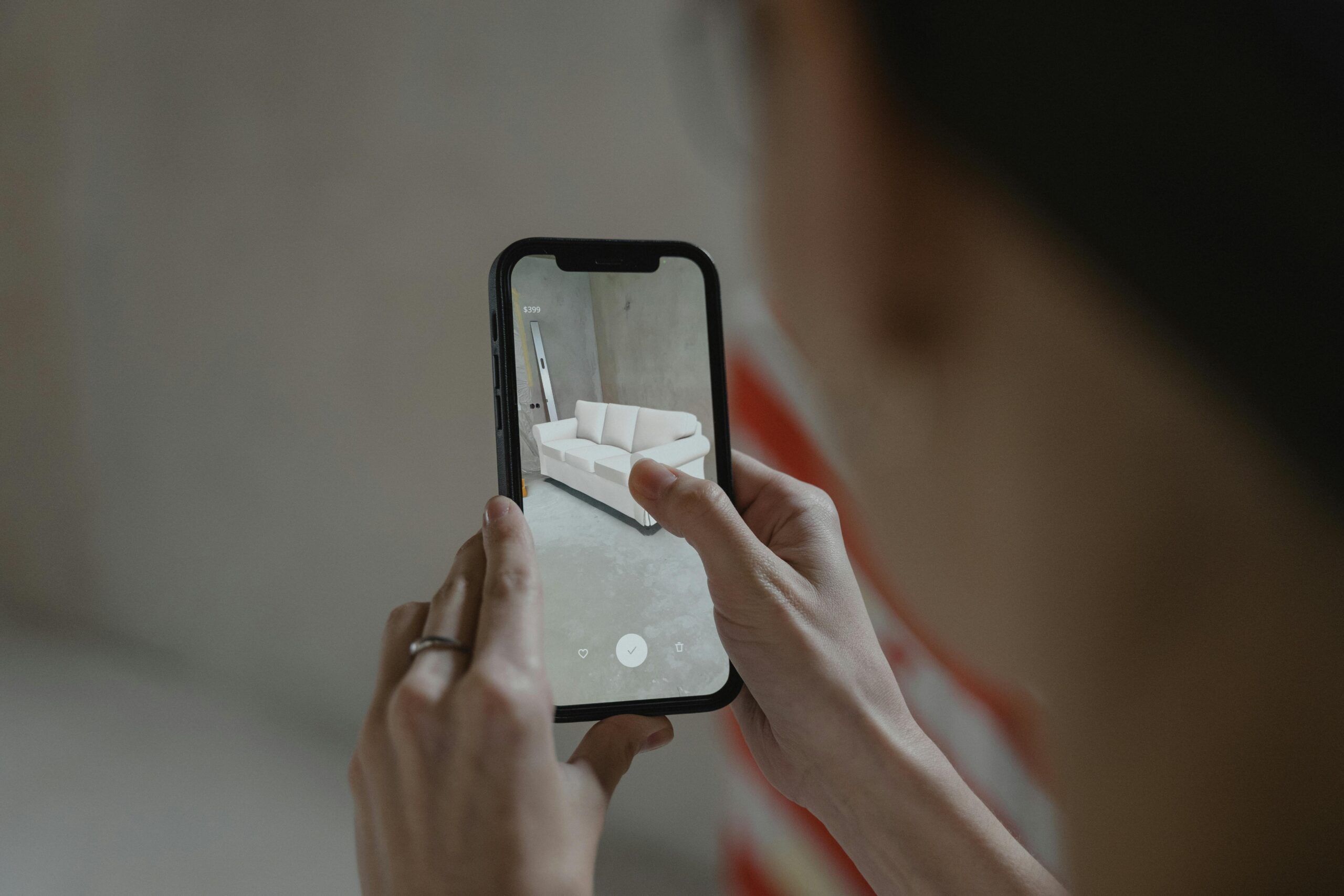
Perhaps no category benefits more dramatically from AR than furniture shopping. The traditional frustration of purchasing a sofa online only to discover it doesn’t fit the space or match the aesthetic has been largely eliminated. AR furniture visualization apps allow customers to place true-to-scale 3D models of furniture items in their actual rooms.
These applications measure room dimensions using device cameras, account for existing furniture and decor, and show exactly how new pieces will look and fit. Customers can walk around virtual furniture, view it from different angles, and even change colors or configurations in real-time. Major furniture retailers have reported significant decreases in return rates since implementing AR visualization tools.
Footwear Technology
Shoe shopping presents unique challenges—fit, style, and how shoes look when actually worn all matter tremendously. AR sneaker try-on experiences show shoes on customers’ feet in real-time as they move and walk. Advanced systems even analyze gait and foot structure to provide fit recommendations.
Athletic brands have developed AR experiences that not only show product appearance but also explain technical features through interactive overlays. Customers can see cushioning technology cross-sections, understand traction patterns, and visualize how shoes perform during specific activities.
The Business Impact: Numbers That Matter 📊
Retailers implementing AR try-on technology consistently report impressive results across multiple metrics. Conversion rates typically increase between 20% and 200%, depending on product categories and implementation quality. Customer engagement metrics show dramatic improvements, with users spending significantly more time interacting with products through AR experiences compared to traditional product pages.
Return rates—a persistent challenge for online retail—decrease substantially when customers use AR try-on before purchasing. This reduction stems from more accurate expectations about product appearance, fit, and suitability. For some retailers, AR-assisted purchases show return rates 25% to 40% lower than standard online purchases.
Customer Satisfaction and Loyalty
Beyond immediate transaction metrics, AR try-on experiences build long-term customer relationships. Shoppers report higher satisfaction levels when they’ve used AR tools, feeling more confident about their purchases and more connected to brands offering these experiences. This satisfaction translates into repeat purchases and positive word-of-mouth recommendations.
The entertainment value of AR try-on shouldn’t be underestimated either. Many customers use these features recreationally, experimenting with products they might not otherwise consider. This exploration often leads to unexpected purchases and broader product discovery.
Overcoming Implementation Challenges
Despite AR’s tremendous potential, retailers face several challenges when implementing virtual try-on experiences. Creating high-quality 3D models requires significant investment in photography, modeling, and rendering. Each product variant—different colors, sizes, and configurations—must be accurately represented.
Technical performance presents another hurdle. AR experiences must load quickly and run smoothly across diverse devices and network conditions. Poor performance frustrates users and undermines the technology’s benefits. Successful implementations invest heavily in optimization and testing across multiple platforms.
Accuracy and Realistic Expectations 🎯
Managing customer expectations remains critical. While AR technology has advanced remarkably, virtual representations can’t perfectly replicate every aspect of physical products. Colors may appear slightly different on various screens, materials have tactile qualities that can’t be conveyed digitally, and fit remains somewhat approximate.
Leading retailers address these limitations through clear communication, detailed product descriptions accompanying AR experiences, and generous return policies. They position AR as a helpful tool for preliminary decision-making rather than a perfect substitute for physical examination.
The Social Shopping Dimension
AR try-on technology has unlocked new social shopping behaviors. Many applications include sharing features that let users send photos or videos of virtual try-ons to friends and family for feedback. This social validation influences purchasing decisions and makes shopping more collaborative and enjoyable.
Some platforms have integrated AR try-on with social media, allowing users to post virtual try-on images directly to their feeds. This content serves dual purposes—personal expression and indirect product promotion. When friends see attractive AR try-on posts, they’re motivated to explore the technology and products themselves.
Privacy Considerations and Data Security 🔐
AR try-on applications necessarily collect sensitive data, including facial images, body measurements, and room layouts. Responsible retailers must implement robust privacy protections and communicate clearly about data usage. Customers need assurance that their biometric information won’t be misused or shared without consent.
Leading implementations use on-device processing whenever possible, meaning facial mapping and product overlay happen locally rather than on external servers. When data transmission is necessary, encryption and anonymization protocols protect user information. Transparent privacy policies and user controls over data retention build trust in these technologies.
The Future: What’s Next for AR Shopping?
AR try-on technology continues evolving rapidly, with several exciting developments on the horizon. Improved hardware—including more sophisticated smartphone cameras and emerging AR glasses—will enable even more realistic and seamless experiences.
Artificial intelligence integration will personalize recommendations based on AR try-on behavior, suggesting products that complement items customers have virtually tried. AI could also provide style advice, alerting users to trending combinations or warning about potential fit issues based on body scan data.
Integration with Physical Retail 🏬
Rather than replacing physical stores, AR technology will increasingly bridge online and offline shopping. In-store AR mirrors will allow customers to virtually try entire outfits without changing clothes, see themselves in different colors or sizes not physically stocked, and receive instant styling recommendations.
Smart fitting rooms equipped with AR capabilities could suggest complementary items, provide detailed product information through interactive displays, and enable customers to request different sizes without leaving the room. This fusion of physical and digital creates shopping experiences that leverage the strengths of both channels.
Expanded Product Categories
As technology matures and costs decrease, AR try-on will extend into categories currently underserved. Clothing fit—currently challenging to simulate accurately—will improve through better body scanning and fabric physics simulation. Customers will virtually try on complete outfits with realistic draping and movement.
Even groceries might incorporate AR elements, with virtual package inspection, nutritional information overlays, and recipe visualization showing how ingredients will look prepared. The potential applications are limited only by imagination and technical feasibility.
Making AR Try-On Work for Your Business
Retailers considering AR implementation should start by identifying specific customer pain points that virtual try-on can address. Not every product category requires AR, and resources should focus where impact will be greatest. High-return items, products with complex fit requirements, or expensive purchases typically benefit most.
Partnering with established AR platform providers often makes more sense than building proprietary solutions, especially for smaller retailers. These platforms offer proven technology, ongoing updates, and cross-device compatibility without massive development investments.
User experience must remain paramount throughout implementation. The best AR technology fails if it’s difficult to access, slow to load, or confusing to use. Successful retailers extensively test their AR experiences with real customers, iterating based on feedback to create intuitive, enjoyable interactions.
Transforming Shopping Forever 🚀
Augmented reality virtual try-on represents far more than technological novelty—it fundamentally reimagines the shopping experience for the digital age. By eliminating uncertainty, reducing returns, and making shopping more engaging and personalized, AR technology benefits customers and retailers alike.
The retailers who thrive in coming years will be those who embrace these innovations while maintaining focus on customer needs. AR isn’t about replacing human judgment or eliminating physical retail; it’s about empowering shoppers with better information and more confidence in their decisions.
As technology continues advancing and consumer expectations evolve, AR virtual try-on will transition from competitive advantage to basic requirement. The question isn’t whether to adopt these technologies, but how quickly and effectively businesses can implement them. Those who step boldly into this augmented future will lead their industries, while those who hesitate risk being left behind in an increasingly digital marketplace where virtual experiences feel increasingly real.
The revolution in shopping has arrived, powered by smartphones in our pockets and creativity in our approaches to customer service. Augmented reality virtual try-on experiences represent the next chapter in retail history—one where technology serves humanity’s desire for both convenience and confidence, creating shopping journeys that are as effective as they are enjoyable.