
Augmented Reality is transforming classrooms worldwide, offering immersive experiences that make learning tangible, memorable, and extraordinarily effective for students of all ages.

🚀 The Dawn of a New Educational Era
Education stands at a pivotal crossroads. Traditional teaching methods, while foundational, often struggle to capture the attention of digital-native students who have grown up surrounded by interactive technology. The solution isn’t to abandon proven pedagogical principles but to enhance them with cutting-edge tools that speak the language of today’s learners.
Interactive AR learning simulations represent this evolution perfectly. By overlaying digital information onto the physical world, augmented reality creates a bridge between abstract concepts and concrete understanding. Students no longer need to imagine the solar system—they can watch planets orbit around their classroom. Historical events don’t remain confined to textbook pages—they unfold in three-dimensional space before eager eyes.
This technological revolution addresses a fundamental challenge in education: engagement. When students interact with AR content, they don’t just consume information passively; they manipulate, explore, and experiment with concepts in ways that traditional methods simply cannot match.
🎓 Understanding Interactive AR Learning Simulations
Augmented reality learning simulations blend digital content with real-world environments through smartphones, tablets, or specialized AR glasses. Unlike virtual reality, which creates entirely artificial environments, AR enhances reality by adding layers of interactive information to what students already see around them.
These simulations can range from simple 3D models that students can rotate and examine from all angles to complex interactive scenarios that respond to student actions in real-time. The technology recognizes physical surfaces and objects, allowing digital elements to appear anchored in space, creating a convincing illusion that digital and physical coexist seamlessly.
Core Components of AR Learning Systems
Effective AR educational platforms incorporate several essential elements that work together to create meaningful learning experiences:
- Visual Recognition: The system identifies real-world objects, surfaces, or markers that trigger AR content
- 3D Modeling: Detailed digital representations of concepts, from molecular structures to architectural designs
- Interactive Elements: Touch, gesture, or voice controls that allow students to manipulate virtual objects
- Real-Time Feedback: Immediate responses to student actions, reinforcing correct understanding or guiding corrections
- Progress Tracking: Systems that monitor student engagement and comprehension levels
- Collaborative Features: Multi-user experiences where students can learn together in shared AR environments
📚 Transforming Subject Areas Through AR Innovation
The versatility of augmented reality learning simulations means virtually every academic discipline can benefit from this technology. Each subject area presents unique opportunities for AR enhancement that traditional teaching methods struggle to provide.
Science Education Reimagined
Science classes become living laboratories with AR simulations. Students can examine the intricate details of cellular mitosis, watching chromosomes separate in real-time floating above their desks. Chemistry students manipulate molecular bonds, observing how different elements interact without the safety concerns of physical experiments. Physics concepts like force, momentum, and energy become visible through AR visualizations that demonstrate abstract principles with concrete examples.
Biology students can dissect virtual organisms with precision impossible in traditional labs, repeating procedures until mastery is achieved without ethical concerns or resource limitations. Astronomy enthusiasts explore the cosmos without leaving Earth, examining distant galaxies, understanding stellar lifecycles, and witnessing cosmic events that span millions of years compressed into observable moments.
Mathematics Made Tangible
Mathematics, often perceived as abstract and intimidating, transforms into a visual, interactive experience through AR. Geometric shapes materialize in three dimensions, allowing students to understand spatial relationships intuitively. Algebraic equations become graphical representations that students can manipulate, seeing immediately how changing variables affects outcomes.
Calculus concepts like derivatives and integrals gain visual meaning as AR simulations demonstrate rates of change and areas under curves with dynamic, interactive models. Even advanced topics like topology and multidimensional mathematics become more accessible when students can visualize concepts that typically exist only in theoretical space.
History and Social Studies Brought to Life
AR simulations transport students through time, reconstructing historical events and civilizations with remarkable detail. Ancient Rome rises from classroom floors, complete with accurate architectural reconstructions. Students walk through historically accurate representations of significant moments, understanding context and consequence in ways that static images and text descriptions cannot convey.
Geography lessons extend beyond map memorization as AR overlays topographical information, climate patterns, and demographic data onto physical globes or surfaces. Students explore ecosystems, witness geological processes unfold, and understand the interconnectedness of global systems through interactive simulations.
Language Arts and Communication Skills
Language learning accelerates when AR places vocabulary in context. Virtual labels appear on real-world objects, reinforcing word-object associations. Interactive storytelling experiences engage students in narratives where their choices influence outcomes, developing critical thinking alongside language skills.
Literature comes alive as characters and settings emerge from pages in AR-enhanced books. Students analyze literary elements not through abstract discussion alone but by interacting with visual representations of themes, symbolism, and character development.
💡 The Cognitive Benefits of AR-Enhanced Learning
Beyond the obvious engagement factor, AR learning simulations offer profound cognitive advantages backed by educational research. These benefits extend across learning styles and ability levels, making education more inclusive and effective.
Enhanced Memory Retention
Experiential learning creates stronger neural pathways than passive information consumption. When students interact with AR content, they engage multiple sensory channels simultaneously—visual, auditory, and kinesthetic. This multisensory engagement significantly improves information encoding and long-term retention.
Studies consistently demonstrate that students remember information better when they can manipulate it physically, even when that manipulation involves virtual objects. The spatial memory associated with AR experiences creates additional retrieval cues that help students recall information more effectively during assessments and real-world applications.
Accommodating Diverse Learning Styles
Traditional education often favors auditory and visual learners while kinesthetic learners struggle with passive instruction methods. AR simulations inherently accommodate all learning preferences simultaneously. Visual learners benefit from detailed 3D models, auditory learners from integrated sound explanations, and kinesthetic learners from the interactive manipulation of concepts.
This inclusive approach means fewer students fall through educational cracks. Everyone accesses content through their preferred learning channel while simultaneously developing competencies in other modalities.
Promoting Active Learning and Critical Thinking
AR simulations require active participation rather than passive observation. Students must make decisions, test hypotheses, and evaluate outcomes—all hallmarks of effective critical thinking. This active engagement develops problem-solving skills that extend far beyond specific subject content.
When students can immediately see the consequences of their choices within AR environments, they develop intuitive understanding of cause-and-effect relationships. This experiential learning builds metacognitive skills as students reflect on their decision-making processes and adjust strategies accordingly.
🌟 Practical Implementation in Educational Settings
Transitioning from traditional teaching methods to AR-enhanced instruction requires thoughtful planning and strategic implementation. Success depends on addressing technological, pedagogical, and logistical considerations.
Infrastructure Requirements
Most modern AR educational applications run on standard smartphones and tablets, making implementation more accessible than specialized equipment might suggest. Schools need reliable Wi-Fi networks capable of handling simultaneous connections from multiple devices. Cloud-based AR platforms reduce local processing demands, allowing even older devices to deliver quality experiences.
For institutions ready to invest further, dedicated AR glasses offer hands-free experiences that more closely integrate digital and physical learning environments. However, these remain optional enhancements rather than requirements for effective AR education.
Teacher Training and Support
Technology alone doesn’t transform education—prepared educators do. Successful AR implementation includes comprehensive professional development that goes beyond technical operation to encompass pedagogical integration. Teachers need time to experiment with AR tools, develop lesson plans that leverage technology effectively, and share best practices with colleagues.
Ongoing support systems—including technical assistance, curriculum resources, and peer learning communities—help educators overcome initial challenges and continuously refine their AR teaching strategies.
Curriculum Integration Strategies
AR works best when thoughtfully integrated into existing curricula rather than treated as separate “technology time.” Effective implementation identifies specific learning objectives where AR provides clear advantages over traditional methods. Not every lesson benefits equally from AR enhancement—strategic deployment maximizes impact while avoiding technology fatigue.
Blended learning approaches that combine AR experiences with traditional instruction, hands-on activities, and collaborative projects create comprehensive educational experiences that leverage the strengths of multiple teaching methods.
🔍 Measuring Success and Learning Outcomes
Implementing AR learning simulations requires assessment strategies that capture both traditional academic achievements and new competencies these technologies develop.
Engagement Metrics
AR platforms typically include analytics that track student interaction patterns—time spent on activities, attempts before success, areas requiring additional review. These engagement metrics provide insights into student motivation and persistence that traditional assessments miss.
Teachers can identify when students struggle with specific concepts based on interaction patterns, allowing targeted intervention before frustration leads to disengagement.
Academic Performance Indicators
Traditional assessments remain relevant for measuring content mastery. The question becomes whether AR-enhanced instruction improves performance on these established measures. Early research indicates significant improvements in test scores, particularly in subjects requiring spatial reasoning, process understanding, and long-term retention.
More importantly, students demonstrate improved ability to apply knowledge in novel contexts—a crucial skill that standardized testing often fails to capture adequately.
Skill Development Beyond Content
AR learning develops competencies extending beyond specific subject matter. Students gain technological literacy, problem-solving skills, collaborative abilities, and creative thinking capacities that prepare them for future academic and professional challenges.
Assessment frameworks should recognize and measure these broader outcomes, acknowledging that education prepares students for lives and careers that don’t yet exist.
🌐 The Future Landscape of AR Education
Current AR learning simulations represent just the beginning of a technological transformation that will continue evolving rapidly. Understanding emerging trends helps educators and institutions prepare for coming innovations.
Artificial Intelligence Integration
The convergence of AR and AI creates adaptive learning environments that personalize educational experiences in real-time. AI algorithms analyze student interactions, identifying knowledge gaps and adjusting difficulty levels automatically. Virtual tutors powered by natural language processing provide personalized guidance within AR environments, offering support tailored to individual learning needs.
Expanded Accessibility
As AR technology matures, costs decrease while capabilities expand. This democratization means quality AR educational experiences become available to schools regardless of budget constraints. Open-source AR platforms and collaborative content development communities further reduce barriers to implementation.
Enhanced Social Learning Experiences
Next-generation AR platforms emphasize collaborative experiences where students in different physical locations share synchronized AR environments. These social learning spaces combine the benefits of remote learning flexibility with the engagement of shared experiences, transcending geographical limitations.
🎯 Maximizing AR Learning Impact
Realizing the full potential of AR educational technology requires attention to best practices that optimize both technological implementation and pedagogical effectiveness.
Student-Centered Design
The most effective AR learning experiences place students at the center of their educational journey. Rather than passive recipients of pre-programmed content, students become active explorers who direct their learning paths. This agency increases motivation while developing self-directed learning skills crucial for lifelong education.
Balancing Technology and Humanity
Technology enhances rather than replaces human connection in education. The teacher’s role evolves from information transmitter to learning facilitator, mentor, and guide. AR frees educators from routine content delivery, allowing more time for individualized attention, mentorship, and the human connections that remain irreplaceable in meaningful education.
Continuous Innovation and Adaptation
The educational landscape continues evolving as rapidly as technology itself. Schools and educators committed to AR learning must embrace cultures of continuous improvement—regularly evaluating what works, adapting to new capabilities, and remaining flexible as student needs change.
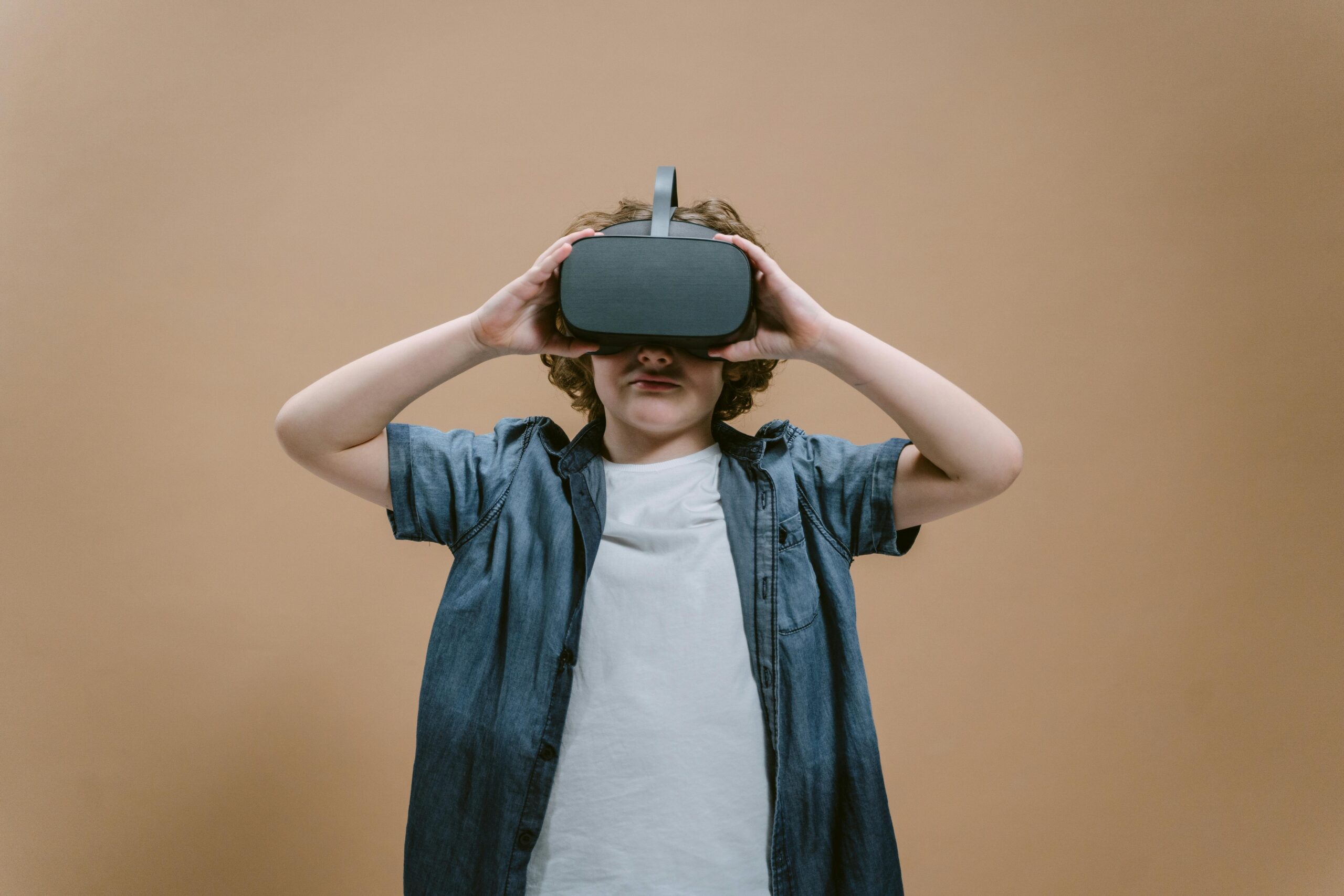
✨ Embracing Educational Transformation
Interactive AR learning simulations represent more than technological novelty—they embody a fundamental reimagining of how humans learn and teach. By making abstract concepts tangible, distant subjects immediate, and passive learning active, AR addresses longstanding educational challenges while preparing students for futures we can barely imagine.
The question facing educators today isn’t whether AR will transform education but how quickly institutions will embrace these powerful tools. Early adopters gain advantages not just in student outcomes but in attracting motivated learners and innovative educators who recognize that education’s future has already arrived.
Success requires courage to move beyond comfortable traditions, commitment to ongoing learning and adaptation, and conviction that every student deserves educational experiences that engage their full potential. AR learning simulations provide the tools—dedicated educators provide the vision and humanity that transform those tools into genuine educational revolution.
The classrooms of tomorrow are being built today, one AR experience at a time. Students who engage with these innovative learning environments don’t just acquire knowledge—they develop the curiosity, creativity, and critical thinking skills that enable them to excel in whatever futures they choose to create. This isn’t simply evolution in education; it’s revolution, and it’s happening now.