
Augmented reality is transforming education by creating immersive assessment environments where students receive instant, contextualized feedback that accelerates learning and engagement like never before.

🚀 The Dawn of AR-Enhanced Educational Assessment
Traditional assessment methods have long relied on paper-based tests, standardized exams, and delayed feedback cycles that often leave students disconnected from their learning journey. The educational landscape is experiencing a seismic shift as augmented reality tools emerge as powerful catalysts for reimagining how we measure, evaluate, and enhance student performance. These cutting-edge technologies are not merely digitizing existing assessment frameworks; they are fundamentally restructuring the relationship between learners, educators, and the evaluation process itself.
Augmented reality overlays digital information onto the physical world, creating hybrid learning environments where abstract concepts become tangible experiences. When applied to assessment and feedback mechanisms, AR transforms passive evaluation into active discovery, turning every quiz into an exploration and every assignment into an adventure. Students no longer simply answer questions—they manipulate 3D models, solve spatial problems, and demonstrate understanding through interactive simulations that reveal competencies traditional tests cannot capture.
📊 Understanding the AR Assessment Advantage
The superiority of augmented reality assessment tools stems from their ability to evaluate multidimensional competencies simultaneously. Unlike conventional testing that typically measures memorization and recall, AR-based assessments can gauge spatial reasoning, problem-solving approaches, collaborative skills, and creative thinking within a single integrated experience. This holistic evaluation provides educators with unprecedented insights into student capabilities and learning patterns.
Research indicates that students retain information 75% better when learning through interactive AR experiences compared to traditional lecture-based instruction. This retention advantage extends directly to assessment scenarios, where students demonstrate deeper understanding because they have engaged with content through multiple sensory channels and practical application rather than abstract memorization.
Real-Time Performance Analytics
One of the most transformative aspects of AR assessment tools is their capacity to generate real-time performance data. As students interact with augmented environments, sophisticated tracking algorithms monitor eye movements, decision-making patterns, time allocation, and problem-solving strategies. This continuous data stream allows educators to identify learning obstacles immediately rather than discovering gaps weeks later when grading completed assignments.
These analytics dashboards visualize student progress through intuitive interfaces that highlight strengths, pinpoint weaknesses, and suggest personalized intervention strategies. Teachers gain the ability to differentiate instruction dynamically, adapting lesson plans and assessment difficulty based on emerging patterns rather than relying on periodic standardized test results that offer only retrospective snapshots of student achievement.
🎯 Practical AR Tools Transforming Educational Feedback
Several pioneering augmented reality platforms are already demonstrating the tremendous potential of this technology in educational settings. These tools span various subject areas and grade levels, each offering unique approaches to assessment and feedback delivery that would be impossible in conventional classrooms.
Science and STEM Applications
In science education, AR assessment tools allow students to conduct virtual dissections, manipulate molecular structures, and simulate physics experiments without the constraints of physical laboratories. Students can demonstrate their understanding of chemical bonding by physically arranging atoms in three-dimensional space, receiving immediate feedback when their configurations are incorrect and guided hints that scaffold learning without providing direct answers.
Mathematics becomes tangible through AR tools that transform abstract equations into visual representations students can manipulate. Geometry problems emerge as physical puzzles where learners rotate shapes, calculate volumes by filling virtual containers, and explore spatial relationships through interactive challenges. The system assesses not just final answers but the pathways students take to reach solutions, identifying conceptual misunderstandings that multiple-choice tests would miss entirely.
Language and Communication Skills
Language learning benefits dramatically from AR assessment tools that place students in immersive conversational contexts. Rather than completing fill-in-the-blank worksheets, learners navigate virtual environments where they must use target vocabulary to accomplish authentic tasks—ordering food in a simulated restaurant, asking for directions in a digital city, or participating in workplace scenarios that require specific grammatical structures.
Speech recognition technology integrated with these AR environments provides immediate pronunciation feedback, while natural language processing algorithms evaluate grammatical accuracy and contextual appropriateness. Students receive corrective feedback instantly, allowing them to adjust and improve within the learning experience rather than discovering errors days later when reviewing graded assignments.
💡 Personalized Feedback Loops That Accelerate Mastery
The true revolution in AR-enhanced assessment lies not in the technology itself but in the pedagogical transformation it enables. Traditional feedback often arrives too late to influence learning effectively—students complete assignments, wait days or weeks for grades, and by the time they receive feedback, they have mentally moved on to new topics. This temporal disconnect severely limits feedback effectiveness.
Augmented reality tools collapse this feedback delay to zero. Students receive guidance at the precise moment they need it, when they are actively engaged with content and cognitively prepared to incorporate corrections. This immediacy transforms feedback from evaluative judgment to instructional support, creating continuous improvement cycles where students iteratively refine their understanding through successive attempts.
Adaptive Difficulty Calibration
Advanced AR assessment systems employ machine learning algorithms that dynamically adjust challenge levels based on individual performance. When students consistently demonstrate mastery, the system introduces more complex variations and novel problem types. Conversely, when learners struggle, the AR environment scaffolds tasks into manageable components, provides additional contextual support, and offers alternative explanatory approaches tailored to different learning styles.
This adaptive calibration ensures that assessments remain within each student’s zone of proximal development—challenging enough to promote growth but not so difficult as to cause frustration and disengagement. Traditional standardized assessments, by contrast, necessarily target average difficulty levels, leaving advanced students unchallenged and struggling students overwhelmed.
🌐 Collaborative Assessment in Augmented Spaces
Perhaps the most underutilized potential of augmented reality assessment lies in its capacity to evaluate collaborative competencies authentically. In our increasingly interconnected world, the ability to work effectively in teams, communicate across diverse perspectives, and collectively solve complex problems represents essential 21st-century skills that traditional individual assessments cannot measure.
AR platforms create shared augmented environments where multiple students collaborate on challenges that require coordinated effort. The system assesses not only whether teams reach correct solutions but how they distribute responsibilities, communicate strategies, resolve disagreements, and support struggling members. These social and emotional learning competencies are as important as content knowledge yet remain virtually unmeasured in conventional assessment frameworks.
Gamification and Intrinsic Motivation
Augmented reality assessments naturally incorporate gamification elements that transform evaluation from anxiety-inducing events into engaging challenges. Students earn achievements, unlock new difficulty levels, and visualize their progress through compelling interfaces that maintain motivation and reduce test-related stress. This psychological shift is particularly important for learners who experience assessment anxiety that artificially depresses their performance on traditional tests.
By reframing assessment as gameplay, AR tools help students develop growth mindsets where challenges represent opportunities for learning rather than threats to self-esteem. Failure becomes a natural part of the learning process—students can retry challenges immediately with different approaches, learning from mistakes in low-stakes environments before attempting high-stakes evaluations.
🔧 Implementation Strategies for Educators
Transitioning from traditional assessment methods to AR-enhanced evaluation requires thoughtful planning and professional development. Educators need not abandon proven assessment practices entirely but rather strategically integrate augmented reality tools where they offer clear advantages over conventional approaches.
Start by identifying assessment pain points in your current practice. Where do students consistently struggle? Which competencies are difficult to measure accurately? What feedback do learners need but rarely receive? Augmented reality tools excel at addressing specific assessment challenges rather than replacing entire evaluation systems wholesale.
Professional Development Priorities
Teachers require training not just in AR technology operation but in redesigning assessment frameworks to leverage augmented reality capabilities. This involves shifting from summative evaluation mindsets toward formative assessment approaches that use continuous feedback to guide instruction. Professional learning communities where educators share AR assessment strategies, troubleshoot implementation challenges, and collaboratively design augmented learning experiences prove essential for successful adoption.
Technical support infrastructure also determines implementation success. Schools must ensure reliable device availability, robust wireless networks capable of handling AR applications’ bandwidth requirements, and IT personnel familiar with troubleshooting augmented reality platforms. Without this foundational support, even the most pedagogically sound AR assessment initiatives will falter due to technical frustrations.
📈 Measuring the Impact of AR Assessment Innovation
As with any educational innovation, implementing augmented reality assessment tools requires evidence of effectiveness. Early research demonstrates promising results across multiple outcome measures, including improved student engagement, deeper conceptual understanding, enhanced retention, and more positive attitudes toward assessment.
Longitudinal studies comparing student performance before and after AR assessment implementation consistently show significant gains in both formative assessment metrics and summative evaluation outcomes. More importantly, these improvements appear most pronounced among traditionally underperforming student populations, suggesting that AR tools may help reduce achievement gaps by providing personalized support that adapts to individual learning needs.
Beyond Test Scores
While standardized test performance matters, the full impact of AR assessment extends beyond easily quantifiable metrics. Students report feeling more confident in their abilities, more willing to attempt challenging problems, and more aware of their own learning processes. These metacognitive and affective outcomes represent long-term educational benefits that transcend any single content area or grade level.
Teachers observe qualitative changes in classroom dynamics as well. Students become more self-directed learners who take ownership of their progress rather than passively waiting for teacher evaluation. Peer collaboration increases as students help each other navigate augmented challenges, creating learning communities rather than competitive environments where assessment pits students against each other.
🌟 The Future Landscape of Augmented Assessment
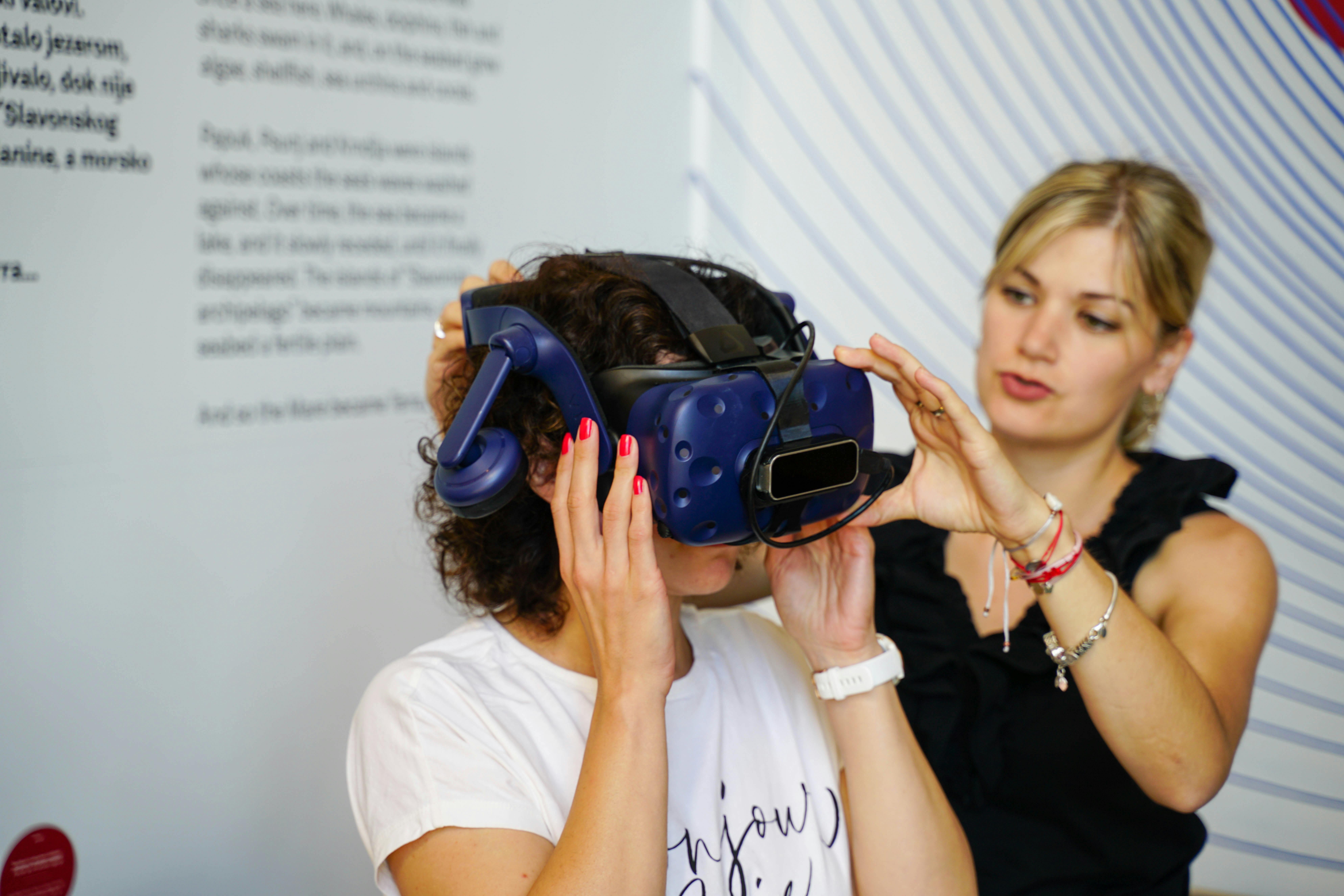
As augmented reality technology continues advancing, the possibilities for educational assessment will expand exponentially. Emerging developments in haptic feedback will add tactile dimensions to AR assessments, allowing students to physically feel molecular bonds, architectural structures, or biological systems they manipulate. Artificial intelligence integration will enable AR tutors that provide increasingly sophisticated guidance tailored to individual learning patterns and preferences.
The convergence of AR with other emerging technologies promises even more transformative possibilities. Blockchain-based credential systems could create permanent, verifiable records of competencies demonstrated through AR assessments, replacing traditional transcripts with comprehensive portfolios showcasing authentic capabilities. Virtual reality integration might extend augmented assessment into fully immersive environments where students tackle complex interdisciplinary challenges that mirror real-world professional scenarios.
The assessment revolution enabled by augmented reality represents far more than technological novelty. It embodies a fundamental reconceptualization of evaluation’s purpose in education—shifting from gatekeeping mechanisms that sort students into categories toward supportive systems that illuminate learning pathways and accelerate every learner’s journey toward mastery. As these tools become more accessible, affordable, and pedagogically refined, they promise to fulfill education’s fundamental mission: helping every student reach their full potential through timely, personalized, and actionable feedback that transforms assessment from judgment into opportunity.