
Augmented reality is no longer science fiction—it’s reshaping how enterprises operate, compete, and innovate in a digital-first world where transformation demands bold technological leaps. 🚀

The intersection of physical and digital worlds has created unprecedented opportunities for businesses willing to embrace cutting-edge technologies. Augmented reality (AR) stands at the forefront of this revolution, offering enterprises the tools to reimagine workflows, enhance customer experiences, and drive operational excellence. As organizations navigate increasingly complex market dynamics, AR innovation emerges as a critical differentiator that separates industry leaders from followers.
From manufacturing floors to retail showrooms, from healthcare facilities to educational institutions, augmented reality is fundamentally altering how we interact with information, products, and services. This transformation isn’t merely about adopting new technology—it’s about reimagining entire business models and creating value in ways previously impossible.
The Business Case for Augmented Reality Adoption 💼
Enterprise leaders face mounting pressure to deliver results while managing costs, improving efficiency, and staying ahead of competition. Augmented reality addresses these challenges head-on by providing tangible returns on investment across multiple business functions. Organizations implementing AR solutions report significant improvements in productivity, accuracy, and employee satisfaction.
The financial implications are compelling. Research indicates that companies leveraging AR technology experience up to 32% reduction in operational errors, 46% decrease in training time, and 25% improvement in first-time fix rates for maintenance tasks. These metrics translate directly to bottom-line improvements and competitive advantages that stakeholders can measure and appreciate.
Beyond immediate cost savings, AR creates strategic value through enhanced customer engagement and brand differentiation. Companies utilizing augmented reality in customer-facing applications report higher conversion rates, increased time spent with products, and improved customer satisfaction scores. These outcomes demonstrate that AR investment delivers both operational and marketing returns.
Transforming Industrial Operations Through Immersive Technology
Manufacturing and industrial sectors have emerged as early adopters of augmented reality, recognizing its potential to revolutionize production processes. AR-enabled work instructions overlay digital guidance onto physical equipment, allowing technicians to complete complex tasks with unprecedented accuracy and speed. This approach eliminates the need for bulky manuals and reduces cognitive load on workers.
Maintenance operations particularly benefit from AR innovation. Technicians equipped with AR headsets or tablets can visualize internal machine components without disassembly, access real-time diagnostic data, and receive step-by-step repair guidance. Remote assistance capabilities allow expert technicians to guide on-site personnel through complex procedures, dramatically reducing downtime and travel costs.
Quality control processes are similarly transformed. AR systems can instantly compare manufactured parts against digital specifications, highlighting deviations with precision impossible for human inspectors. This automated quality assurance reduces defects, minimizes waste, and ensures consistent product excellence across production runs.
Redefining Customer Experience in Retail and E-Commerce 🛍️
The retail landscape has undergone seismic shifts, with augmented reality playing a starring role in bridging online and offline shopping experiences. Virtual try-on solutions allow customers to visualize products in context before purchase, significantly reducing return rates and increasing buyer confidence. From furniture placement in living rooms to makeup application on facial features, AR removes uncertainty from purchasing decisions.
Leading retailers report that customers engaging with AR features are significantly more likely to complete purchases. The technology addresses the primary weakness of online shopping—the inability to physically interact with products—by creating immersive digital experiences that feel tangible and personal. This innovation proves particularly valuable for high-consideration purchases where visual confirmation drives decision-making.
In-store experiences benefit equally from augmented reality integration. Interactive displays provide product information, comparisons, and recommendations through simple smartphone interactions. Navigation assistance guides customers to specific items in large stores, while promotional AR experiences create memorable brand interactions that drive social sharing and word-of-mouth marketing.
Personalization at Scale Through AR Innovation
Augmented reality enables mass personalization previously achievable only through expensive custom solutions. Customers can configure products in real-time, adjusting colors, materials, and features while visualizing the final result. This customization capability increases perceived value, justifies premium pricing, and creates emotional connections between consumers and products.
The data generated through AR interactions provides invaluable insights into customer preferences and behavior patterns. Enterprises can analyze which features attract attention, where users encounter difficulties, and which configurations generate the most interest. These insights inform product development, marketing strategies, and inventory decisions with unprecedented precision.
Accelerating Training and Knowledge Transfer 📚
Corporate training represents one of augmented reality’s most impactful applications. Traditional training methods struggle with engagement, retention, and practical application—challenges AR addresses through experiential learning that mimics real-world scenarios without associated risks or costs.
New employees can practice procedures in AR-simulated environments, making mistakes and learning from consequences without disrupting actual operations or endangering themselves. This hands-on approach accelerates competency development while reducing the supervision burden on experienced staff. Companies report that AR-trained employees reach full productivity significantly faster than those trained through conventional methods.
Complex equipment operation and safety protocols particularly benefit from AR training applications. Learners can interact with virtual representations of dangerous machinery, experience hazardous scenarios, and develop muscle memory for emergency responses—all within controlled, repeatable environments that ensure comprehensive skill development.
Continuous Learning and Performance Support
Augmented reality extends beyond initial training to provide ongoing performance support. Workers can access contextual information and guidance precisely when needed, transforming AR devices into intelligent assistants that enhance human capabilities. This just-in-time knowledge delivery reduces errors, improves decision-making, and enables employees to tackle unfamiliar challenges confidently.
The documentation burden diminishes substantially when AR systems provide visual, interactive guidance. Updates and procedural changes deploy instantly across the workforce, ensuring everyone operates with current information. This agility proves invaluable in rapidly evolving industries where knowledge obsolescence poses constant challenges.
Healthcare Innovation Through Augmented Vision 🏥
Medical applications of augmented reality demonstrate the technology’s life-changing potential. Surgical planning and execution benefit from AR overlays that display patient-specific anatomy, vital signs, and procedural guidance directly in the surgeon’s field of view. This integration of digital information with physical reality enhances precision, reduces complications, and improves patient outcomes.
Medical education leverages AR to provide anatomy instruction that surpasses traditional textbooks and cadaver studies. Students can explore three-dimensional organ systems, simulate procedures, and develop diagnostic skills through interactive experiences that adapt to individual learning pace and style. This enhanced education produces better-prepared healthcare professionals.
Patient care extends beyond the operating room through AR-enabled rehabilitation and physical therapy. Gamified exercises motivate patients while providing therapists with detailed performance metrics. Remote monitoring capabilities allow healthcare providers to track progress and adjust treatment plans without requiring frequent in-person visits, improving access and reducing healthcare costs.
Architectural and Design Collaboration Reimagined 🏗️
Architecture, engineering, and construction industries embrace augmented reality for design visualization and stakeholder collaboration. Clients can walk through virtual buildings before construction begins, experiencing spatial relationships and design decisions in ways two-dimensional plans never convey. This immersive preview reduces change orders, ensures alignment with expectations, and accelerates approval processes.
On-site construction benefits from AR-overlaid building plans that help workers verify placement accuracy and identify conflicts before they become costly errors. Coordination between trades improves as teams visualize how electrical, plumbing, and structural systems integrate within confined spaces. This proactive problem-solving reduces rework and keeps projects on schedule.
Design iteration cycles accelerate when stakeholders can instantly visualize modifications in context. AR facilitates rapid prototyping and decision-making that would require days or weeks using traditional methods. This agility translates to faster project completion and improved creative outcomes.
Overcoming Implementation Challenges and Barriers 🔧
Despite compelling benefits, augmented reality adoption faces legitimate obstacles that enterprises must address strategically. Hardware costs, while decreasing, still represent significant investment. Organizations must carefully evaluate device options, balancing capability against budget constraints while considering total cost of ownership including maintenance and upgrades.
Technical integration challenges arise when connecting AR systems with existing enterprise software, databases, and workflows. Legacy systems may lack APIs or data formats compatible with modern AR platforms. Successful implementation requires thorough planning, potentially including middleware development or system upgrades that extend beyond the AR application itself.
User acceptance cannot be taken for granted. Some employees resist new technologies due to comfort with existing methods, fear of job displacement, or simply change fatigue. Change management strategies must address these concerns through clear communication about benefits, comprehensive training, and inclusive implementation processes that incorporate user feedback.
Building the Foundation for AR Success
Successful AR implementation begins with clear objective definition. Organizations must identify specific problems to solve or opportunities to capture rather than adopting technology for its own sake. Pilot projects targeting high-impact, achievable goals build momentum and demonstrate value to stakeholders skeptical of emerging technology.
Infrastructure requirements deserve careful attention. AR applications demand robust network connectivity, substantial processing power, and reliable data access. Enterprises should audit existing infrastructure against AR requirements and address gaps before deployment to avoid performance issues that undermine user confidence.
Vendor selection significantly impacts outcomes. The AR technology landscape includes established players and innovative startups, each with different strengths, specializations, and support capabilities. Organizations should evaluate vendors based on industry experience, solution maturity, integration flexibility, and long-term viability rather than focusing solely on features or pricing.
The Future Landscape of Enterprise AR 🌟
Augmented reality continues evolving rapidly, with emerging capabilities promising even greater enterprise value. Artificial intelligence integration enables AR systems to recognize objects, understand context, and provide intelligent recommendations. This convergence creates truly adaptive systems that learn from user interactions and continuously improve performance.
5G connectivity removes bandwidth constraints that previously limited AR applications, enabling cloud-based processing that eliminates device hardware limitations. Edge computing brings processing power closer to users, reducing latency to imperceptible levels and enabling real-time collaborative experiences previously impossible.
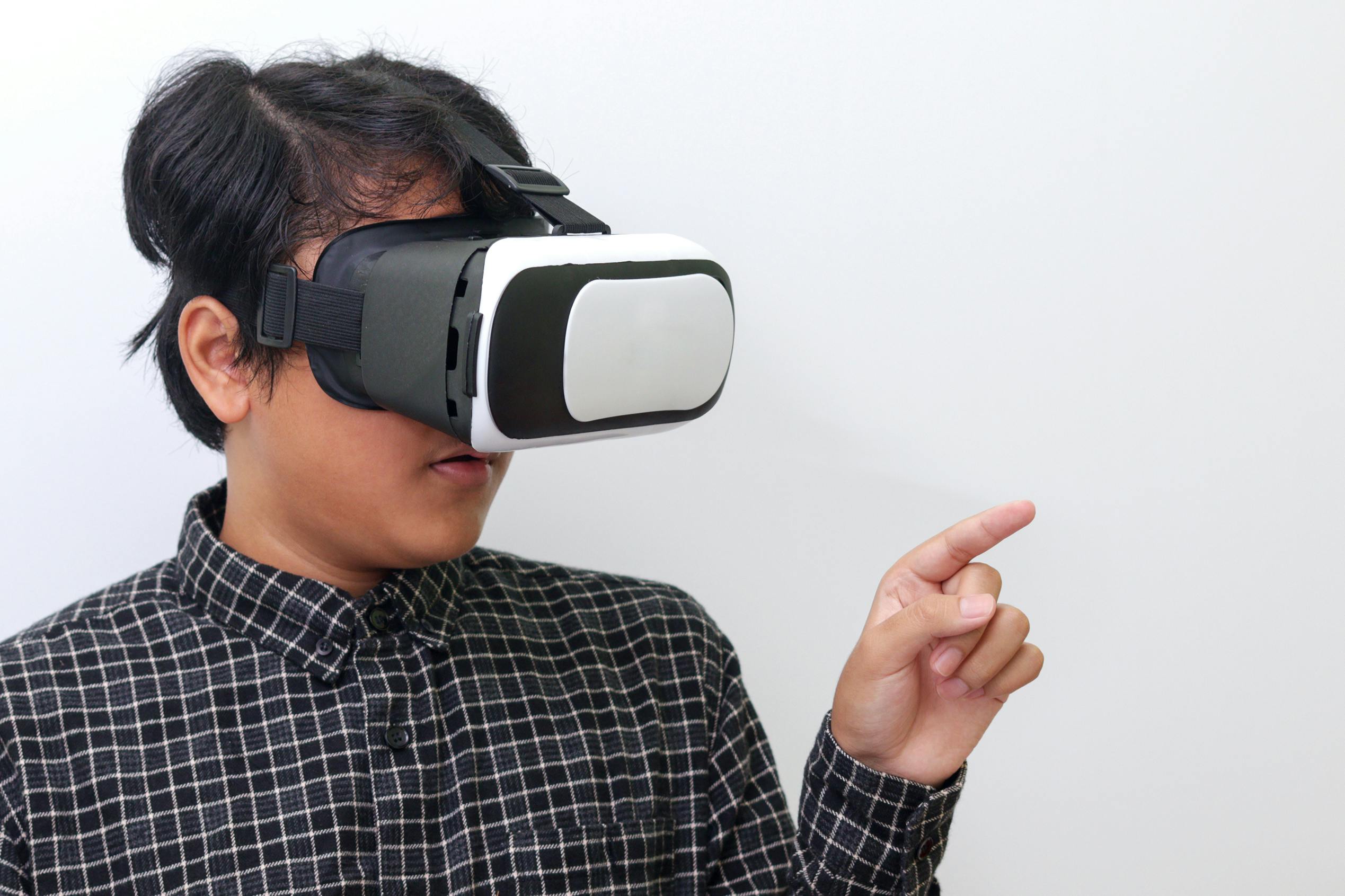
Miniaturization advances produce increasingly comfortable, capable wearable devices that users can employ throughout workdays without fatigue. As AR glasses approach the form factor and social acceptability of regular eyewear, adoption barriers diminish and use cases expand into contexts where bulky headsets proved impractical.
Preparing Organizations for the AR-Enabled Future
Forward-thinking enterprises recognize that augmented reality mastery will differentiate winners from losers in coming competitive battles. Building organizational AR capability requires investment not just in technology but in skills development, process redesign, and cultural adaptation. Leaders should foster experimentation, celebrate learning from failures, and maintain commitment through inevitable implementation challenges.
Cross-functional collaboration accelerates AR success. IT teams bring technical expertise, operations understand process requirements, and business leaders ensure strategic alignment. Breaking down silos enables holistic solutions that deliver comprehensive value rather than point optimizations that miss broader opportunities.
The competitive landscape shows clear patterns: early adopters gain advantages that followers struggle to match. Companies establishing AR capabilities today position themselves to capitalize on continuous innovation while competitors remain mired in traditional approaches. This first-mover advantage compounds over time as organizations develop expertise, refine processes, and build ecosystems around AR-enabled operations.
Creating Lasting Value Through AR Innovation 💡
Augmented reality represents more than another technology wave—it’s a fundamental shift in how humans interact with information and physical environments. Enterprises embracing this shift unlock transformation opportunities across every business dimension, from operational efficiency to customer engagement, from workforce capability to competitive positioning.
The question facing business leaders isn’t whether augmented reality will reshape their industries—it’s whether their organizations will lead that transformation or scramble to catch up. Investments made today in AR capability, infrastructure, and expertise determine tomorrow’s competitive position and market relevance.
Success requires vision, commitment, and willingness to challenge conventional thinking. Organizations must experiment boldly, learn continuously, and maintain focus on value creation rather than technology implementation for its own sake. Those embracing this approach will discover that augmented reality delivers not just incremental improvements but genuine transformation that revolutionizes what’s possible.
The future belongs to enterprises that see beyond current limitations to imagine new possibilities—and then build the capabilities to make those possibilities real. Augmented reality provides the tools; visionary leadership provides the direction. Together, they unlock enterprise transformation that seemed impossible just years ago but will become table stakes in tomorrow’s business landscape. The revolution is underway, and the time to act is now.