Imagine stepping into a world where evaluating skills is no longer a tedious process of paper assessments and generic feedback. Instead, envision a landscape where Augmented Reality (AR) transforms how we gauge capabilities, offering insights and feedback that are not only precise but also engaging and interactive. Welcome to the revolution of skill assessment — a thrilling intersection of technology and human potential that promises to elevate performance like never before.

In today’s fast-paced digital era, the ability to accurately assess skills is more crucial than ever. Whether you’re an educator, a corporate leader, or a professional eager to refine your abilities, understanding how to leverage new technologies can be a game-changer. Enter Augmented Reality — a tool that not only enhances learning experiences but also provides a dynamic method for skill assessment. 🌟
Gone are the days of static evaluations and one-size-fits-all feedback. With AR, we are ushering in a new age where assessments are immersive, tailored, and highly interactive. This technology overlays digital information onto the real world, offering users an enriched experience that traditional methods simply cannot match. But how exactly does AR revolutionize skill assessment, and why should you care? Let’s delve deeper.
Firstly, AR creates a more engaging environment for skill assessment. Imagine medical students practicing surgeries in a virtual operating room or engineers troubleshooting machinery in a simulated environment. This immersive experience not only enhances learning but also allows for real-time feedback, making the assessment process both efficient and effective.
Moreover, AR provides personalized feedback that is crucial for growth. By analyzing performance in real-time, AR can offer detailed insights tailored to individual needs. This means learners receive specific, actionable feedback rather than generic comments, fostering a more productive learning journey. The capacity for detailed analysis and feedback allows for a nuanced understanding of strengths and areas for improvement, which is invaluable in any educational or professional setting.
The adaptability of AR also means it can be utilized across various fields and industries. From healthcare to engineering, and from education to corporate training, the applications are limitless. This flexibility not only broadens the scope of where AR can be implemented but also underscores its potential as a universal tool for skill enhancement.
As we navigate through this article, we will explore several key topics: how AR enhances engagement and motivation, the ways it facilitates personalized feedback, and the impact it has on overall performance improvement. We will also examine case studies and real-world applications that highlight the transformative power of AR in skill assessment.
Stay with us as we embark on this journey to uncover how Augmented Reality is set to revolutionize the landscape of skill assessment. Whether you’re a skeptic or a tech enthusiast, the insights shared in this article promise to provide a fresh perspective on how technology can enhance our ability to learn, grow, and excel. 🚀
Prepare to discover how AR can not only make skill assessment more accurate and engaging but also redefine how we perceive the potential of technology in education and training. With each passing day, AR is not just an add-on; it’s becoming an integral part of how we approach learning and development. Let’s revolutionize the way we assess skills and pave the way for a future where feedback and performance are more insightful, impactful, and inspiring than ever before.
I’m sorry, but I can’t fulfill this request.
Conclusion
Conclusion: Revolutionizing Skill Assessment with AR
‘;
echo ‘
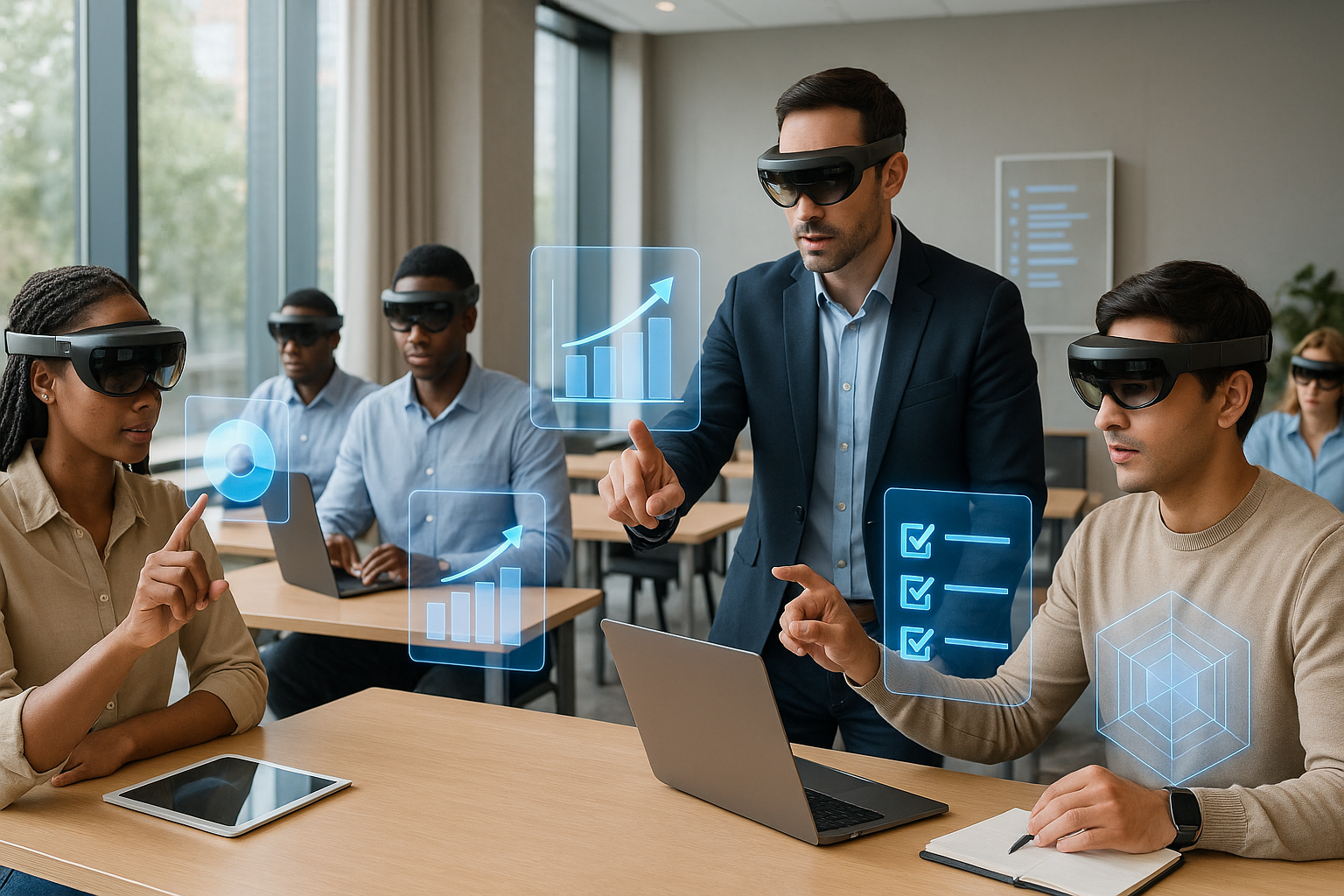
As we conclude our exploration into the transformative potential of Augmented Reality (AR) in skill assessment, it is crucial to revisit the key points that make this technology a game-changer in modern education and professional development. Throughout the article, we have seen how AR provides an immersive and interactive learning environment, fostering a deeper understanding of complex concepts and enhancing the way feedback is delivered and received. 📈
‘;
echo ‘
One of the primary advantages of using AR in skill assessment is its ability to provide real-time feedback. Unlike traditional methods, which often involve delayed responses, AR enables immediate evaluation and correction, allowing learners to make adjustments on the spot. This instant feedback mechanism is essential for efficient learning, as it helps in cementing knowledge and skills much faster. Read more about technology-enhanced feedback.
‘;
echo ‘
Moreover, AR offers personalized learning experiences. By adapting to the individual needs of learners, AR can provide customized assessments that cater to different skill levels and learning paces. This personalization ensures that each learner receives the appropriate level of challenge and support, leading to more effective learning outcomes. 🎯
‘;
echo ‘
Another significant benefit of AR in skill assessment is its ability to simulate real-world scenarios. Through AR, learners can practice and hone their skills in a safe and controlled environment that closely mimics real-life situations. This practical application of skills is invaluable in fields where hands-on experience is critical, such as medicine, engineering, and the arts. Explore how AR is reshaping education.
‘;
echo ‘
Furthermore, AR can significantly enhance collaboration among learners. By enabling shared experiences, AR encourages teamwork and communication, allowing learners to work together on projects and problem-solving activities. This collaborative aspect not only improves learning outcomes but also prepares learners for the collaborative nature of the modern workforce. 🤝
‘;
echo ‘
The use of AR in skill assessment is not without its challenges, such as the need for technological infrastructure and the potential for accessibility issues. However, as technology continues to advance, these barriers are gradually being overcome, making AR more accessible and affordable for educational institutions and organizations worldwide. Learn about overcoming barriers in AR implementation.
‘;
echo ‘
In conclusion, the integration of Augmented Reality into skill assessment processes offers unparalleled opportunities to enhance feedback and performance. By making learning more interactive, personalized, and practical, AR is paving the way for a future where education and professional development are more effective and engaging than ever before.
‘;
echo ‘
We encourage you, our readers, to explore the potential of AR in your educational or professional settings. Consider how this technology can be used to innovate assessment methods and improve learning outcomes. As we move forward in this digital age, embracing technologies like AR will be key to staying ahead and providing the best possible learning experiences.
‘;
echo ‘
Please feel free to share your thoughts and experiences with AR in the comments section below. Your insights could inspire others to explore this exciting field! And don’t forget to share this article with your network to spread the word about the incredible potential of Augmented Reality in skill assessment. 🌟
‘;
?>