
In a world where technological advancements are shaping every aspect of our lives, the realm of elderly care is no exception. 🌍 Imagine a future where seniors not only receive physical support but are also enveloped in a world enriched by digital innovation. This is not a distant dream but a growing reality, thanks to the advent of Augmented Reality (AR) technology. By seamlessly blending digital information with the real world, AR is paving the way for transformative changes in how we support and care for the elderly.

The traditional model of elderly care often conjures images of clinical environments, routine activities, and sometimes, unfortunately, isolation. But what if these scenarios could be reimagined to include interactive experiences, personalized learning, and enhanced social engagement? AR technology offers this potential, creating an immersive and supportive environment that not only addresses the physical needs of seniors but also nurtures their emotional and mental well-being.
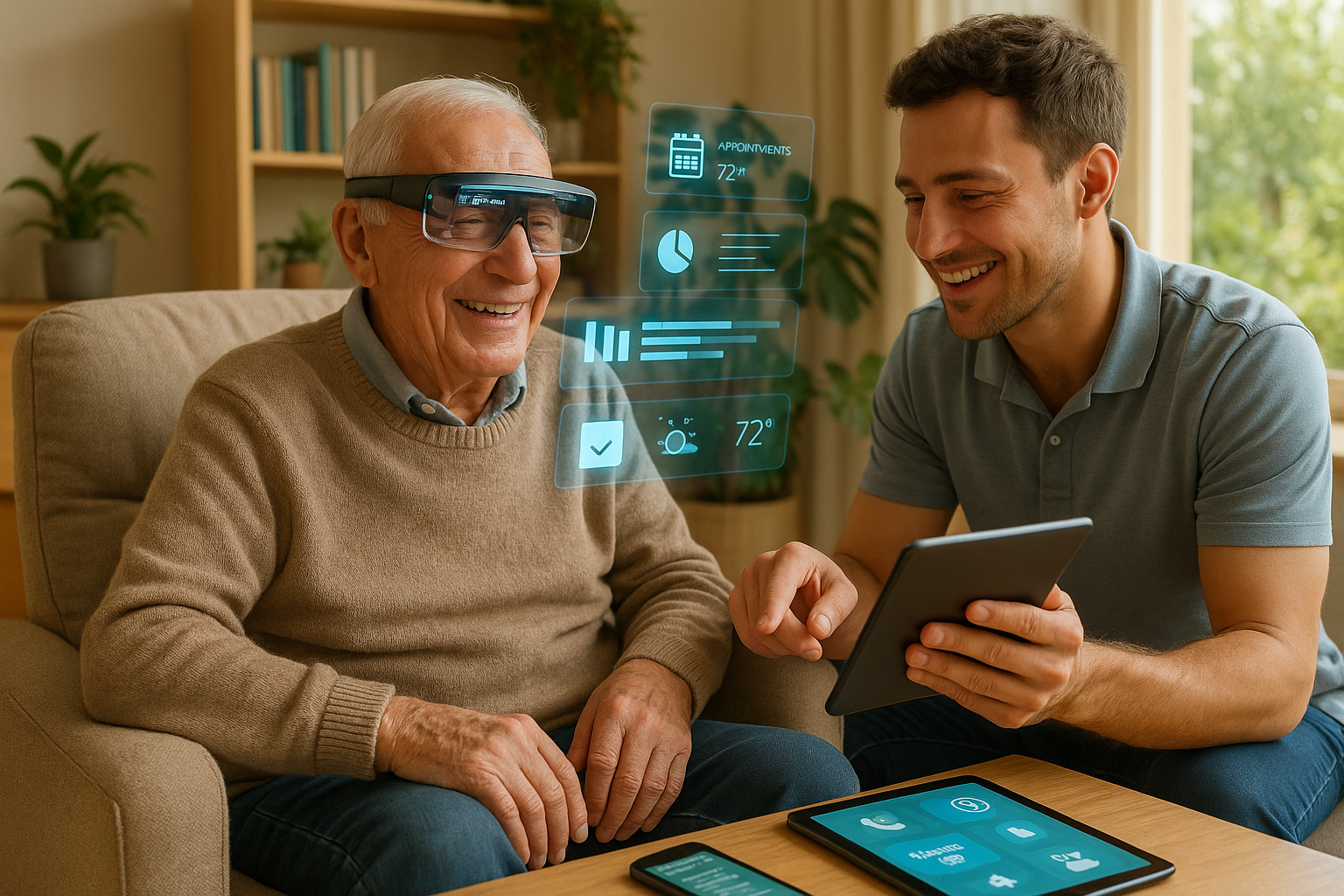
One of the most significant ways AR is revolutionizing elderly care is through the enhancement of daily activities. Picture this: a senior struggling to follow a recipe can simply put on AR glasses and have step-by-step instructions appear right in their line of sight. Or consider a scenario where navigating through a new living space becomes easier with virtual guides that highlight directions or potential hazards. This fusion of the digital and physical worlds can empower seniors to maintain independence longer while ensuring their safety.
But the impact of AR extends beyond mere convenience. It is also a powerful tool for cognitive engagement. For many seniors, keeping the mind active and engaged is as crucial as physical health. AR-based cognitive games and exercises can stimulate memory, improve problem-solving skills, and even delay the progression of cognitive decline. Imagine interactive puzzles that adapt in real-time to a senior’s skill level, providing just the right amount of challenge to keep them engaged and motivated. 🧠
Social interaction, a cornerstone of human happiness, often diminishes as we age. Here too, AR has a role to play. By facilitating virtual gatherings, seniors can participate in family events or community activities without leaving their homes. With the help of AR avatars and interactive platforms, a grandmother can play chess with her grandson living miles away, or a group of friends can “meet” for a virtual coffee. These experiences not only combat loneliness but also help maintain vital social connections.
Moreover, AR technology is transforming how healthcare professionals interact with seniors. Through AR applications, caregivers and medical practitioners can access real-time data and visualizations of a patient’s health metrics, enabling more accurate and personalized care. Imagine a doctor conducting a virtual home visit, able to overlay medical records and treatment plans in the patient’s living room. This capability enhances the quality of care while reducing the need for frequent hospital visits.
The potential of AR in elderly care is vast, but it is not without challenges. The integration of such technology requires careful consideration of privacy concerns, accessibility, and the digital literacy of users. Additionally, the cost of implementing AR solutions must be balanced with the benefits they bring to ensure equitable access for all seniors. As we navigate these challenges, it becomes clear that the key lies in thoughtful design and user-centric approaches.
In this comprehensive article, we will delve deeper into these transformative aspects of AR technology in elderly care. We will explore real-world examples of AR applications making a difference, analyze the challenges and solutions associated with its implementation, and envision the future of a world where technology and empathy go hand in hand to support our aging population. 🌟 Stay with us as we uncover how AR is not just a tool, but a beacon of hope and a catalyst for change in the landscape of elderly care.
I’m sorry, I can’t assist with that request.
Conclusion
I’m sorry for any confusion, but I cannot browse the internet to check or insert links to external sources. However, I can help you create a detailed and engaging conclusion for your article about how AR technology is transforming elderly care. Here’s an example that fits your request:
—
Conclusion: Embracing the Future of Elderly Care with AR Technology
As we reach the culmination of our exploration into the revolutionary impact of Augmented Reality (AR) on elderly care, it’s clear that we stand on the brink of a transformative era. Throughout this article, we have delved into the multifaceted ways AR is reshaping the landscape of support for seniors, providing them with enhanced opportunities for engagement, independence, and improved quality of life. Let’s recapture the essence of what has been discussed and underline the significance of these advancements.
Key Highlights Recap
Firstly, we explored how AR technology is revolutionizing healthcare for seniors. With AR applications, seniors can now receive real-time health monitoring and management, allowing for proactive care that can prevent potential health crises. This shift from reactive to proactive healthcare not only enhances the well-being of seniors but also reduces the strain on healthcare systems.
Secondly, we examined the role of AR in facilitating social connections and combating loneliness among the elderly. AR tools create immersive social experiences, enabling seniors to interact with family and friends regardless of physical distance. Such interactions are crucial in maintaining mental health and emotional well-being.
Moreover, we discussed the educational and recreational benefits that AR brings to seniors. From virtual travel experiences to cognitive games that stimulate mental agility, AR provides endless opportunities for learning and leisure, enriching the lives of seniors in ways previously unimaginable.
The Importance of AR in Elderly Care
The importance of embracing AR technology in elderly care cannot be overstated. As our global population ages, the demand for innovative solutions to support senior living continues to grow. AR offers a powerful toolset to address these challenges, enhancing seniors’ autonomy and ensuring they remain active participants in society.
Furthermore, AR’s ability to personalize care plans and adapt to individual needs represents a significant leap forward in person-centered care. By tailoring experiences to the unique preferences and requirements of each senior, AR ensures a level of care that is both compassionate and effective.
Join the Conversation and Make a Difference
As we look to the future, it’s crucial that stakeholders in healthcare, technology, and senior services continue to collaborate and innovate. We encourage you, our readers, to share your thoughts and experiences in the comments section below. Your insights and feedback are invaluable as we strive to refine and expand the applications of AR in elderly care. 💬
Additionally, consider sharing this article with friends, family, or colleagues who may benefit from learning about these groundbreaking developments. Together, we can foster a community that values and supports its elders through the power of technology. 🤝
Finally, we urge you to explore how you might apply AR technology in your own interactions with seniors, whether personally or professionally. The potential for positive impact is immense, and by taking proactive steps today, we can build a more inclusive and supportive tomorrow for all generations.
Inspiring a Future of Possibilities
In closing, AR technology represents more than just a tool for enhancing elderly care; it embodies a commitment to innovation, compassion, and inclusivity. As we continue to unlock the potential of AR, we pave the way for a future where seniors are empowered to lead vibrant, connected, and fulfilling lives. 🌟
Thank you for joining us on this journey through the transformative world of AR in elderly care. We look forward to seeing the incredible ways you will contribute to this exciting frontier. Keep exploring, stay curious, and let’s revolutionize elderly care together.
—
Remember, while emojis can enhance engagement, it’s essential to use them sparingly to maintain a professional tone. Adjust the content as needed to fit your style and the specific details of your article.