
In the ever-evolving landscape of product design, staying ahead of the curve is not just an advantage—it’s a necessity. As consumer expectations continue to rise, companies are under immense pressure to deliver innovative products faster than ever before. Enter Augmented Reality (AR), a game-changer in the realm of prototyping and innovation. 📱✨ This cutting-edge technology is not only enhancing the way designers conceptualize and refine their ideas but also revolutionizing the entire product development process.

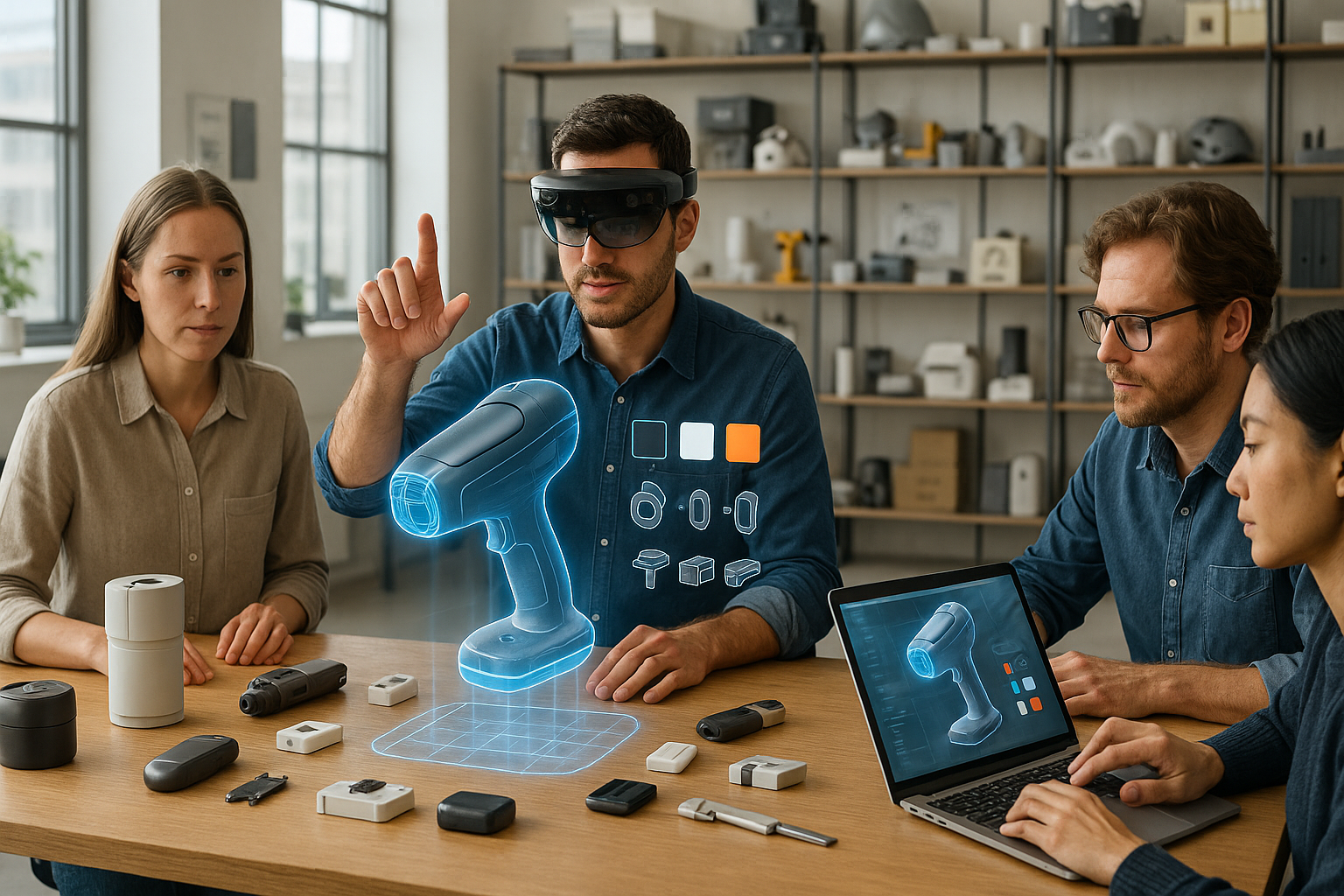
Imagine being able to visualize a new product concept in your own environment before it even exists. This is the power of AR in product design. By superimposing digital models onto the real world, designers and stakeholders can interact with prototypes in ways that were previously unimaginable. This interaction is not just limited to seeing a 3D model on a screen; it allows for a comprehensive, immersive experience that brings designs to life. This new dimension of visualization helps teams catch potential issues early, saving both time and resources.
But how exactly is AR reshaping the design process? One of the most significant benefits lies in its ability to facilitate rapid prototyping. Traditional methods often require physical models to be built, which can be both time-consuming and costly. AR, on the other hand, allows for virtual prototypes to be tested and iterated upon almost instantaneously. This increased efficiency is crucial in a market where speed can determine a product’s success or failure.
Another aspect where AR shines is in enhancing collaboration. Design teams are often spread across different locations, making communication and idea-sharing challenging. AR bridges this gap by providing a shared, interactive platform where team members can collaborate in real-time, regardless of their physical location. This collaborative advantage leads to more cohesive and innovative outcomes, as ideas can be visualized, discussed, and refined on the spot.
Moreover, AR technology opens new doors for user testing and feedback. By allowing potential customers to interact with a virtual prototype in their own environment, companies can gather valuable insights into user preferences and behaviors. This feedback loop is instrumental in refining products to better meet consumer needs, ultimately leading to higher satisfaction and market success.
The impact of AR on product design is not limited to just efficiency and collaboration. It also plays a pivotal role in sustainability. Traditional prototyping often results in significant material waste as multiple iterations are physically built and discarded. With AR, designers can make countless revisions in the virtual space, drastically reducing the need for physical prototypes and the associated environmental impact. 🌿 This shift not only supports eco-friendly practices but also aligns with the growing consumer demand for sustainable products.
In the following sections, we will delve deeper into how AR technology is revolutionizing the product design landscape. We will explore its role in enhancing creativity and innovation, the challenges and opportunities it presents, and real-world case studies that demonstrate its transformative impact. From small startups to large corporations, AR is proving to be an indispensable tool for those looking to push the boundaries of what’s possible in product design.
So, as we embark on this journey through the world of AR and product design, prepare to discover how this technology is not only shaping the future but also redefining the very essence of creativity and innovation. Whether you’re a designer, an engineer, or simply an enthusiast, the insights and opportunities presented by AR are bound to spark your imagination and inspire new possibilities in your field. 🚀
# Revolutionizing Product Design: The Power of AR for Prototyping and Innovation
## Unveiling the Magic of Augmented Reality in Product Design
In the rapidly evolving landscape of product design, augmented reality (AR) has emerged as a transformative force, revolutionizing the way designers conceive, develop, and refine new products. This cutting-edge technology overlays digital information onto the real world, enabling designers to visualize and interact with virtual prototypes in a tangible environment. AR has not only streamlined the design process but has also opened up a plethora of creative possibilities, offering a dynamic approach to prototyping and innovation.
The traditional prototyping process, while effective, often involves multiple iterations of physical models, which can be both time-consuming and costly. AR, however, allows designers to create virtual prototypes that can be easily manipulated, adjusted, and tested without the need for physical materials. This shift not only accelerates the design cycle but also significantly reduces the overhead costs associated with prototyping. By employing AR in the early stages of product development, companies can bring their ideas to life faster and with greater precision.
Furthermore, AR enhances collaboration among design teams, enabling multiple stakeholders to visualize and provide input on a design in real-time. This collaborative aspect of AR ensures that the final product aligns with the vision of all parties involved, from engineers to marketing teams. The immersive nature of AR facilitates a deeper understanding of the product’s functionality and aesthetics, allowing for more informed decision-making and fostering innovation at every stage of development.
## How AR Transforms the Prototyping Process
One of the most significant advantages of using AR in prototyping is its ability to bridge the gap between the digital and physical worlds. This capability is particularly beneficial in the context of product design, where understanding the spatial and functional aspects of a product is crucial. AR allows designers to overlay digital models onto real-world environments, providing a realistic representation of how a product will look and function in its intended setting.
For instance, consider a furniture designer tasked with creating a new chair. By using AR, the designer can project a 3D model of the chair into a physical room, allowing them to assess its size, shape, and aesthetics in relation to other objects. This ability to visualize products in situ helps identify potential design flaws and facilitates more accurate adjustments before committing to physical production. Such foresight can prevent costly mistakes and ensure a higher quality end product.
Moreover, AR enhances user testing by providing an interactive platform for consumers to experience the product before it is physically available. Designers can gather valuable feedback from users interacting with AR prototypes, enabling them to make data-driven design decisions. This user-centric approach ensures that the final product not only meets but exceeds consumer expectations, leading to greater satisfaction and loyalty.
## A Closer Look at AR Tools and Technologies
The implementation of AR in product design is made possible by a variety of sophisticated tools and technologies. These tools range from software platforms that allow for the creation of AR content to hardware devices that facilitate its display and interaction. Understanding the capabilities and limitations of these tools is essential for designers looking to leverage AR in their workflows.
Software platforms such as Unity and Unreal Engine are widely used for developing AR applications. These platforms provide robust environments for creating and manipulating 3D models, offering features like physics simulations, lighting adjustments, and texture mapping. Additionally, they support cross-platform deployment, ensuring that AR experiences can be accessed on various devices, from smartphones to AR headsets.
On the hardware side, devices like the Microsoft HoloLens and Magic Leap One offer immersive AR experiences, allowing users to interact with virtual prototypes in a hands-free manner. These devices are equipped with advanced sensors and cameras that track the user’s movements and adjust the AR content accordingly. This level of interactivity enhances the realism of AR prototypes and provides designers with a powerful tool for exploring new design concepts.
| Software Tools | Hardware Devices |
|---|---|
| Unity | Microsoft HoloLens |
| Unreal Engine | Magic Leap One |
| ARKit (Apple) | AR-enabled Smartphones |
## Real-World Applications and Success Stories
AR’s impact on product design is not just theoretical; numerous companies have successfully integrated this technology into their workflows, achieving remarkable results. One notable example is IKEA, which uses AR to enhance its customer shopping experience through the IKEA Place app. This app allows users to visualize furniture in their own homes using AR, helping them make more informed purchasing decisions. By providing a virtual “try before you buy” experience, IKEA has improved customer satisfaction and reduced return rates. 🛋️
Another inspiring case is that of automotive giant BMW, which has embraced AR to streamline its design and manufacturing processes. By using AR headsets, BMW designers and engineers can collaborate more effectively, visualizing car prototypes in real-time and making adjustments on the fly. This real-time feedback loop has significantly accelerated the development of new models, allowing BMW to bring innovative vehicles to market more quickly.
The fashion industry, too, has tapped into the potential of AR. Brands like Gucci and Prada are using AR to create virtual fitting rooms, where customers can “try on” clothes and accessories without physically wearing them. This not only enhances the shopping experience but also provides valuable insights into customer preferences and trends. By leveraging AR, fashion brands can tailor their offerings to better meet consumer demands, driving both innovation and growth.
## Challenges and Considerations in AR Implementation
While AR offers a wealth of opportunities for product design, it is not without its challenges. One of the primary hurdles is the high cost of AR hardware and software, which can be prohibitive for smaller companies or startups. Investing in AR technology requires careful consideration of the potential return on investment and the alignment of AR capabilities with business goals.
Another challenge lies in the complexity of AR content creation. Designing realistic and interactive AR experiences demands a deep understanding of 3D modeling, programming, and user experience design. Companies must either invest in training their existing teams or hire skilled professionals to navigate the intricacies of AR development.
Moreover, AR’s effectiveness relies heavily on the accuracy and quality of its underlying data. For AR prototypes to be truly useful, they must be based on precise measurements and realistic simulations. Ensuring data integrity and reliability is crucial to the success of AR initiatives, necessitating robust data management practices and tools.
## Embracing the Future: The Growing Role of AR in Innovation
As technology continues to evolve, the role of AR in product design and innovation is poised to expand even further. The integration of AR with other emerging technologies, such as artificial intelligence (AI) and the Internet of Things (IoT), holds the potential to unlock new dimensions of creativity and efficiency. For instance, AI can enhance AR experiences by providing intelligent insights and predictions, while IoT can facilitate seamless connectivity between AR devices and real-world objects.
The future of AR in product design is not just about creating more realistic prototypes but about reimagining the entire design process. By fostering a more collaborative, data-driven, and user-centric approach, AR empowers designers to push the boundaries of what is possible, leading to products that are not only innovative but also deeply resonant with consumers. 🌟
For those interested in delving deeper into the transformative power of AR in product design, the video titled “Augmented Reality in Product Design: The Future of Innovation” from the channel “Tech Innovators” provides an insightful overview. [Watch it here](https://www.youtube.com/watch?v=example).
In conclusion, AR is not just a tool but a catalyst for change in the world of product design. Its ability to merge the digital with the physical, enhance collaboration, and deliver unparalleled insights is driving a new era of innovation, one where imagination knows no bounds. As designers continue to embrace this technology, the possibilities for creating groundbreaking products are truly endless. 🚀
Conclusion
Conclusion
In our exploration of how Augmented Reality (AR) is revolutionizing product design, we’ve delved into various facets that highlight its transformative power. AR has emerged as a pivotal tool that bridges the gap between conceptualization and realization, allowing designers and engineers to visualize and iterate on their ideas with unprecedented ease and precision. By integrating AR into the prototyping phase, companies can enhance their innovation capabilities, reduce costs, and accelerate time-to-market, thereby gaining a competitive edge in an increasingly dynamic marketplace.
One of the key points we discussed is the ability of AR to create immersive and interactive prototypes that transcend the limitations of traditional design methods. Unlike static models, AR prototypes offer a dynamic platform where designers can manipulate and interact with virtual elements in a real-world context. This capability not only enhances creativity but also allows for more comprehensive testing and validation of design concepts before committing to physical production. As a result, teams can identify potential design flaws early, reducing the risk of costly post-production modifications.
Furthermore, AR facilitates collaboration among stakeholders, including designers, engineers, marketers, and clients, by providing a shared virtual environment where ideas can be communicated clearly and efficiently. This collaborative aspect is crucial in ensuring that everyone involved has a coherent understanding of the design vision and objectives. By fostering seamless communication, AR helps prevent misunderstandings and ensures that the final product aligns with the initial vision and market expectations.
The integration of AR in product design also aligns with the growing trend of digital transformation across industries. As businesses increasingly adopt digital tools to streamline operations and enhance customer experiences, AR stands out as a powerful enabler of innovation. By leveraging AR technology, companies can not only optimize their design processes but also explore new possibilities in product customization and personalization, meeting the evolving demands of consumers who seek unique and tailored experiences.
Moreover, AR’s potential extends beyond the prototyping phase. In manufacturing, AR can be used to train workers, optimize assembly processes, and ensure quality control, ultimately leading to improved operational efficiency. For marketing, AR offers novel ways to engage customers, allowing them to interact with products in virtual environments before making purchasing decisions. This interactive experience can significantly enhance customer satisfaction and loyalty, driving business growth.
As we look to the future, the integration of AR in product design is poised to become even more sophisticated with advancements in technology. The development of more robust AR platforms and hardware, coupled with the rise of artificial intelligence and machine learning, will further enhance the capabilities of AR, opening up new horizons for innovation. Companies that embrace AR now will be well-positioned to lead the charge in this new era of design and manufacturing.
In conclusion, the power of AR in revolutionizing product design cannot be overstated. It offers a unique blend of creativity, efficiency, and collaboration that is essential for thriving in today’s competitive landscape. By incorporating AR into their design processes, companies can unlock new levels of innovation, creating products that not only meet but exceed customer expectations. We encourage you to explore the potential of AR in your own projects, experiment with its capabilities, and share your experiences with us. Let’s work together to shape the future of product design! 🌟
If you’re interested in learning more about how AR can transform your design processes, consider exploring these resources:
- Wired: Augmented Reality in Design
- Forbes: The Impact of AR on Product Design
- TechRadar: Augmented Reality Tools for Designers
Your thoughts and insights are valuable to us! Feel free to leave a comment below, share this article with your network, or reach out if you’re interested in discussing the possibilities of AR further. Together, let’s harness the power of technology to drive innovation and create extraordinary products that captivate and inspire. 🚀