
Augmented Reality is reshaping medical education by providing healthcare professionals with immersive, risk-free environments to practice complex procedures and refine critical skills before treating real patients.

🏥 The Evolution of Healthcare Training Beyond Traditional Methods
For decades, medical training has relied on textbooks, cadaver labs, and the time-honored “see one, do one, teach one” approach. While these methods have produced generations of competent healthcare professionals, they come with inherent limitations. Patient safety concerns, limited exposure to rare conditions, and the high costs of traditional simulation labs have created gaps in practical experience that can compromise both learning outcomes and patient care quality.
The introduction of Augmented Reality technology is fundamentally transforming this landscape. Unlike Virtual Reality, which creates completely artificial environments, AR overlays digital information onto the real world, allowing healthcare professionals to interact with virtual anatomical structures, medical equipment, and patient scenarios while remaining aware of their physical surroundings. This unique characteristic makes AR particularly valuable for medical training, where spatial awareness and real-world context are essential.
Modern AR healthcare applications leverage sophisticated sensors, advanced graphics processing, and artificial intelligence to create realistic simulations that respond dynamically to user actions. Medical students can now visualize complex anatomical relationships in three dimensions, surgeons can practice intricate procedures on virtual organs positioned within actual operating room settings, and emergency responders can rehearse crisis management protocols with virtual patients in realistic environments.
🎯 How Immersive AR Scenarios Transform Clinical Competence
The power of AR-based healthcare training lies in its ability to bridge the gap between theoretical knowledge and practical application. Traditional learning methods often struggle to convey the three-dimensional complexity of human anatomy or the dynamic nature of medical emergencies. AR dissolves these barriers by allowing learners to manipulate virtual organs, observe physiological processes in real-time, and experience the consequences of their clinical decisions in a controlled environment.
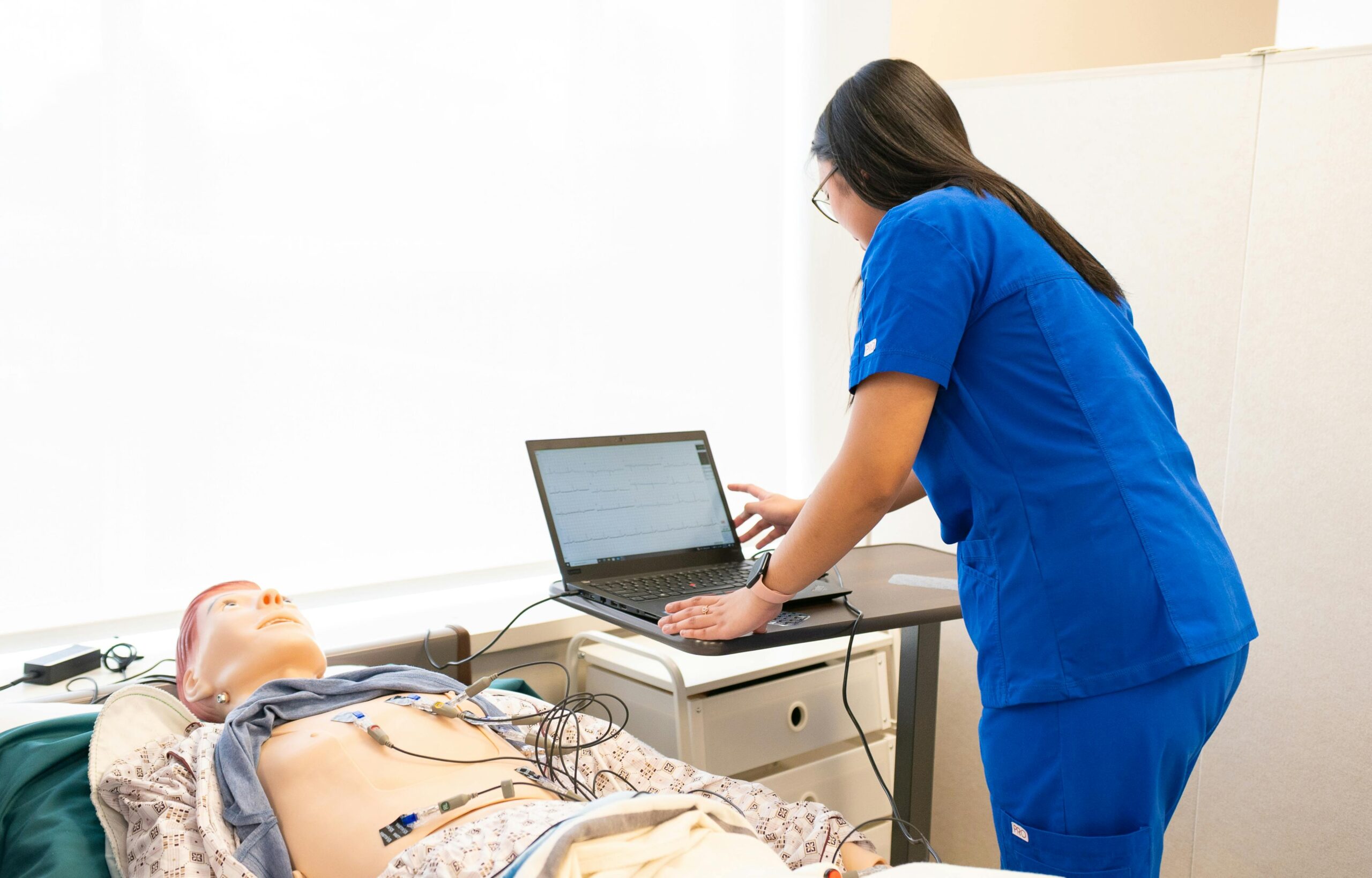
One of the most significant advantages is repeatability. A medical resident can practice placing a central venous catheter dozens of times without requiring a patient, supervising physician, or expensive mannequin. Each attempt provides immediate feedback on needle trajectory, depth, and positioning relative to critical anatomical structures. This repetition builds muscle memory and confidence that translates directly to improved performance in clinical settings.
Realistic Patient Interactions Without the Risk
AR scenarios can simulate patient conditions ranging from routine examinations to life-threatening emergencies. A nursing student might encounter a virtual patient experiencing anaphylactic shock, complete with visible symptoms like facial swelling and audible respiratory distress. The system monitors the student’s response time, medication dosage calculations, and intervention sequence, providing detailed performance analytics that identify specific areas for improvement.
These simulations can be calibrated to match the learner’s skill level, gradually increasing in complexity as competence develops. Beginning students might face straightforward scenarios with clear symptoms and standard treatment protocols, while advanced practitioners can tackle ambiguous presentations, comorbidities, and complications that require sophisticated clinical reasoning.
📱 Key Applications Transforming Medical Education
The diversity of AR applications in healthcare training reflects the technology’s versatility. Different specialties have unique educational requirements, and AR platforms are being tailored to address these specific needs with remarkable precision.
Surgical Training and Procedural Skills
Surgical education represents one of the most promising applications of AR technology. Trainee surgeons can use AR headsets to visualize patient anatomy during procedures, with digital overlays highlighting critical structures like blood vessels, nerves, and tumor margins. Before performing actual operations, they can rehearse every step of complex procedures on virtual anatomies that accurately replicate individual patient characteristics based on CT or MRI scans.
AR surgical simulations provide haptic feedback that mimics tissue resistance, allowing trainees to develop the delicate touch required for microsurgery or the controlled force needed for orthopedic procedures. Performance metrics track hand steadiness, instrument handling, and procedural efficiency, creating objective assessments that complement traditional surgical evaluations.
Emergency Medicine and Crisis Management
Emergency departments present chaotic, high-pressure environments where split-second decisions can determine patient outcomes. AR training scenarios prepare healthcare providers for these situations by simulating mass casualty incidents, cardiac arrests, and other critical emergencies within actual clinical spaces.
Teams can practice coordinated responses to trauma cases, with virtual patients displaying realistic injuries and vital sign changes. Communication patterns, role clarity, and protocol adherence are all captured and analyzed, helping teams identify weaknesses in their emergency response systems before real crises occur.
Anatomy Education and Diagnostic Skills
Understanding three-dimensional anatomical relationships is fundamental to medical practice, yet traditional teaching methods rely on two-dimensional images and static models. AR transforms anatomy education by allowing students to explore virtual cadavers from any angle, peel away tissue layers to expose underlying structures, and observe physiological processes in motion.
Diagnostic training benefits similarly. Students can examine virtual patients, observing subtle physical findings that might be difficult to demonstrate with real patients or standard mannequins. A virtual patient with heart failure might display jugular venous distention, peripheral edema, and abnormal breath sounds that students can assess repeatedly until they master the examination technique.
💡 The Cognitive Science Behind AR Learning Effectiveness
The educational superiority of AR training isn’t merely anecdotal—it’s grounded in cognitive science principles that explain how humans acquire and retain complex skills. AR leverages multiple learning pathways simultaneously, engaging visual, kinesthetic, and spatial processing systems in ways that traditional methods cannot match.
Embodied cognition theory suggests that physical interaction with learning materials enhances understanding and retention. When medical students manipulate virtual anatomical structures with their hands, they create stronger neural connections than when passively viewing diagrams. This multisensory engagement produces deeper learning that persists longer and transfers more effectively to clinical practice.
Immediate Feedback and Iterative Improvement
AR systems provide instantaneous performance feedback, a critical component of effective skill acquisition. When a trainee makes an error during a virtual procedure, the system can immediately highlight the mistake, explain the correct approach, and allow another attempt. This rapid feedback loop accelerates learning by preventing the reinforcement of incorrect techniques.
Traditional training often involves delayed feedback, with performance reviews occurring hours or days after practice sessions. By that time, memories have faded and learning opportunities diminish. AR’s real-time guidance maintains engagement and capitalizes on teachable moments when learners are most receptive.
🌐 Addressing Healthcare Disparities Through Accessible Training
One of AR technology’s most profound impacts may be its potential to democratize access to high-quality medical education. Geographic and economic barriers have historically limited training opportunities, particularly in underserved regions where access to specialized instructors, expensive equipment, and diverse patient populations is limited.
AR training applications can be deployed anywhere with minimal infrastructure requirements. A rural clinic in a developing nation can provide the same sophisticated training experiences available at prestigious urban teaching hospitals. Healthcare workers in remote areas can practice managing conditions they rarely encounter locally, ensuring they’re prepared when such cases arise.
This accessibility extends to continuing education for practicing professionals. Rather than traveling to distant conference centers for skills updates, clinicians can access AR training modules during breaks between patient appointments, maintaining their competencies without disrupting their practice or incurring substantial costs.
🔬 Evidence-Based Outcomes: Measuring AR Training Impact
As AR adoption accelerates, research is documenting its tangible benefits for healthcare training outcomes. Multiple studies have demonstrated that learners using AR simulations achieve competency faster, retain skills longer, and perform better in clinical assessments compared to those trained exclusively through traditional methods.
A systematic review of AR surgical training found that participants showed significant improvements in procedural accuracy, reduced error rates, and enhanced confidence levels. Importantly, these improvements translated to better performance when subsequently treating actual patients—the ultimate measure of training effectiveness.
Objective Performance Metrics
AR platforms generate comprehensive data on learner performance, creating objective records that complement subjective evaluations. Systems track metrics such as procedure completion time, accuracy of anatomical identification, appropriate response to clinical changes, and adherence to safety protocols. This data-driven approach identifies specific competency gaps and guides personalized learning pathways.
For healthcare institutions, these analytics provide insights into training program effectiveness, helping educators refine curricula and allocate resources more efficiently. Patterns in learner performance can reveal which concepts require additional emphasis or which teaching methods produce the best outcomes.
🚀 Overcoming Implementation Challenges
Despite its enormous potential, AR healthcare training faces obstacles that must be addressed for widespread adoption. Hardware costs, though decreasing, remain substantial for institutions with limited budgets. High-quality AR headsets and supporting technology require significant initial investment, though costs typically decrease over time compared to maintaining traditional simulation labs.
Content development presents another challenge. Creating realistic, medically accurate AR scenarios requires collaboration between software developers, medical experts, and instructional designers. This interdisciplinary process is time-intensive and expensive, though platforms that support user-generated content are emerging to distribute development efforts across the medical education community.
Integration with Existing Curricula
Educational institutions must thoughtfully integrate AR training into established curricula rather than treating it as a standalone novelty. AR works best as a complement to traditional methods, not a complete replacement. Cadaver dissection, patient interaction, and mentorship from experienced clinicians remain irreplaceable elements of medical education that AR can enhance but not supplant.
Faculty training is essential for successful implementation. Educators need support in understanding AR technology’s capabilities and limitations, developing effective scenarios, and interpreting performance data. Institutions that invest in comprehensive faculty development programs see significantly better adoption rates and learning outcomes.
🔮 The Future Landscape of AR Healthcare Training
The trajectory of AR in medical education points toward increasingly sophisticated, personalized learning experiences. Artificial intelligence integration will enable adaptive scenarios that adjust difficulty in real-time based on learner performance, ensuring optimal challenge levels that maximize skill development without causing frustration or disengagement.
Collaborative AR environments will allow geographically dispersed teams to practice together in shared virtual spaces. A surgical team in Boston could rehearse a complex procedure with colleagues in Tokyo, each interacting with the same virtual patient despite being separated by oceans. This collaborative capability extends learning opportunities and facilitates knowledge transfer across institutional and national boundaries.
Personalized Learning Pathways
Future AR systems will leverage machine learning to create individualized training programs that adapt to each learner’s unique strengths, weaknesses, and learning preferences. Rather than following rigid curricula, healthcare professionals will progress through customized scenarios that target their specific development needs, accelerating competency achievement and improving retention.
Integration with electronic health records and clinical decision support systems will blur the boundaries between training and practice. Clinicians might use AR to visualize patient-specific anatomy before procedures or receive just-in-time training on unfamiliar conditions when encountering rare cases, extending the learning continuum throughout their entire careers.
💪 Empowering the Next Generation of Healthcare Professionals
The ultimate promise of AR healthcare training lies in its potential to produce more competent, confident, and compassionate clinicians. By providing unlimited opportunities to practice without risk, AR allows healthcare professionals to make mistakes, learn from them, and refine their skills in ways that traditional training never could safely accommodate.
This enhanced preparation translates directly to improved patient care. Physicians who have practiced procedures dozens of times in AR simulations approach their first real patient with greater confidence and competence. Nurses who have managed virtual cardiac arrests respond more effectively when facing actual emergencies. The entire healthcare system benefits when its workforce receives superior training.
As technology continues evolving and adoption barriers diminish, AR-based training will become increasingly integral to healthcare education at all levels. From medical school through continuing professional development, immersive scenarios will empower healthcare professionals with the realistic practice they need to excel in an increasingly complex medical landscape. The revolution in healthcare training has begun, and its impact on patient outcomes and clinical excellence will only grow in the years ahead.