
Augmented reality is transforming how prosthetic limbs are designed, fitted, and worn, offering unprecedented precision and comfort for amputees worldwide through innovative digital solutions.

🦾 The Evolution of Prosthetic Technology Meets Digital Innovation
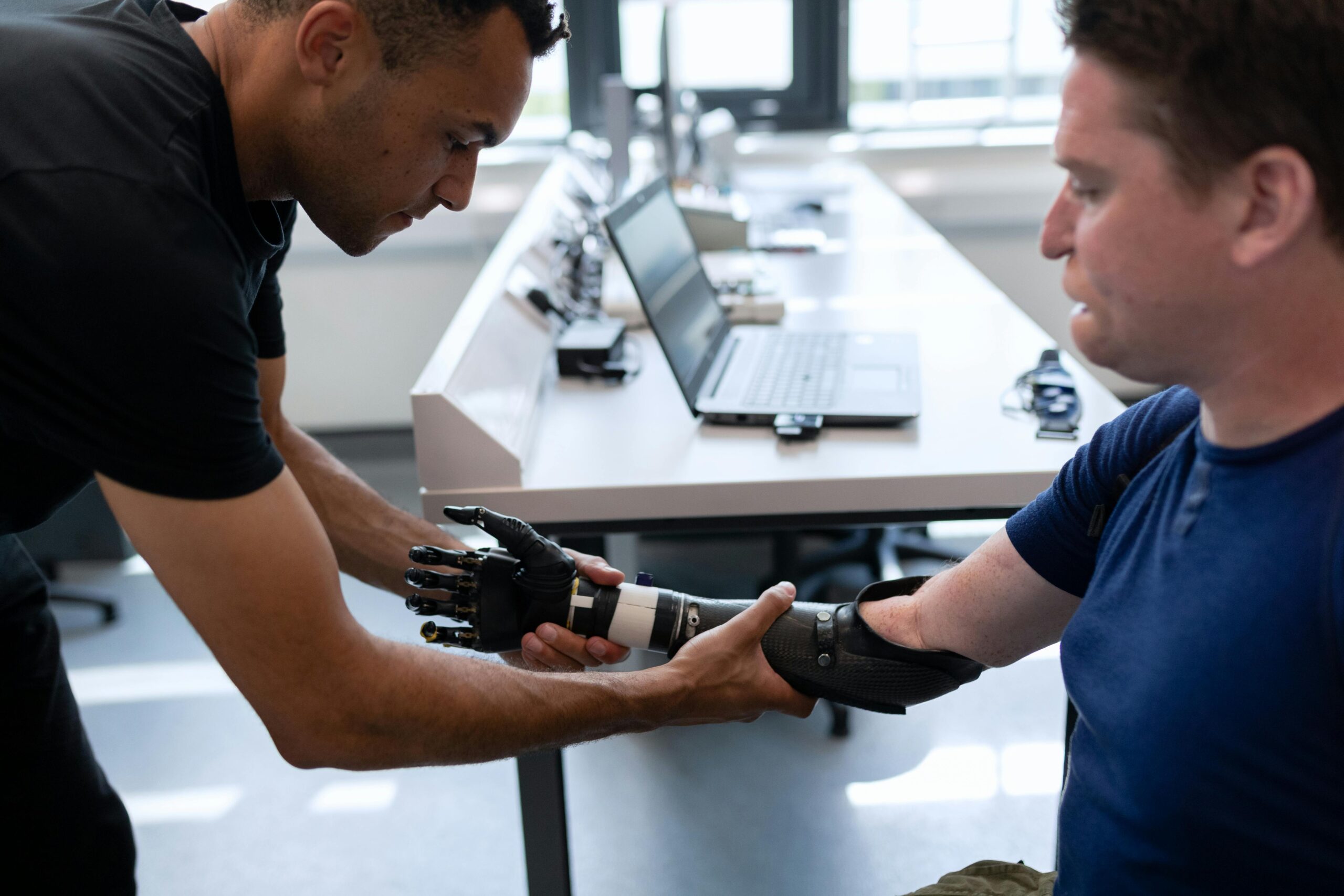
For decades, prosthetic fitting has been an imperfect science, relying heavily on manual measurements, physical casts, and countless adjustment appointments. The traditional process often left patients frustrated with uncomfortable devices that required extensive modifications. Today, augmented reality technology is revolutionizing this entire experience, bringing digital precision to what was once an analog, trial-and-error process.
The integration of AR into prosthetics represents more than just technological advancement—it signifies a fundamental shift in patient care philosophy. By overlaying digital information onto the physical world, prosthetists can now visualize fitting challenges before they become painful realities for patients. This predictive capability dramatically reduces the time between initial consultation and comfortable, functional prosthetic use.
Understanding the Current Challenges in Prosthetic Fitting
Before exploring how augmented reality solves existing problems, it’s essential to understand the traditional obstacles that have plagued prosthetic fitting for generations. The conventional process involves creating plaster casts of residual limbs, manually measuring dimensions, and fabricating devices based on these static snapshots of anatomy.
However, residual limbs are far from static. They change volume throughout the day due to fluid fluctuations, swelling, and activity levels. A prosthetic socket that fits perfectly in the morning might become uncomfortably loose by afternoon or painfully tight after exercise. This dynamic nature of human anatomy has always been the Achilles heel of traditional prosthetic design.
Additionally, communication barriers between patients and prosthetists often complicate the fitting process. Patients struggle to articulate exactly where discomfort occurs or how pressure points develop during different activities. Prosthetists, in turn, must interpret these subjective descriptions and translate them into physical adjustments—a process that frequently requires multiple iterations and appointments.
🔬 How Augmented Reality Transforms the Fitting Process
Augmented reality brings unprecedented visualization capabilities to prosthetic design and fitting. Using AR-enabled devices like tablets or specialized glasses, prosthetists can scan a patient’s residual limb and immediately see a 3D digital model overlaid onto the physical anatomy. This real-time visualization allows for precise measurements that capture subtle contours traditional methods miss entirely.
The technology goes beyond simple measurement. Advanced AR systems can simulate how different prosthetic socket designs will interact with the patient’s specific anatomy before any physical fabrication begins. Prosthetists can virtually “try on” various design iterations, adjusting socket depth, wall thickness, and pressure relief areas while the patient provides immediate feedback on what they see and conceptually understand.
This collaborative visualization bridges the communication gap that has historically plagued prosthetic fitting. When patients can see exactly what the prosthetist is proposing through AR visualization, they can provide more informed feedback. Instead of saying “it hurts somewhere around here,” patients can point to specific areas on the AR model and discuss precise modifications needed for optimal comfort.
Dynamic Fitting Analysis Through AR Technology
One of the most revolutionary aspects of AR in prosthetics is dynamic analysis capability. Traditional fitting occurs while patients are stationary—sitting or standing still during casting and initial fitting sessions. However, prosthetics must function during movement, and this is where many comfort issues arise.
AR systems can now track limb volume changes and socket interaction during various activities. Patients can walk, sit, climb stairs, or perform job-specific movements while AR sensors capture how the residual limb behaves within the socket. This dynamic data reveals pressure points, areas of excessive movement, and potential irritation zones that would never appear during static fitting.
The captured information creates a comprehensive picture of the prosthetic’s performance across different scenarios. Prosthetists can then make data-driven decisions about socket modifications, cushioning placement, and structural reinforcements in areas experiencing the highest stress. This evidence-based approach significantly reduces the guesswork that has traditionally characterized prosthetic adjustments.
📊 Precision Measurement and Custom Manufacturing
Augmented reality scanning achieves measurement precision that human hands and traditional tools simply cannot match. AR systems capture measurements accurate to fractions of a millimeter, documenting every ridge, valley, and contour of the residual limb’s surface. This level of detail enables truly custom prosthetic designs tailored to each patient’s unique anatomy.
These precise digital models integrate seamlessly with computer-aided design software and 3D printing technology. The entire workflow—from scanning to final fabrication—remains digital until the physical prosthetic is manufactured. This eliminates the cumulative errors that occur when information is translated between different mediums in traditional processes.
The benefits extend beyond initial fabrication. Digital models stored in patient records allow for consistent reproduction if replacement sockets are needed. As patients’ residual limbs change over time due to muscle development, weight fluctuation, or natural aging, prosthetists can compare new AR scans against historical data to understand exactly how anatomy has evolved and adjust designs accordingly.
Enhanced Patient Education and Expectation Management
Augmented reality serves as a powerful educational tool that helps patients understand their prosthetic journey. Through AR visualization, patients can see cross-sections of socket designs, understand how suspension systems work, and visualize the biomechanics of their specific prosthetic solution. This transparency reduces anxiety and builds confidence in the treatment process.
Managing expectations is crucial in prosthetic care. AR allows prosthetists to show patients realistic simulations of what their prosthetic will look like, how it will attach to their body, and what range of motion they can reasonably expect. These visual explanations are far more effective than verbal descriptions or static images, leading to higher patient satisfaction and fewer misunderstandings.
The technology also facilitates informed decision-making when patients choose between different prosthetic options. By visualizing various component choices—different feet, knee mechanisms, or cosmetic finishes—patients can make selections based on clear understanding rather than abstract descriptions. This participatory approach empowers patients and increases their investment in successful outcomes.
🎯 Real-Time Adjustment and Immediate Feedback Loops
Perhaps the most transformative aspect of AR in prosthetic fitting is the ability to make virtual adjustments and immediately see their effects. During fitting sessions, prosthetists can digitally modify socket dimensions, relief areas, or interface angles while the AR system shows how these changes affect limb contact and pressure distribution.
This immediate feedback dramatically accelerates the optimization process. Rather than making physical modifications, having the patient try the prosthetic, gathering feedback, removing the prosthetic, making another round of changes, and repeating the cycle—the entire process occurs virtually first. Only once the optimal configuration is achieved in AR does physical fabrication or modification begin.
The time savings are substantial. What traditionally required five to ten appointments over several months can often be accomplished in two to three sessions. Patients spend less time traveling to appointments, less time in uncomfortable trial prosthetics, and reach optimal comfort significantly faster. This efficiency also reduces healthcare costs while improving outcomes—a rare combination in modern medicine.
Integration with Artificial Intelligence and Machine Learning
The most advanced AR prosthetic systems incorporate artificial intelligence that learns from thousands of previous fittings. These AI algorithms analyze patterns between residual limb anatomy, socket designs, and patient comfort outcomes. When scanning a new patient, the system can suggest optimal socket designs based on successful configurations for patients with similar anatomical characteristics.
This AI assistance doesn’t replace prosthetist expertise—it enhances it. Experienced clinicians still make final decisions, but they’re informed by data-driven insights that would be impossible to compile manually. The technology identifies subtle anatomical features that correlate with specific fitting challenges, alerting prosthetists to potential issues before they manifest as patient discomfort.
Machine learning systems also improve continuously. Each fitting outcome—successful or problematic—feeds back into the algorithm, refining recommendations for future patients. This creates a virtuous cycle where prosthetic fitting becomes progressively more accurate and efficient as more data accumulates in the system.
🌍 Expanding Access to Quality Prosthetic Care
Augmented reality technology has profound implications for prosthetic care accessibility, particularly in underserved regions. Traditional prosthetic fitting requires highly specialized expertise that’s concentrated in major medical centers. AR systems can partially democratize this expertise by guiding less experienced practitioners through complex fitting processes.
Remote consultation capabilities enabled by AR allow expert prosthetists to virtually supervise fittings performed by local practitioners in remote areas. The expert can see exactly what the local clinician sees through AR visualization, providing real-time guidance and ensuring quality care without requiring patient travel to distant specialized centers.
In developing regions where prosthetic services are scarce, AR-guided fitting protocols can train local healthcare workers to provide basic prosthetic services. While complex cases still require specialist involvement, AR technology enables competent local care for straightforward fittings, dramatically expanding the number of amputees who can access life-changing prosthetic devices.
Addressing Socket Comfort: The Ultimate Priority
Socket comfort remains the single most important factor in prosthetic success. Even the most advanced prosthetic components are useless if the socket causes pain that prevents wearing the device. Augmented reality’s greatest contribution to prosthetics may be its ability to optimize socket comfort through precise, individualized design.
AR systems map pressure distribution across the residual limb surface with extraordinary detail. Heat mapping overlays show precisely where excessive pressure occurs, where relief is needed, and where additional support would improve stability. This objective data removes ambiguity from the comfort optimization process.
The technology also accounts for tissue characteristics that vary across the residual limb. Some areas can tolerate significant pressure, while others are exquisitely sensitive. AR scanning combined with patient feedback creates a comprehensive map of pressure tolerance that guides socket shaping with unprecedented precision. The result is sockets that distribute forces optimally, maximizing comfort while maintaining functional stability.
🔄 Long-Term Monitoring and Adaptive Adjustments
Prosthetic needs change over time, and augmented reality facilitates longitudinal monitoring that ensures continued optimal fit. Regular AR scans document how residual limbs evolve, allowing prosthetists to anticipate when modifications will be needed rather than waiting for patients to report problems.
Some advanced prosthetic systems incorporate continuous monitoring sensors that feed data to AR visualization platforms. These systems track daily volume fluctuations, activity patterns, and socket wear patterns. When concerning trends emerge—such as increasing asymmetry in pressure distribution—the system alerts both patient and prosthetist that assessment is needed.
This proactive approach prevents minor issues from developing into major problems. A small pressure point detected early can be addressed with minor modification, while the same issue ignored for months might cause tissue damage requiring extensive healing time and socket replacement. AR-enabled monitoring transforms prosthetic care from reactive troubleshooting to proactive optimization.
Training the Next Generation of Prosthetists
Augmented reality is revolutionizing prosthetic education by providing immersive training experiences impossible with traditional methods. Students can practice fitting virtual patients with diverse anatomies, making mistakes and learning from them without risk to actual patients. The AR system provides immediate feedback on fitting decisions, accelerating skill development.
Complex anatomical concepts become clearer when students can visualize them in three dimensions through AR. Understanding how bone structures, soft tissue characteristics, and biomechanical forces interact is far easier when these elements can be viewed, rotated, and manipulated in augmented space. This deeper understanding translates into better clinical decision-making.
Experienced prosthetists also benefit from AR training systems when learning new techniques or familiarizing themselves with novel prosthetic technologies. The systems provide safe environments to experiment with unfamiliar approaches, building confidence before applying new methods with actual patients. This continuous learning capability ensures the prosthetic field keeps pace with rapid technological advancement.
⚡ The Future Landscape of AR-Enhanced Prosthetics
Current AR applications in prosthetics represent just the beginning of what’s possible. Emerging technologies promise even more revolutionary capabilities. Holographic projection systems may soon allow patients and prosthetists to manipulate life-sized 3D models of proposed prosthetics using natural hand gestures, making the design process even more intuitive and collaborative.
Integration with smart prosthetic components will create closed-loop systems where the prosthetic itself provides performance data that AR systems visualize for optimization. Imagine a prosthetic knee that reports exactly how much resistance it provides during different activities, with AR overlays showing how adjustment would affect gait mechanics. This real-time biomechanical feedback will enable precision tuning unimaginable with current technology.
Neural interface research may eventually allow AR systems to visualize sensory feedback that prosthetic sensors detect. As prosthetics gain touch sensitivity and proprioceptive capabilities, AR could help patients understand and interpret these new sensations during the adaptation process, accelerating neural integration of artificial limbs.
Overcoming Implementation Challenges and Barriers
Despite tremendous potential, AR prosthetic technology faces implementation challenges that must be addressed for widespread adoption. Cost remains a significant barrier, as AR systems require substantial initial investment that smaller prosthetic practices struggle to afford. However, costs are declining as technology matures and economies of scale develop.
Clinician training represents another challenge. Prosthetists trained in traditional methods must learn entirely new workflows and develop digital literacy skills. Professional organizations are developing standardized AR training curricula, but comprehensive education programs remain limited. Overcoming this requires commitment from both individual practitioners and the prosthetic profession broadly.
Regulatory frameworks are still catching up with AR technology. Standards for measurement accuracy, data security, and clinical validation of AR-designed prosthetics are evolving. Establishing clear guidelines that ensure patient safety while not stifling innovation requires collaboration between regulatory agencies, technology developers, and clinical practitioners.
🏆 Measuring Success: Outcomes and Patient Satisfaction
Early outcome data from AR-enhanced prosthetic fitting is remarkably positive. Studies show reduced fitting time, fewer adjustment appointments, and higher patient satisfaction scores compared to traditional methods. More importantly, patients report wearing their prosthetics for longer daily durations, indicating superior comfort—the ultimate measure of fitting success.
Functional outcomes also show improvement. Better-fitting sockets enable more efficient gait mechanics, reducing energy expenditure during walking. This increased efficiency translates to greater mobility and less fatigue, improving quality of life in meaningful ways. Patients can participate more fully in work, recreation, and daily activities when their prosthetics truly fit well.
Long-term data will determine whether AR-fitted prosthetics reduce complication rates like skin breakdown, bone spurs, or chronic pain conditions. Early indications suggest that the precise pressure distribution AR enables should minimize these issues, but years of follow-up are needed to confirm these benefits definitively.
The revolution in prosthetic fitting and comfort driven by augmented reality innovation represents one of healthcare technology’s most patient-centered advances. By bringing digital precision to an analog challenge, AR transforms prosthetic care from an iterative compromise into an optimized, individualized science. As technology continues evolving and becoming more accessible, millions of amputees worldwide will benefit from prosthetics that fit better, feel more comfortable, and function more naturally than ever before possible. This isn’t just technological progress—it’s genuine improvement in human lives, restoring mobility, independence, and dignity to those who have lost limbs.