
Augmented Reality is revolutionizing education by creating interactive learning environments that transform abstract concepts into tangible, three-dimensional experiences students can explore and manipulate.

🚀 The Dawn of Immersive Learning Experiences
Education stands at a pivotal crossroads where traditional teaching methods merge with cutting-edge technology. Augmented Reality (AR) has emerged as a transformative force, reshaping how students absorb information, engage with content, and develop critical thinking skills. Unlike passive learning approaches, AR creates dynamic educational ecosystems where learners become active participants in their knowledge acquisition journey.
The integration of AR technology in classrooms isn’t merely about novelty—it addresses fundamental challenges in modern education. Students today require more than textbooks and lectures; they need experiences that resonate with their digital-native mindset. AR bridges the gap between theoretical knowledge and practical application, making learning memorable, engaging, and profoundly effective.
Educational institutions worldwide are witnessing remarkable improvements in student engagement, retention rates, and comprehension levels when AR tools are implemented strategically. This technological evolution represents not just a trend but a fundamental shift in pedagogical approaches that recognizes diverse learning styles and cognitive preferences.
📚 Understanding Augmented Reality in Educational Contexts
Augmented Reality overlays digital information onto the physical world, creating a blended reality that enhances perception and interaction. In educational settings, this technology transforms static learning materials into interactive experiences. Students can examine a beating human heart in 3D, explore ancient civilizations by walking through virtual reconstructions, or dissect complex molecular structures by simply pointing their device at a textbook page.
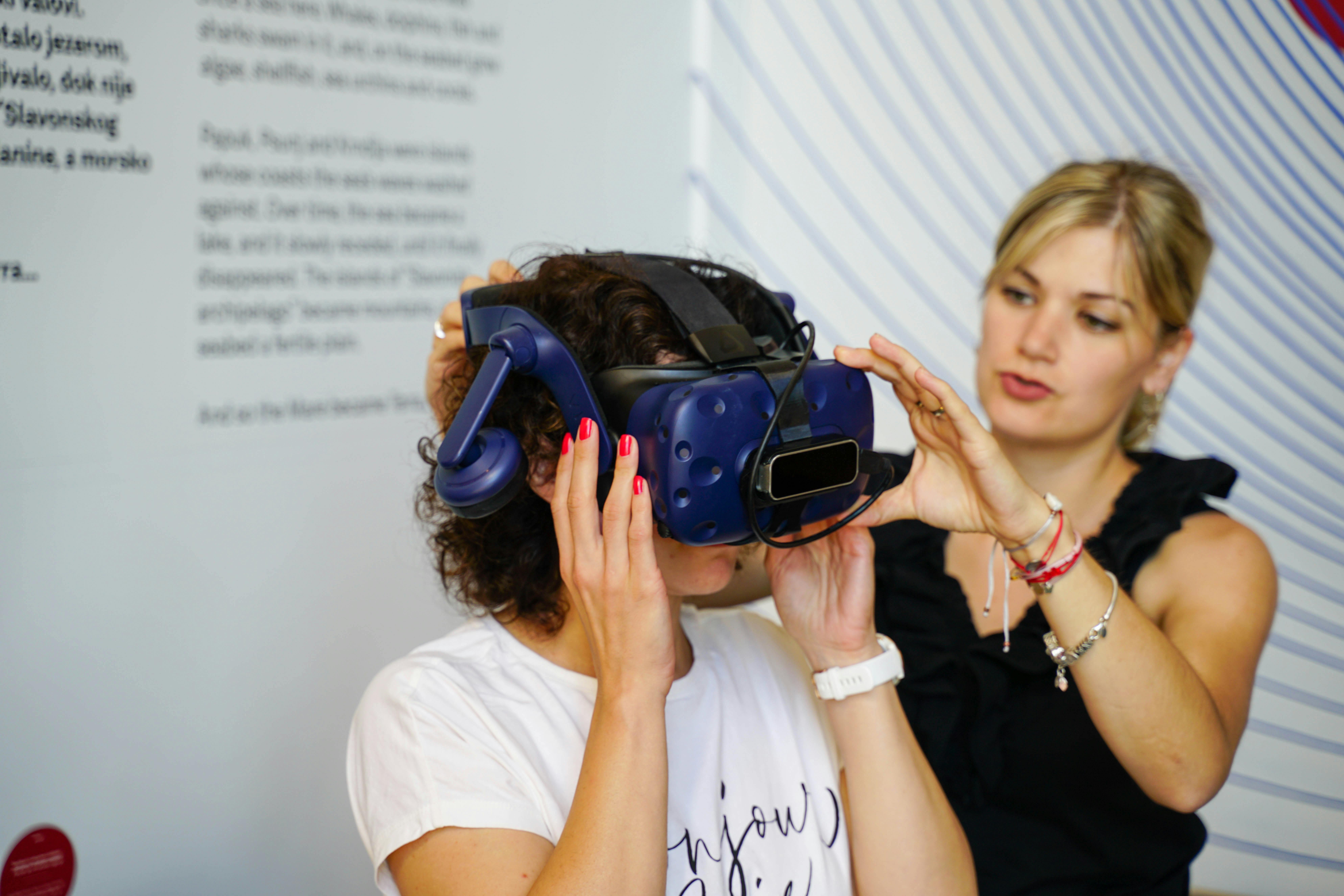
The distinction between AR and Virtual Reality (VR) is crucial for educational applications. While VR creates completely immersive environments that isolate users from their physical surroundings, AR maintains connection with the real world while augmenting it with digital enhancements. This characteristic makes AR particularly suitable for classroom environments where teachers need to maintain supervision and facilitate collaborative learning experiences.
Modern AR educational tools utilize smartphone cameras, tablets, or specialized headsets to recognize markers or surfaces, then project contextually relevant digital content. The technology has become increasingly accessible, with most students already possessing devices capable of delivering AR experiences through their smartphones or tablets.
Core Technologies Powering Educational AR
Several technological components work harmoniously to deliver seamless AR educational experiences. Computer vision algorithms enable devices to recognize objects, images, or spatial environments. Simultaneous Localization and Mapping (SLAM) technology allows AR applications to understand three-dimensional spaces and position digital objects accurately within them.
Depth sensors and advanced cameras provide the spatial awareness necessary for realistic object placement, while powerful processors handle the complex computations required to render high-quality 3D models in real-time. Cloud computing infrastructure supports the delivery of extensive content libraries, ensuring students can access comprehensive educational resources on demand.
🎯 Transformative Benefits for Modern Learners
The implementation of AR in educational environments delivers measurable advantages that extend beyond superficial engagement. Research consistently demonstrates that students using AR-enhanced learning materials show improved knowledge retention compared to traditional methods. The multisensory nature of AR experiences creates stronger neural pathways, making information more memorable and accessible during recall.
Visual and kinesthetic learners particularly benefit from AR’s interactive nature. Complex spatial relationships, abstract concepts, and processes that occur over time become comprehensible when students can manipulate and observe them from multiple perspectives. A chemistry student can rotate a molecule to understand its three-dimensional structure, while a history student can witness historical events unfold in their classroom space.
Fostering Deeper Engagement and Motivation
Student motivation dramatically increases when learning incorporates game-like elements and interactive challenges. AR naturally integrates these engagement mechanisms while maintaining educational integrity. The excitement of discovery, the satisfaction of solving problems through spatial manipulation, and the joy of seeing concepts materialize before their eyes transform learning from an obligation into an adventure.
Collaborative learning experiences flourish in AR environments. Multiple students can simultaneously interact with the same digital objects, discussing observations, formulating hypotheses, and collectively solving problems. This social dimension of AR learning builds communication skills while reinforcing academic content through peer interaction and shared discovery.
Accessibility and Inclusive Education
AR technology demonstrates remarkable potential for supporting diverse learners, including those with learning differences or physical disabilities. Visual impairments can be partially compensated through audio descriptions triggered by AR markers, while hearing-impaired students benefit from visual representations of auditory information. Language learners can point their devices at objects to receive instant translations with pronunciation guides.
The self-paced nature of many AR educational applications allows students to progress according to their individual learning speeds without feeling pressured or held back. This personalization addresses one of traditional education’s persistent challenges—accommodating diverse abilities within a single classroom structure.
🏫 Practical Applications Across Academic Disciplines
AR’s versatility enables transformative applications across virtually every academic subject. In STEM education, AR excels at visualizing abstract concepts that traditionally challenge students. Mathematical functions become three-dimensional graphs students can walk around and examine from any angle. Physics simulations demonstrate force vectors, energy transfers, and wave behaviors in real-time, responsive to student manipulation.
Biology classes leverage AR to explore anatomical structures with unprecedented detail. Students can examine organ systems, observe cellular processes, and understand physiological functions without requiring expensive cadavers or microscopy equipment. Medical and nursing education programs use AR for surgical procedure training, allowing students to practice complex techniques in risk-free environments before working with actual patients.
Humanities and Social Sciences Enhanced Through AR
History education becomes visceral when students witness reconstructed ancient cities, battlefields, or significant historical moments overlaid onto their present environment. AR applications can place historical figures in classroom spaces, deliver first-person narratives, and present primary source documents in context, creating emotional connections that textbooks alone cannot achieve.
Geography students explore terrain features, climate patterns, and cultural landmarks through interactive globe projections or location-based AR experiences that provide contextual information about their immediate surroundings. Art education benefits from AR applications that allow students to virtually place masterpieces in their environment, examine brushwork details, and understand artistic techniques through layered information displays.
Language Learning Revolution
Language acquisition accelerates when AR provides contextual vocabulary learning. Students point their devices at objects to receive instant translations, pronunciation guides, and usage examples. Conversational practice becomes more natural through AR companions that respond to student speech and provide real-time feedback on pronunciation and grammar.
Cultural immersion experiences, traditionally requiring expensive travel, become accessible through AR applications that recreate foreign environments, simulate social interactions, and present authentic cultural contexts for language practice. This contextual learning strengthens language retention and builds practical communication skills.
💡 Implementation Strategies for Educational Institutions
Successfully integrating AR into educational programs requires thoughtful planning and strategic implementation. Institutions should begin with clear learning objectives, identifying specific educational outcomes AR can enhance rather than implementing technology for its own sake. Pilot programs in select classrooms allow educators to refine approaches before broader deployment.
Teacher training represents a critical success factor. Educators need hands-on experience with AR tools, understanding both technical operation and pedagogical integration strategies. Professional development should emphasize how AR complements existing curricula rather than replacing proven teaching methods entirely.
Infrastructure and Resource Considerations
While AR technology has become increasingly accessible, institutions must assess their existing infrastructure. Reliable high-speed internet connectivity supports cloud-based AR applications and content streaming. Device availability determines implementation scope—schools can leverage student-owned smartphones through BYOD (Bring Your Own Device) policies or invest in dedicated tablets or AR headsets for shared classroom use.
Content selection requires careful evaluation. Quality AR educational applications should align with curriculum standards, offer assessment capabilities, and provide teachers with analytics to monitor student progress. Open educational resources and educator communities share AR lesson plans and best practices, reducing development burdens for individual teachers.
Building a Sustainable AR Program
Long-term sustainability depends on continuous evaluation and iteration. Schools should establish metrics for measuring AR’s educational impact, gathering feedback from students and teachers, and adjusting implementation strategies accordingly. Building internal expertise through teacher champions who become AR specialists creates support networks and encourages peer-to-peer learning among faculty.
Budget considerations extend beyond initial technology purchases to include ongoing content subscriptions, device maintenance, and regular professional development. Grant opportunities, educational technology partnerships, and phased implementation approaches can make AR adoption financially feasible for institutions with limited resources.
🌟 Overcoming Challenges and Addressing Concerns
Despite AR’s tremendous potential, educators and administrators rightfully consider implementation challenges. Technical difficulties, including device compatibility issues, software bugs, and connectivity problems, can disrupt learning experiences. Selecting reliable platforms with strong technical support and backup lesson plans for technology failures mitigates these risks.
Screen time concerns arise frequently in discussions about educational technology. AR’s blended reality approach offers advantages over fully screen-based learning by maintaining physical world connections and often incorporating movement and spatial interaction. Setting appropriate usage boundaries and balancing AR activities with traditional methods addresses these concerns while maximizing benefits.
Privacy and Safety Considerations
Educational AR applications must comply with student privacy regulations, including COPPA and FERPA in the United States and GDPR in Europe. Institutions should carefully review data collection practices, ensuring applications don’t gather unnecessary personal information or share student data with third parties without appropriate consent and safeguards.
Physical safety requires attention, particularly when AR experiences encourage movement or distract students from their surroundings. Establishing clear usage guidelines, designating safe spaces for AR activities, and supervising student interactions with technology prevents accidents and ensures responsible use.
🔮 The Evolving Landscape of Educational AR
Emerging technologies promise to expand AR’s educational potential dramatically. Advances in artificial intelligence enable adaptive AR experiences that personalize content difficulty, pacing, and presentation styles based on individual student performance and learning preferences. Machine learning algorithms analyze interaction patterns to identify struggling students and suggest targeted interventions.
Next-generation AR hardware, including lightweight glasses with improved field-of-view and extended battery life, will make immersive experiences more comfortable and practical for extended classroom use. Haptic feedback technologies add tactile dimensions to AR learning, allowing students to “feel” digital objects, further enhancing realism and engagement.
The Convergence of Educational Technologies
AR increasingly integrates with complementary educational technologies, creating powerful learning ecosystems. Learning Management Systems (LMS) incorporate AR content alongside traditional materials, providing seamless experiences for students. Assessment tools track AR interaction data, offering teachers detailed insights into student comprehension and engagement patterns.
Social learning platforms enable students to share AR creations, collaborate on projects across distances, and participate in global educational communities. These connections expose learners to diverse perspectives while developing digital citizenship and collaboration skills essential for future success.
🎓 Preparing Students for an AR-Enhanced Future
Beyond immediate educational benefits, AR literacy prepares students for workplaces increasingly incorporating these technologies. Industries from architecture and engineering to healthcare and retail utilize AR for training, design, and customer interaction. Students familiar with AR interfaces and spatial computing concepts gain competitive advantages in evolving job markets.
Creating AR content, not just consuming it, develops valuable skills in digital design, storytelling, and technical implementation. Student-created AR projects foster creativity while teaching practical application development, 3D modeling, and user experience design principles applicable across numerous career paths.
The problem-solving approaches students develop through AR experiences—spatial reasoning, systems thinking, and experimental iteration—transfer to diverse challenges beyond technology-specific applications. These metacognitive skills represent lasting educational outcomes that extend well beyond individual subject matter mastery.
🌐 Building Communities Around Educational AR
Educators implementing AR benefit enormously from connecting with peers navigating similar journeys. Professional learning communities, both online and at conferences, share lesson plans, troubleshooting strategies, and innovative applications. These networks accelerate individual learning curves and prevent redundant effort across institutions.
Industry partnerships between educational institutions and AR technology companies create mutually beneficial relationships. Companies gain valuable feedback on product development and real-world testing environments, while schools access cutting-edge tools, training, and sometimes subsidized or donated equipment.
Student involvement in AR communities cultivates leadership and advocacy skills. Student technology teams can support AR implementation, provide peer training, and develop custom content addressing local curriculum needs. These opportunities build confidence while creating authentic learning experiences beyond traditional academic structures.
✨ Realizing the Full Potential of Immersive Education
The transformation of education through Augmented Reality represents more than technological advancement—it embodies a fundamental reimagining of teaching and learning. AR creates opportunities for students to explore, experiment, and engage with content in ways that honor diverse learning styles while building skills essential for navigating an increasingly complex, technology-integrated world.
Successful implementation requires commitment beyond initial enthusiasm, including sustained investment in infrastructure, professional development, and continuous improvement. The rewards—increased student engagement, improved learning outcomes, and preparation for future challenges—justify these efforts manifold.
As AR technology continues evolving and becoming more accessible, the question facing educational institutions shifts from “whether” to “how” to integrate these powerful tools effectively. Early adopters gain valuable experience, establish leadership positions, and most importantly, provide their students with enhanced educational experiences that traditional methods alone cannot deliver.
The future of education is not entirely virtual, nor is it completely traditional—it exists in the augmented space where digital enhancement enriches physical reality, where technology serves pedagogy, and where students discover that learning can be as engaging and dynamic as the world they’ll soon enter as graduates prepared for whatever challenges await.