
Augmented Reality is revolutionizing how students learn by creating interactive experiences that bridge the gap between digital content and the physical world, transforming passive observation into active participation.

🚀 The Dawn of Immersive Learning Experiences
Education has reached a pivotal moment where traditional methods are being enhanced by cutting-edge technology. The integration of Augmented Reality (AR) into educational settings represents more than just a technological upgrade—it’s a fundamental shift in how knowledge is delivered, absorbed, and retained. Students no longer need to imagine abstract concepts when they can visualize them in three-dimensional space, manipulate virtual objects, and explore complex systems through intuitive interactions.
The power of AR lies in its ability to overlay digital information onto the real world, creating a blended learning environment that engages multiple senses simultaneously. This multisensory approach has proven to significantly improve information retention rates, with studies showing that students remember up to 90% of what they do compared to just 10% of what they read. By transforming textbooks into interactive portals and classrooms into dynamic laboratories, AR technology is unlocking unprecedented levels of educational engagement.
Understanding the AR Learning Revolution
Augmented Reality in education isn’t about replacing teachers or traditional learning materials—it’s about amplifying their effectiveness. When students can point their devices at a history textbook and watch ancient civilizations come to life, or examine the human cardiovascular system in full 3D detail right in their classroom, learning becomes an adventure rather than a chore.
The technology works by using cameras, sensors, and sophisticated software to recognize real-world objects and overlay relevant digital content. This seamless integration means that learning can happen anywhere—in the classroom, at home, in museums, or even outdoors. The flexibility of AR learning tools makes education more accessible and adaptable to different learning styles and environments.
How AR Transforms Abstract Concepts into Tangible Experiences
One of the greatest challenges in education has always been making abstract concepts concrete. Mathematical equations, scientific theories, and historical events can feel distant and disconnected from students’ everyday lives. AR technology bridges this gap by providing contextualized, visual representations that make complex ideas comprehensible and memorable.
Physics students can now visualize electromagnetic fields, watch molecules bond and break apart, or observe planetary orbits from any angle. Biology lessons transform into explorations where students can dissect virtual specimens without ethical concerns or safety risks. Geography classes become immersive journeys where students can stand at the base of Mount Everest or explore the depths of the Mariana Trench—all from their desks.
📱 The Technology Behind Educational AR
Modern smartphones and tablets have become powerful AR platforms, equipped with advanced processors, high-resolution cameras, and sophisticated sensors that make immersive learning experiences accessible to millions of students worldwide. The democratization of AR technology means that schools don’t need expensive specialized equipment to implement these transformative learning tools.
Applications leverage marker-based recognition, where specific images trigger AR content, or markerless tracking, which uses environmental features to anchor virtual objects in space. Some platforms incorporate gesture recognition, allowing students to interact with virtual content through natural hand movements, while others use voice commands to navigate through educational experiences.
Key Components of Effective AR Learning Applications
Successful educational AR platforms share several critical characteristics. They must be intuitive enough for students and teachers to use without extensive training, yet sophisticated enough to deliver meaningful educational value. The content must align with curriculum standards while providing experiences that would be impossible or impractical with traditional methods.
Real-time feedback mechanisms are essential, allowing students to experiment, make mistakes, and learn through trial and error in safe virtual environments. The best AR educational tools also include assessment features that help teachers track student progress and identify areas where additional support might be needed.
💡 Practical Applications Across Subject Areas
The versatility of AR technology means it can enhance virtually every subject in the curriculum. In STEM fields, students can conduct virtual chemistry experiments, build and test engineering designs, or program interactive robots. Language learners can immerse themselves in virtual environments where they practice conversations with AI characters or see vocabulary words attached to real-world objects.
Art and design students benefit from AR tools that allow them to visualize their creations in real spaces before committing to physical materials. History lessons become time-travel experiences where students can witness historical events unfold, explore ancient architectures at full scale, or interact with historical figures brought to life through AI-powered avatars.
Mathematics: Making Numbers Come Alive
Mathematics, often considered one of the most challenging subjects, becomes significantly more approachable with AR visualization. Geometric shapes transform from flat textbook diagrams into manipulable 3D objects that students can rotate, dissect, and reassemble. Algebraic functions can be visualized as dynamic graphs that change in real-time as students adjust variables, making abstract relationships concrete and understandable.
Calculus students can visualize derivatives and integrals as physical transformations rather than purely symbolic operations. Statistics becomes more engaging when students can see data distributions in three-dimensional space and manipulate datasets to observe how changes affect outcomes. This hands-on approach to mathematical concepts builds intuitive understanding that traditional methods struggle to achieve.
Science: Virtual Laboratories Without Limitations
Science education particularly benefits from AR’s ability to simulate environments and phenomena that would be dangerous, expensive, or impossible to demonstrate in traditional classrooms. Students can safely observe chemical reactions that would be hazardous in real life, manipulate atomic structures to understand molecular bonding, or explore ecosystems ranging from microscopic cellular environments to entire planetary systems.
Biology students can examine human anatomy in unprecedented detail, zooming through layers from skeletal structure to organ systems to cellular components. Environmental science becomes more impactful when students can visualize pollution effects, climate change impacts, or ecosystem dynamics through interactive AR simulations that show cause-and-effect relationships over compressed timeframes.
🎯 Engagement Strategies That Actually Work
Simply having AR technology available doesn’t automatically guarantee increased engagement—implementation strategy matters enormously. Successful integration requires thoughtful planning, teacher training, and alignment with pedagogical best practices. The technology should enhance learning objectives rather than distract from them.
Gamification elements, when appropriately implemented, can boost motivation and persistence. Progress tracking, achievement badges, and collaborative challenges transform learning into engaging experiences that students actively pursue. However, these elements must support educational goals rather than becoming ends in themselves.
Collaborative Learning in Shared AR Spaces
One of AR’s most powerful features is the ability to create shared experiences where multiple students interact with the same virtual content simultaneously. Collaborative AR learning environments enable group problem-solving, peer teaching, and social learning that builds both subject knowledge and critical soft skills like communication and teamwork.
Students can work together to solve complex puzzles, build virtual structures, conduct group experiments, or explore historical scenarios where each participant plays a different role. These collaborative experiences mirror real-world professional environments, preparing students for future careers while making current learning more dynamic and socially engaging.
🌟 Measuring Impact and Learning Outcomes
The educational value of AR technology extends beyond anecdotal enthusiasm—research consistently demonstrates measurable improvements in learning outcomes. Studies show enhanced retention rates, deeper conceptual understanding, increased student motivation, and improved attitudes toward challenging subjects when AR is effectively integrated into instruction.
Assessment data reveals that students using AR learning tools demonstrate better spatial reasoning skills, improved problem-solving abilities, and stronger connections between theoretical knowledge and practical applications. These cognitive benefits extend beyond the specific content being taught, developing transferable skills valuable across all academic and professional domains.
Data-Driven Insights for Continuous Improvement
Modern AR educational platforms incorporate analytics that provide teachers with valuable insights into student engagement patterns, common misconceptions, and individual learning progress. This data enables personalized instruction, allowing educators to identify which students need additional support and which are ready for more advanced challenges.
Real-time feedback loops allow for immediate instructional adjustments, making teaching more responsive and effective. Teachers can see which AR activities generate the most engagement, which concepts students struggle with most frequently, and how different students interact with the technology, enabling evidence-based decisions about curriculum design and instructional strategies.
⚡ Overcoming Implementation Challenges
Despite its tremendous potential, AR integration faces practical challenges that schools and educators must address. Infrastructure requirements, including reliable internet connectivity and adequate devices, can present obstacles, particularly in under-resourced schools. Professional development for teachers is essential—educators need training not just in how to use AR tools, but in how to integrate them effectively into pedagogical practice.
Content quality varies widely across available AR educational applications. Schools must carefully evaluate resources to ensure they align with curriculum standards, provide accurate information, and offer genuine educational value rather than mere technological novelty. Budget constraints require strategic decisions about which AR tools provide the best return on investment for specific educational goals.
Building Sustainable AR Learning Programs
Successful long-term AR integration requires institutional commitment beyond initial enthusiasm. Schools need clear implementation plans that address technical support, ongoing teacher training, content curation, and regular assessment of effectiveness. Partnerships with technology providers, educational institutions, and other schools can provide valuable resources and shared learning experiences.
Starting small with pilot programs allows schools to build expertise, identify challenges, and demonstrate success before scaling up. Early adopter teachers can become internal champions and trainers, creating sustainable models for broader implementation. Regular evaluation and adaptation ensure that AR integration continues meeting educational goals as both technology and pedagogical understanding evolve.
🔮 The Future of AR in Education
As AR technology continues advancing, the boundaries between physical and digital learning environments will become increasingly seamless. Emerging developments in artificial intelligence will enable more personalized, adaptive AR experiences that respond to individual student needs in real-time. Haptic feedback systems will add tactile dimensions to virtual interactions, further enhancing the sense of presence and engagement.
Integration with other emerging technologies like virtual reality, artificial intelligence, and the Internet of Things will create comprehensive learning ecosystems where students move fluidly between different modes of interaction. Cloud-based platforms will enable synchronous and asynchronous collaboration across geographic boundaries, connecting students worldwide in shared learning experiences.
✨ Empowering the Next Generation of Learners
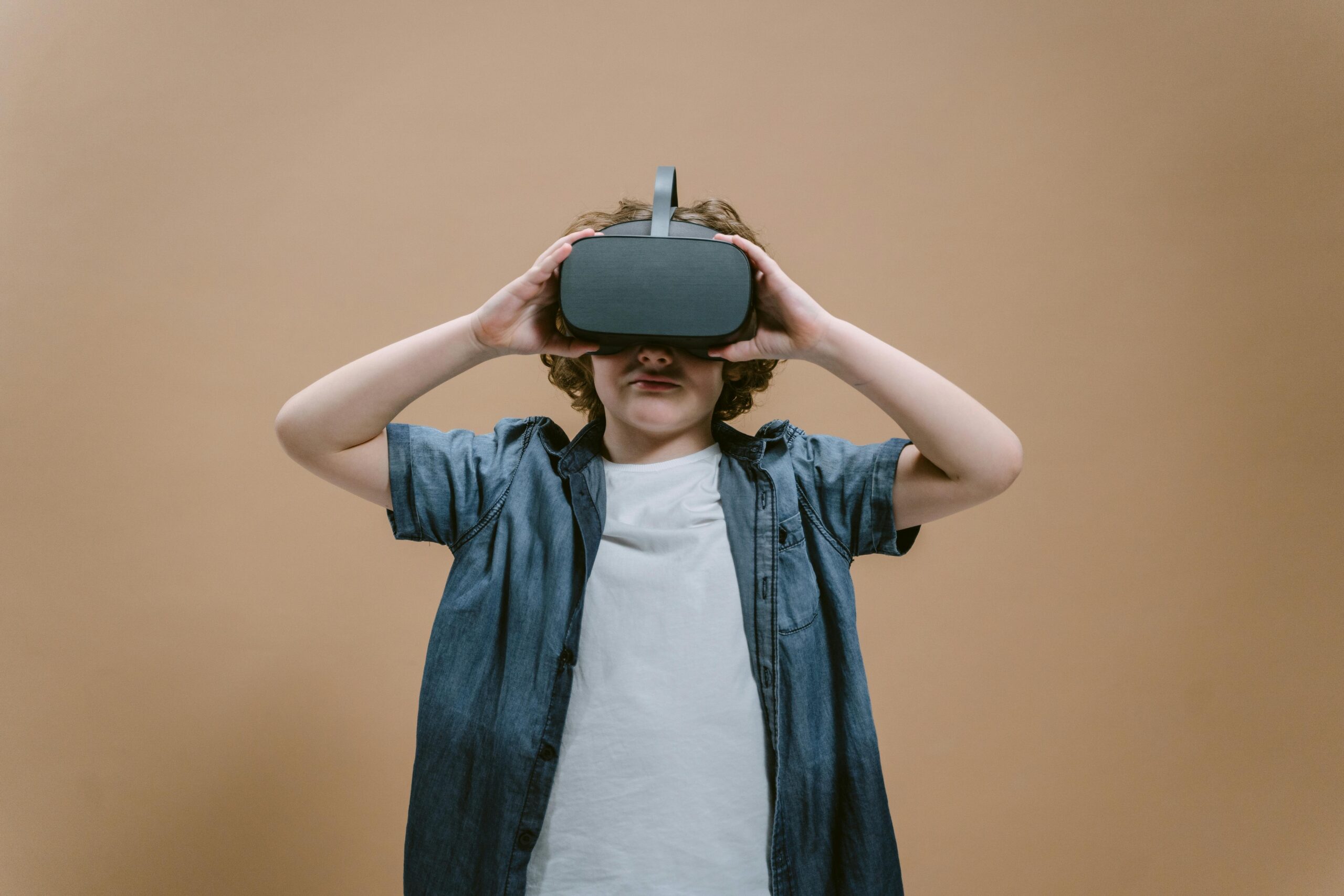
The transformation of education through immersive AR interactivity represents more than technological progress—it’s about empowering students with tools that make learning more accessible, engaging, and effective. By transforming abstract concepts into tangible experiences, AR technology helps students develop deeper understanding, stronger retention, and genuine enthusiasm for learning.
As educators, technologists, and policymakers continue refining approaches to AR integration, the focus must remain on pedagogical effectiveness rather than technological novelty. The goal isn’t to use technology for its own sake, but to leverage AR’s unique capabilities to address longstanding educational challenges and unlock potential that traditional methods cannot reach.
The students engaging with AR learning experiences today are developing skills and ways of thinking that will serve them throughout their lives. They’re learning to visualize complex systems, think spatially, solve problems creatively, and approach learning with curiosity and confidence. These capabilities will prove invaluable as they navigate an increasingly complex, technology-rich world where the ability to learn continuously and adapt rapidly becomes ever more critical.
Educational institutions that embrace immersive AR interactivity aren’t just adopting new technology—they’re participating in a fundamental reimagining of what learning can be. By creating environments where students actively explore, experiment, and engage with content in meaningful ways, we’re building a future where education is not something done to students but something they actively pursue with enthusiasm and purpose.