Augmented Reality is revolutionizing how educators approach special education, offering unprecedented opportunities to unlock the potential of students with diverse learning needs.

🌟 The Dawn of a New Educational Era
Special education has long faced challenges in providing individualized, engaging learning experiences that cater to students with varying cognitive, physical, and emotional needs. Traditional teaching methods, while valuable, often struggle to address the multisensory requirements and personalized pacing that many special needs students require. Enter Augmented Reality—a technology that overlays digital information onto the physical world, creating immersive, interactive learning environments that can be customized to each learner’s unique requirements.
The integration of AR into special education isn’t just a technological advancement; it represents a fundamental shift in how we conceptualize inclusive learning. By blending digital elements with real-world environments, AR creates a bridge between abstract concepts and concrete understanding, making learning more accessible for students who struggle with conventional educational approaches.
Understanding the Special Education Landscape
Before exploring AR’s transformative potential, it’s essential to understand the diverse spectrum of special education needs. Students in special education programs may have learning disabilities, autism spectrum disorders, attention deficit disorders, visual or hearing impairments, physical disabilities, or emotional and behavioral challenges. Each condition presents unique learning barriers that require tailored instructional strategies.
Traditional special education often relies heavily on one-on-one instruction, visual aids, manipulatives, and repetitive practice. While these methods have proven effective, they can be resource-intensive, difficult to scale, and sometimes fail to fully engage students who are growing up in an increasingly digital world. This is where augmented reality steps in to complement and enhance existing approaches.
🎯 How Augmented Reality Transforms Learning Experiences
Augmented reality technology creates learning experiences that are simultaneously immersive and controllable, offering several distinct advantages for special education students. The technology allows educators to present information in multiple formats simultaneously—visual, auditory, and kinesthetic—catering to different learning styles within a single activity.
Multisensory Engagement and Retention
Research consistently shows that multisensory learning approaches significantly improve information retention and comprehension. AR naturally facilitates this by engaging multiple senses simultaneously. A student learning about the solar system, for instance, can see planets floating in their classroom space, hear information about each celestial body, and interact with the objects by rotating them or triggering animations through gestures.
For students with autism spectrum disorder, who often benefit from visual learning and predictable routines, AR applications can provide consistent, repeatable experiences that reduce anxiety while building skills. Social skills training, typically challenging to teach through traditional methods, becomes more manageable when students can practice interactions with AR avatars in controlled environments.
Personalized Learning Pathways
One of AR’s most powerful features in special education is its ability to adapt to individual learning paces and preferences. Unlike traditional classroom instruction where all students must move at roughly the same speed, AR applications can adjust difficulty levels, provide additional prompts or supports, and offer unlimited practice opportunities without judgment or fatigue.
Students with intellectual disabilities who need more repetition to master concepts can work through AR lessons as many times as necessary. Meanwhile, the technology tracks progress, providing educators with valuable data on student performance, areas of difficulty, and learning patterns that inform instructional decisions.
🚀 Practical Applications Across Disabilities
Supporting Students with Autism
For students on the autism spectrum, AR offers unique benefits in developing social, communication, and daily living skills. Applications can simulate real-world scenarios such as grocery shopping, crossing streets, or engaging in conversations, allowing students to practice these skills in safe, controlled environments before encountering them in the real world.
Emotion recognition, a common challenge for individuals with autism, can be taught through AR experiences that overlay emotional cues and explanations onto faces or social situations. These applications provide immediate feedback and allow students to pause, rewind, and review interactions—luxuries not available in real social encounters.
Enhancing Communication for Nonverbal Students
Augmented reality opens new communication pathways for nonverbal or minimally verbal students. AR-based communication systems can transform physical objects into communication tools, where pointing a device at an item triggers speech output or displays related vocabulary and concepts. This creates a more intuitive and engaging alternative to traditional picture-based communication systems.
Some innovative AR applications overlay communication options directly onto the student’s environment, allowing them to interact with their surroundings in ways that naturally facilitate language development and expression.
Physical and Occupational Therapy Enhancement
Students with physical disabilities benefit from AR-enhanced therapy sessions that gamify exercises and provide real-time feedback on movements. AR can transform repetitive therapy exercises into engaging games, improving motivation and adherence to treatment protocols. The technology tracks movement patterns, helping therapists assess progress and adjust interventions accordingly.
For fine motor skill development, AR applications can create interactive activities that require precise movements, such as tracing letters or manipulating virtual objects, providing graduated difficulty levels that match the student’s current abilities while gently pushing toward improvement.
📚 Curriculum Integration and Academic Skills
Literacy Development Through Immersive Stories
Reading comprehension and literacy skills can be particularly challenging for special education students. AR brings stories to life in ways that traditional books cannot, with characters emerging from pages, vocabulary words displaying visual representations, and narrative elements becoming interactive experiences.
Students who struggle with abstract language concepts benefit from seeing words connected to three-dimensional representations. The technology can highlight text, provide audio support, define difficult words with visual aids, and offer comprehension checks embedded within the story experience.
Mathematics Made Tangible
Abstract mathematical concepts become concrete through AR visualization. Fractions transform into pizza slices floating in space, geometric shapes can be rotated and examined from all angles, and number lines extend through classroom environments. This tangibility is especially valuable for students with dyscalculia or those who struggle with spatial reasoning.
AR mathematics applications often include scaffolded support, breaking complex problems into manageable steps with visual aids at each stage. Students can manipulate virtual manipulatives with more precision and variety than physical alternatives, experimenting with mathematical concepts in risk-free environments.
Science Exploration Without Boundaries
Science education through AR removes physical limitations that often restrict hands-on learning for special education students. Dangerous experiments become safe, microscopic organisms become visible to the naked eye, and historical events can be witnessed as they unfold in classroom spaces.
Students who cannot participate in traditional lab activities due to physical limitations or safety concerns can fully engage with AR science experiences. The technology also allows for repeated observations and explorations, supporting students who need more time to process and understand scientific concepts.
💡 Implementing AR in Special Education Settings
Choosing Appropriate Technology and Applications
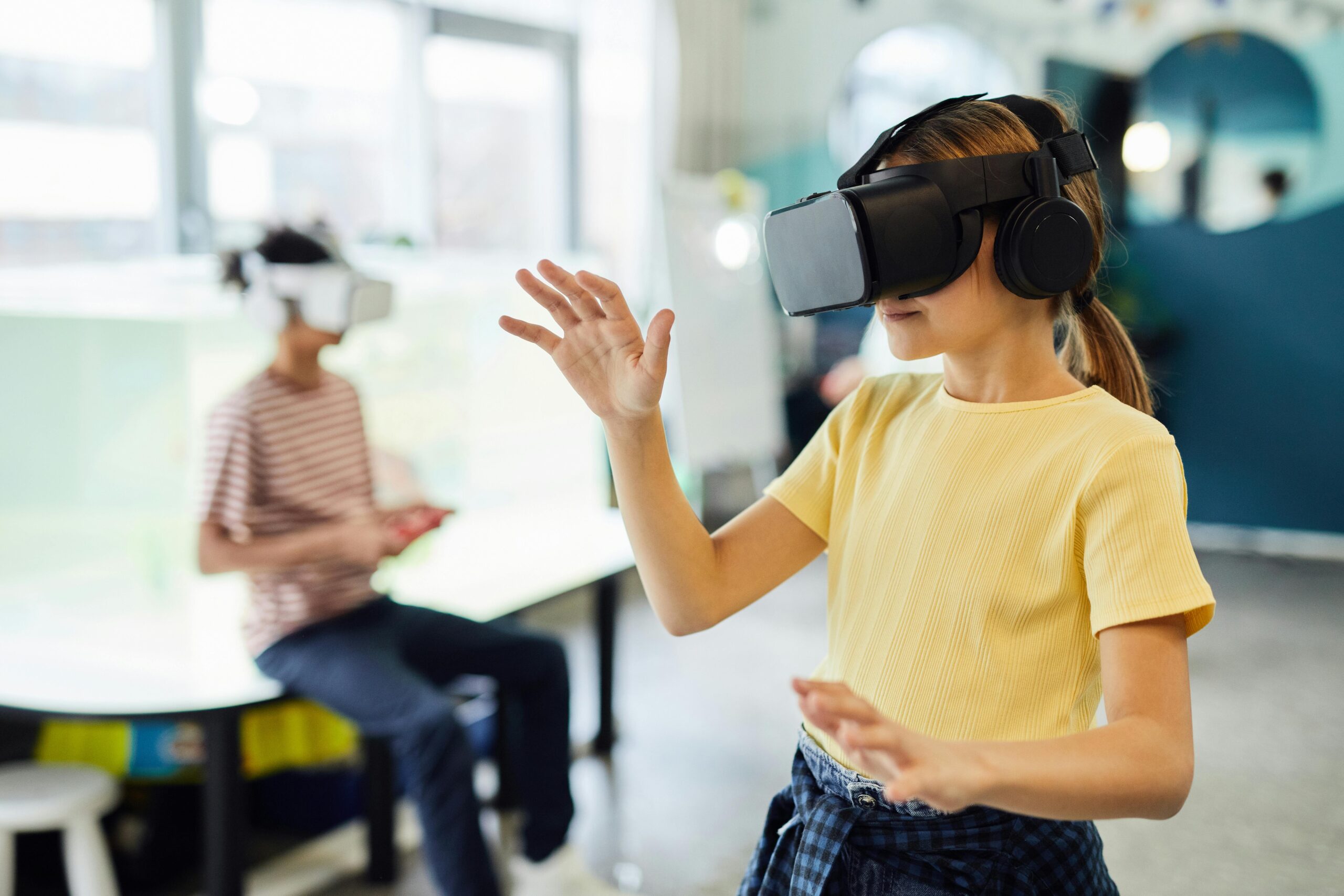
Successful AR implementation begins with selecting appropriate hardware and software. Tablets and smartphones are the most common AR platforms, offering portability and intuitive touchscreen interfaces that many special education students find accessible. Some specialized AR applications work with dedicated headsets, though these may be overwhelming or uncomfortable for certain students.
When selecting AR applications, educators should prioritize those specifically designed for special education or offering robust customization options. Key features to look for include adjustable difficulty levels, multiple sensory input options, progress tracking, and the ability to remove distracting elements for students with attention challenges.
Training Educators and Support Staff
Technology is only as effective as the people implementing it. Comprehensive professional development is essential for educators working with AR in special education contexts. Training should address not only technical operation but also pedagogical strategies for integrating AR into individualized education programs (IEPs), managing classroom technology, troubleshooting common issues, and assessing student progress within AR environments.
Support staff, including paraprofessionals and therapists, also need training to effectively assist students during AR activities and reinforce learning that occurs within these digital experiences.
Creating an Accessible AR Environment
Physical classroom setup matters when implementing AR. Adequate space for movement-based AR activities, appropriate lighting conditions, stable internet connectivity, and charging infrastructure all contribute to successful implementation. Consider creating designated AR stations or zones where students can engage with technology while others participate in different activities.
Accessibility extends beyond physical space to include considerations like adjustable screen brightness, audio volume controls, alternative input methods for students with motor challenges, and options to reduce visual complexity for students who experience sensory overload.
🎓 Measuring Success and Student Progress
One of AR’s significant advantages is its capacity to collect detailed data on student interactions and performance. Quality AR educational applications track metrics such as time spent on tasks, accuracy rates, areas of difficulty, learning progressions, and engagement levels. This data provides educators with objective information to supplement observational assessments.
However, quantitative data should complement, not replace, qualitative observations and assessments. The most comprehensive understanding of student progress emerges from combining AR analytics with teacher observations, student self-reports, parent feedback, and traditional assessment methods.
Aligning AR Activities with IEP Goals
For AR implementation to be truly effective in special education, activities must align with students’ individualized education program goals. Each AR experience should target specific learning objectives, whether academic skills, social-emotional development, communication abilities, or functional life skills.
Documenting how AR activities address IEP goals helps justify technology use to administrators and parents while ensuring that engaging technology serves genuine educational purposes rather than functioning as mere entertainment.
🌐 Addressing Challenges and Limitations
Technological Barriers and Solutions
Not all schools have equal access to the devices and infrastructure necessary for AR implementation. Budget constraints, limited technical support, and inadequate internet bandwidth can present significant obstacles. Solutions include seeking grant funding specifically for assistive technology, partnering with technology companies offering educational discounts, implementing bring-your-own-device policies where appropriate, and prioritizing AR applications that work offline or with minimal connectivity.
Sensory Sensitivities and Overstimulation
While AR offers multisensory engagement, this can be problematic for students with sensory processing disorders or those easily overwhelmed by stimuli. Careful application selection and customization are essential. Look for AR experiences offering sensory controls—the ability to turn off sounds, reduce visual effects, or simplify interfaces. Start with short AR sessions and gradually increase duration as students become comfortable with the technology.
Balancing Technology with Traditional Methods
AR should enhance, not replace, proven special education strategies. The most effective approach integrates AR with traditional teaching methods, hands-on activities, and human interaction. Technology cannot substitute for the relationship between educator and student or the benefits of physical manipulation of real objects and face-to-face social interaction.
🔮 The Future of AR in Special Education
Emerging developments in augmented reality promise even greater potential for special education. Artificial intelligence integration will enable AR applications to adapt more precisely to individual learning patterns, providing truly personalized educational experiences. Improved natural language processing will enhance communication supports, and advanced gesture recognition will make AR interfaces more accessible to students with diverse physical abilities.
Collaborative AR experiences where multiple students interact within shared augmented environments could revolutionize social skills instruction and cooperative learning opportunities. As AR technology becomes more affordable and widespread, we can expect increased accessibility across educational settings, including under-resourced schools and home-based learning environments.
🎯 Moving Forward: Creating Inclusive AR Experiences
The transformation of special education through augmented reality depends on intentional, thoughtful implementation. Educators, developers, administrators, and families must collaborate to create AR experiences that genuinely serve diverse learning needs. This includes involving special education students and their advocates in the design process, ensuring that applications are developed with accessibility as a core consideration rather than an afterthought.
Professional learning communities focused on AR in special education can share effective practices, troubleshoot challenges, and advocate for resources. Research into AR’s effectiveness with specific disabilities and learning profiles should continue, building the evidence base that guides implementation decisions.
As we stand at the intersection of education and technology, augmented reality represents more than just an innovative tool—it embodies a commitment to educational equity and the belief that every student, regardless of ability, deserves access to engaging, effective learning experiences. By thoughtfully integrating AR innovations into special education, we unlock potential that traditional methods alone cannot reach, opening doors to learning, independence, and achievement for students who have too often been underserved by conventional educational approaches.
The journey toward fully realized AR-enhanced special education continues, but the destination—a more inclusive, effective, and empowering educational landscape—makes every step forward worthwhile. Through continued innovation, collaboration, and commitment to the unique needs of special education students, augmented reality will transform not just how we teach, but how we conceive of learning potential itself.