
Augmented Reality is revolutionizing how students absorb, process, and retain information by merging digital content with physical environments in transformative ways. 📱

The traditional education system has long relied on textbooks, lectures, and static visual aids to convey information. While these methods have served generations of learners, they often fail to engage students in ways that promote deep understanding and long-term retention. The average retention rate for lecture-based learning hovers around 5%, while interactive and experiential learning can boost retention to 75% or higher. This is where augmented reality enters the picture, offering a bridge between abstract concepts and tangible experiences that fundamentally changes how our brains encode and recall information.
Today’s students have grown up surrounded by interactive technology, making them naturally receptive to digital learning experiences. Augmented reality meets them where they are, transforming passive observation into active participation. When students can manipulate 3D models of the solar system, watch historical events unfold in their classroom, or dissect virtual organisms without harming living creatures, learning becomes an adventure rather than a chore.
🧠 The Science Behind AR and Memory Retention
Understanding why augmented reality enhances learning retention requires exploring how our brains process and store information. The human memory system operates through three key stages: encoding, storage, and retrieval. Augmented reality positively impacts all three phases by creating multisensory experiences that engage multiple neural pathways simultaneously.
When students interact with AR content, their brains activate visual, spatial, and kinesthetic processing centers concurrently. This multi-modal engagement creates stronger neural connections than single-channel learning methods. Research in cognitive psychology demonstrates that information learned through multiple sensory channels is encoded more robustly and retrieved more easily than information received through a single modality.
The principle of embodied cognition suggests that physical interaction with learning materials strengthens conceptual understanding. AR applications allow students to gesture, move, and physically manipulate virtual objects, creating what neuroscientists call “motor memory.” This type of memory is remarkably durable and resistant to forgetting, which explains why we remember how to ride a bicycle decades after learning, but struggle to recall facts memorized for exams.
Creating Memorable Learning Moments
Augmented reality experiences trigger emotional responses that conventional teaching methods rarely achieve. When a student points their device at a textbook and watches a dinosaur spring to life in full scale, the surprise and delight create an emotional marker in memory. Emotions act as neurochemical tags that signal to the brain: “This is important—remember this.” Studies show that emotionally charged experiences are recalled with greater clarity and persistence than neutral information.
The novelty factor of AR also plays a crucial role in attention and retention. Our brains are evolutionarily wired to notice and remember novel stimuli as a survival mechanism. While this novelty effect may diminish with repeated exposure, the interactive nature of AR ensures that each learning session offers unique discoveries and perspectives, maintaining engagement over time.
📚 Transforming Core Subject Areas with AR Experiences
Different academic disciplines benefit from augmented reality in distinct ways, each leveraging the technology’s unique capabilities to address specific educational challenges. The versatility of AR makes it applicable across virtually every subject area, from elementary concepts to advanced professional training.
Science Education Reimagined
Science subjects naturally lend themselves to AR applications because they deal with phenomena that are often invisible, too large, too small, or too dangerous to observe directly. Chemistry students can visualize molecular structures in three dimensions, rotating and examining bonds from every angle. Physics concepts like electromagnetic fields, which are inherently abstract, become visible and manipulable through AR overlays.
Biology education benefits tremendously from AR’s ability to bring organisms and biological processes to life without ethical concerns. Students can explore human anatomy layer by layer, watching blood flow through arteries or observing neural impulses travel along nerve pathways. This level of detail and interactivity was previously available only in expensive laboratory settings or through invasive procedures.
History and Social Studies Come Alive
Historical events and cultural studies gain new dimensions when students can witness reconstructions of ancient civilizations overlaid on modern landscapes. Imagine standing in an empty field while your AR device displays the Battle of Gettysburg unfolding around you, or visiting museum artifacts that spring to life with contextual information and animated demonstrations of their original use.
Geography lessons transform when students can manipulate virtual globes, trigger volcanic eruptions, or watch tectonic plates shift in real-time. These experiences make abstract geographical concepts concrete and memorable, helping students understand spatial relationships and global interconnections in ways that flat maps cannot achieve.
Mathematics Through Visual Problem-Solving
Mathematics often challenges students because of its abstract nature. AR applications can visualize mathematical concepts, making them tangible and interactive. Geometry students can construct and manipulate 3D shapes, instantly seeing how changing one variable affects the entire figure. Calculus students can watch functions plot themselves in three-dimensional space, observing how derivatives and integrals relate to curve shapes.
Word problems become interactive scenarios where students can see the situations described, manipulate variables, and immediately observe outcomes. This contextualization helps students understand not just how to solve problems, but why certain mathematical approaches work.
🎯 Implementation Strategies for Maximum Impact
Successfully integrating augmented reality into educational settings requires thoughtful planning and strategic implementation. The technology itself is merely a tool; its effectiveness depends on how educators design and deploy AR experiences within their curriculum.
Starting Small and Scaling Gradually
Educational institutions should begin with pilot programs targeting specific learning objectives where AR offers clear advantages over traditional methods. Starting with one subject area or grade level allows teachers to gain confidence with the technology, develop best practices, and demonstrate value before expanding to broader implementation.
Early adopters within faculty can serve as champions who mentor colleagues and share successful approaches. This grassroots growth model often proves more sustainable than top-down mandates that may face resistance from educators uncomfortable with new technology.
Aligning AR Content with Learning Objectives
The most critical factor in successful AR implementation is ensuring that augmented experiences directly support specific learning goals. AR should never be implemented simply because it’s novel or impressive; every AR activity should have clear educational objectives and measurable outcomes.
Educators should ask themselves: “Does this AR experience help students understand concepts they couldn’t grasp as effectively through other methods?” If the answer is no, traditional approaches may be more appropriate. AR works best when it provides unique value—visualization of invisible phenomena, safe exploration of dangerous scenarios, or manipulation of objects impossible to access physically.
Creating Assessment Frameworks for AR Learning
Traditional assessment methods may not adequately capture learning gains from AR experiences. Educators need to develop evaluation approaches that measure not just factual recall, but also conceptual understanding, spatial reasoning, and problem-solving skills that AR activities promote.
Performance-based assessments where students demonstrate understanding through creation or manipulation of AR content can provide richer insights into learning than multiple-choice tests. Portfolio approaches that document student progress through AR projects over time reveal growth patterns that single examinations miss.
💡 Overcoming Common Implementation Challenges
Despite its tremendous potential, augmented reality in education faces several practical obstacles that institutions must address to achieve successful adoption and sustained use.
Technology Access and Equity Considerations
One significant challenge is ensuring equitable access to AR-capable devices. While smartphone ownership is widespread, not all students have access to devices with sufficient processing power for complex AR applications. Schools must consider strategies such as device lending programs, dedicated AR stations, or bring-your-own-device policies with backup options for students who lack personal devices.
Internet connectivity represents another equity concern, particularly for AR applications requiring cloud processing or content streaming. Institutions should prioritize AR solutions that function offline or with minimal bandwidth requirements, ensuring that all students can participate regardless of their home internet situation.
Teacher Training and Support Systems
Educators cannot effectively integrate AR into their teaching without proper training and ongoing support. Professional development programs should cover not just technical operation of AR tools, but pedagogical strategies for maximizing their educational impact. Teachers need time to experiment with AR applications, design lesson plans incorporating them, and reflect on what works best for their particular student populations.
Creating communities of practice where educators share AR lesson plans, troubleshoot challenges, and collaborate on content development helps build institutional knowledge and reduces the burden on individual teachers to reinvent approaches others have already perfected.
🚀 Emerging Trends Shaping AR’s Educational Future
The augmented reality landscape continues evolving rapidly, with several emerging trends promising to further enhance its educational applications and accessibility in coming years.
AI-Enhanced Personalized Learning Paths
Artificial intelligence algorithms are beginning to personalize AR experiences based on individual student performance and learning preferences. These adaptive systems adjust difficulty levels, provide customized hints, and present information in formats optimized for each learner. When a student struggles with a particular concept, the AR system can offer alternative explanations, additional practice opportunities, or simplified visualizations until mastery is achieved.
This combination of AR and AI creates learning experiences that scale personalized tutoring to entire classrooms, something previously impossible with human teachers managing dozens of students simultaneously.
Collaborative Multi-User AR Environments
Next-generation AR platforms enable multiple students to share and interact with the same augmented content simultaneously. These collaborative spaces allow groups to work together on virtual projects, manipulate shared 3D models, and see each other’s contributions in real-time. Such social learning experiences mirror how professionals collaborate in modern workplaces, preparing students for future careers while enhancing retention through peer teaching and discussion.
Integration with Learning Analytics
Advanced AR educational platforms now collect detailed data about how students interact with content—which concepts they struggle with, how long they engage with different elements, and what approaches lead to successful problem-solving. These learning analytics provide educators with unprecedented insights into student understanding, enabling targeted interventions before students fall significantly behind.
When combined with retention studies, this data reveals which AR experiences produce the strongest long-term learning outcomes, allowing continuous refinement of educational content and approaches.
🌟 Real-World Success Stories and Measurable Outcomes
Numerous educational institutions worldwide have implemented AR programs with documented improvements in student engagement, comprehension, and retention. These success stories provide valuable models and demonstrate the technology’s practical impact.
A university medical program implemented AR anatomy applications, allowing students to explore 3D organ systems before entering cadaver labs. Assessment data showed that students using AR scored 30% higher on spatial anatomy questions compared to students using only textbooks and 2D diagrams. More importantly, retention tests administered six months after the course concluded showed that AR-trained students retained significantly more anatomical knowledge than their traditionally-trained peers.
An elementary school district introduced AR applications for teaching solar system concepts. Teachers reported that students who previously showed minimal interest in science became enthusiastic participants when they could place planets in their classroom and walk around them at relative scale. Standardized test scores for space-related content improved by 23% in schools using AR compared to control schools using conventional teaching methods.
A high school chemistry program struggling with abstract concepts like molecular bonding implemented AR visualization tools. Students could build molecules atom by atom, seeing bonds form and electron clouds overlap. The percentage of students passing the advanced placement chemistry exam increased from 67% to 89% after two years of AR integration, with teachers attributing much of the improvement to students’ deeper conceptual understanding rather than mere memorization.
🔮 Preparing Students for an AR-Integrated Future
Beyond immediate learning benefits, exposure to augmented reality in educational settings prepares students for a world where AR will be increasingly prevalent across industries and daily life. Many careers now require comfort with spatial computing, 3D visualization, and digital-physical integration—skills that AR educational experiences naturally develop.
Students who regularly use AR for learning develop digital literacy that extends beyond basic device operation to understanding how digital information layers onto physical reality. This literacy will prove essential as AR glasses, heads-up displays, and spatial computing become mainstream consumer technologies.
The problem-solving approaches students develop through interactive AR experiences—spatial reasoning, systems thinking, and iterative experimentation—transfer to numerous professional contexts. Whether designing products, analyzing data, or troubleshooting complex systems, these cognitive skills provide lifelong advantages.
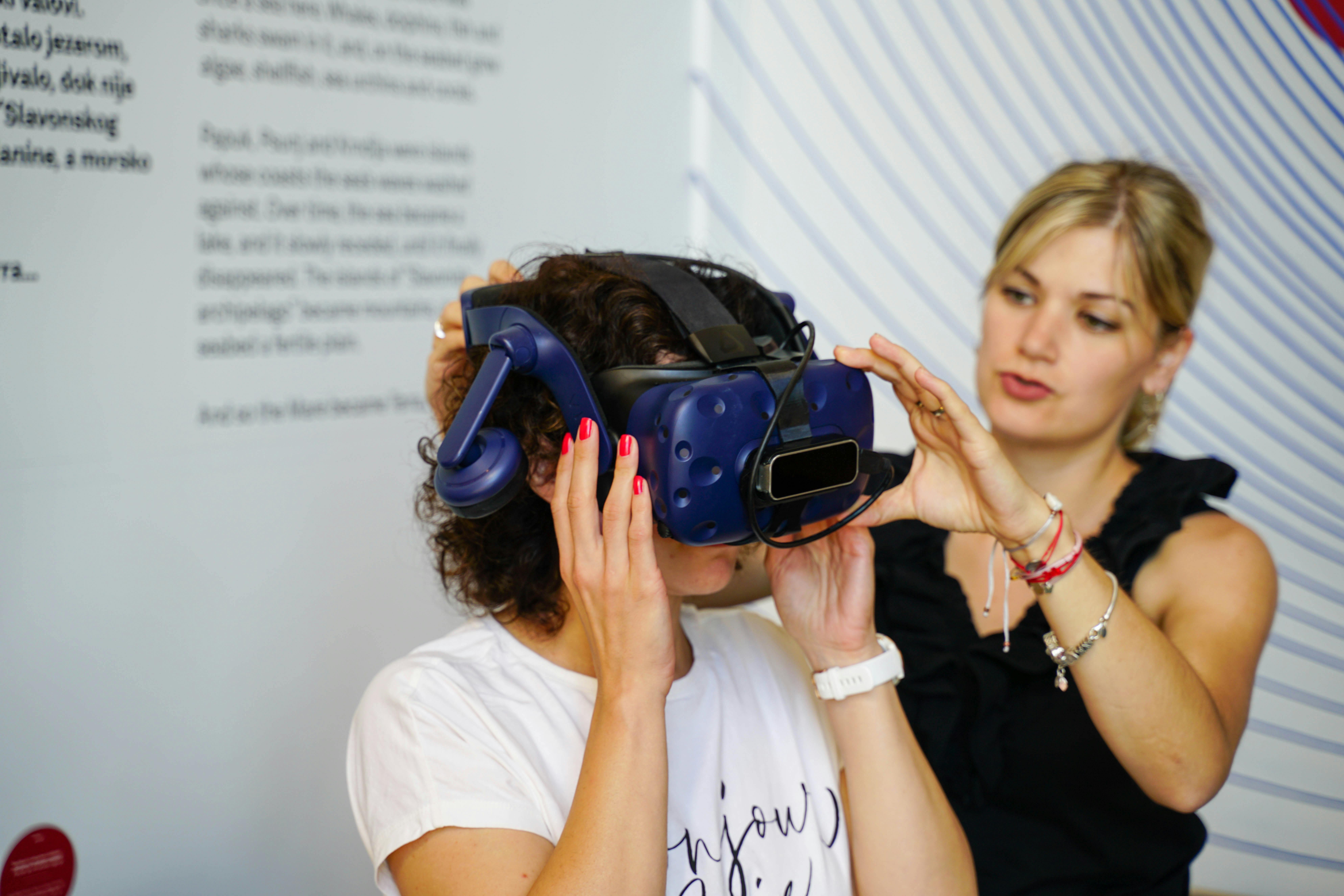
🎓 Maximizing Return on Educational AR Investments
For educational institutions considering AR adoption, strategic planning ensures that investments deliver maximum value and sustainable impact rather than becoming expensive experiments that fade away.
Successful programs begin with clear goals aligned to curriculum standards and identified learning gaps. Rather than implementing AR broadly and hoping for positive outcomes, effective approaches target specific areas where student performance consistently falls short or where engagement problems are most acute.
Selecting AR platforms and content should prioritize flexibility and longevity. Solutions that lock institutions into proprietary ecosystems or require expensive annual subscriptions may prove unsustainable. Open-source platforms and content creation tools that enable educators to develop custom AR experiences provide better long-term value and adaptability to changing needs.
Building internal capacity for AR content creation ensures that programs can grow and evolve without constant dependence on external vendors. When teachers and even students can create AR experiences tailored to their specific learning objectives, the technology becomes truly integrated into educational practice rather than remaining an external add-on.
The transformation of education through augmented reality represents more than a technological upgrade—it fundamentally reimagines the learning process itself. By making abstract concepts tangible, distant phenomena immediate, and passive observation active exploration, AR addresses core challenges that have limited educational effectiveness for generations. The substantial improvements in learning retention documented across diverse educational settings demonstrate that AR delivers on its promise to make learning not just more engaging, but genuinely more effective.
As AR technology becomes more accessible and sophisticated, its role in education will only expand. Institutions that embrace this transformation now position themselves at the forefront of educational innovation, while those that delay risk leaving students unprepared for an increasingly digital and spatially-computing future. The question is no longer whether augmented reality belongs in education, but how quickly and effectively we can integrate it to serve every learner’s potential.