
Augmented reality is transforming how students engage with science, technology, engineering, and mathematics by merging digital content with physical environments, creating unprecedented educational opportunities.

🚀 The Dawn of Immersive STEM Learning
Traditional STEM education has long relied on textbooks, static diagrams, and conventional laboratory experiments. While these methods have served generations of learners, they often fail to capture the dynamic, three-dimensional nature of scientific concepts. Augmented reality bridges this gap by overlaying digital information onto the real world, allowing students to visualize complex phenomena in ways previously impossible.
The integration of AR technology into STEM classrooms represents more than just a technological upgrade—it signifies a fundamental shift in pedagogical approach. Students no longer passively receive information; they actively explore, manipulate, and interact with educational content in their immediate environment. This hands-on engagement fosters deeper understanding and longer retention of challenging concepts.
Breaking Down Complex Concepts Through Visualization
One of the most significant advantages augmented reality brings to STEM education is the ability to visualize abstract concepts. Mathematical equations transform from cryptic symbols on a page into interactive 3D models that students can rotate, dissect, and examine from multiple angles. Chemical molecular structures become tangible objects that learners can manipulate to understand bonding patterns and reactions.
Physics concepts like electromagnetic fields, gravitational forces, and wave propagation—traditionally difficult to demonstrate in conventional classrooms—become visible and interactive through AR applications. Students can observe how changing one variable affects an entire system in real-time, developing intuitive understanding that goes far beyond memorization.
Anatomy and Biology Come Alive
Biological sciences particularly benefit from augmented reality implementation. The human body, with its intricate systems and microscopic processes, becomes accessible through AR visualization. Students can explore the cardiovascular system with blood flow animated in real-time, zoom into cellular structures to observe mitosis, or examine the nervous system’s electrical impulses as they travel through neurons.
This level of detail and interactivity was previously only available through expensive cadaver labs or advanced medical facilities. Now, any classroom with AR-enabled devices can provide similar educational experiences, democratizing access to high-quality STEM education.
🎓 Enhancing Engagement and Motivation
Student engagement remains one of education’s persistent challenges, particularly in STEM subjects that many learners find intimidating or uninteresting. Augmented reality addresses this issue by gamifying learning experiences and making abstract concepts tangible and exciting.
When students can point their device at a textbook page and watch a volcano erupt in 3D, or see the solar system rotate above their desk, learning transforms from a chore into an adventure. This increased engagement translates directly into improved academic outcomes, with numerous studies showing enhanced retention rates and better test performance among students using AR-enhanced learning materials.
Collaborative Learning Environments
AR technology facilitates collaborative problem-solving by allowing multiple students to interact with the same augmented content simultaneously. Teams can work together to build virtual circuits, design engineering projects, or conduct simulated experiments, developing both technical skills and crucial soft skills like communication and teamwork.
This collaborative aspect mirrors real-world STEM careers, where professionals regularly work in multidisciplinary teams to solve complex problems. By introducing these collaborative experiences early, AR prepares students for the realities of modern scientific and technical workplaces.
Practical Applications Across STEM Disciplines
The versatility of augmented reality makes it applicable across all STEM fields, each benefiting in unique ways from this technology.
Mathematics: From Abstract to Concrete
Geometry students can manipulate three-dimensional shapes, observing how surface area and volume change with different dimensions. Calculus learners visualize derivatives as slopes on dynamic curves and integrals as accumulated areas. Probability concepts become intuitive through interactive simulations that demonstrate statistical distributions and outcomes.
Engineering: Virtual Prototyping and Design
Engineering education benefits enormously from AR’s ability to create virtual prototypes. Students can design structures, test their stability under various conditions, and iterate designs without expensive materials or equipment. Civil engineering students analyze bridge designs, mechanical engineering students examine gear systems, and electrical engineering students visualize circuit behavior—all through augmented overlays.
Chemistry: Molecular Interactions Made Visible
Chemistry students struggle with visualizing molecular structures and chemical reactions. AR applications allow learners to build molecules atom by atom, observe electron clouds, and watch chemical reactions unfold step-by-step. Reaction kinetics, equilibrium states, and thermodynamic processes become observable phenomena rather than abstract equations.
🌍 Accessibility and Inclusivity in STEM Education
Augmented reality democratizes access to high-quality STEM education by reducing the need for expensive laboratory equipment and specialized facilities. Schools in underserved communities can provide students with advanced learning experiences using relatively affordable AR-enabled tablets or smartphones.
Additionally, AR technology offers unique benefits for students with different learning styles and abilities. Visual learners thrive with 3D representations, kinesthetic learners engage through interactive manipulation, and students with certain disabilities find AR interfaces more accessible than traditional learning materials.
Breaking Language Barriers
AR applications can provide multilingual support, making STEM education more accessible to non-native speakers and international students. Visual representations of concepts reduce reliance on language proficiency, while real-time translation features help students understand technical terminology in their preferred language.
Teacher Empowerment and Professional Development
The success of AR in education depends heavily on teacher preparation and support. Educators need training not just in operating AR technology, but in integrating it meaningfully into lesson plans and curricula. Professional development programs are emerging worldwide to help teachers leverage AR effectively.
Many educators report that AR tools make their teaching more effective and enjoyable. The technology handles complex visualizations, freeing teachers to focus on facilitating discussion, answering questions, and providing personalized guidance. This shift from content delivery to mentorship represents a positive evolution in educational roles.
Creating Custom AR Content
Increasingly, platforms are enabling teachers to create their own AR experiences tailored to specific learning objectives and student needs. This customization ensures that AR content aligns perfectly with curriculum standards and addresses particular conceptual challenges their students face.
⚡ Real-World Skills and Career Preparation
Beyond academic knowledge, AR-enhanced STEM education develops skills highly valued in modern workplaces. Students learn to work with cutting-edge technology, develop spatial reasoning abilities, and gain experience with visualization tools used in professional fields ranging from medicine to aerospace engineering.
Exposure to AR technology in educational contexts also sparks interest in emerging career fields. Students who interact with AR applications often develop curiosity about software development, 3D modeling, and human-computer interaction—fields with growing employment opportunities and competitive salaries.
Challenges and Considerations for Implementation
Despite its tremendous potential, implementing AR in STEM education faces several challenges that institutions must address thoughtfully.
Infrastructure and Device Requirements
Effective AR experiences require capable hardware, reliable internet connectivity, and adequate technical support. Schools must invest in infrastructure and maintenance, which can strain limited educational budgets. However, costs are decreasing as technology becomes more widespread and accessible.
Content Quality and Pedagogical Soundness
Not all AR applications are created equal. Educators must carefully evaluate AR content for accuracy, pedagogical effectiveness, and alignment with learning objectives. Flashy visualizations that lack educational substance can distract rather than enhance learning.
Screen Time and Health Considerations
Increased use of AR devices raises questions about appropriate screen time limits and potential health effects. Educators must balance AR activities with other learning modalities and ensure students take regular breaks from device use.
📊 Measuring Success and Learning Outcomes
Research into AR’s educational effectiveness shows promising results across multiple metrics. Studies demonstrate improved test scores, increased concept retention, and enhanced problem-solving abilities among students using AR-enhanced learning materials compared to traditional instruction alone.
Longitudinal studies are beginning to track how early exposure to AR in STEM education influences career choices and long-term success in technical fields. Preliminary data suggests positive correlations between AR-enhanced education and persistence in STEM majors at the university level.
The Future Landscape of AR in STEM Education
As technology continues evolving, the potential applications of AR in STEM education will expand dramatically. Artificial intelligence integration will enable adaptive learning experiences that respond to individual student needs in real-time. Mixed reality environments will blend augmented and virtual reality, creating even more immersive educational experiences.
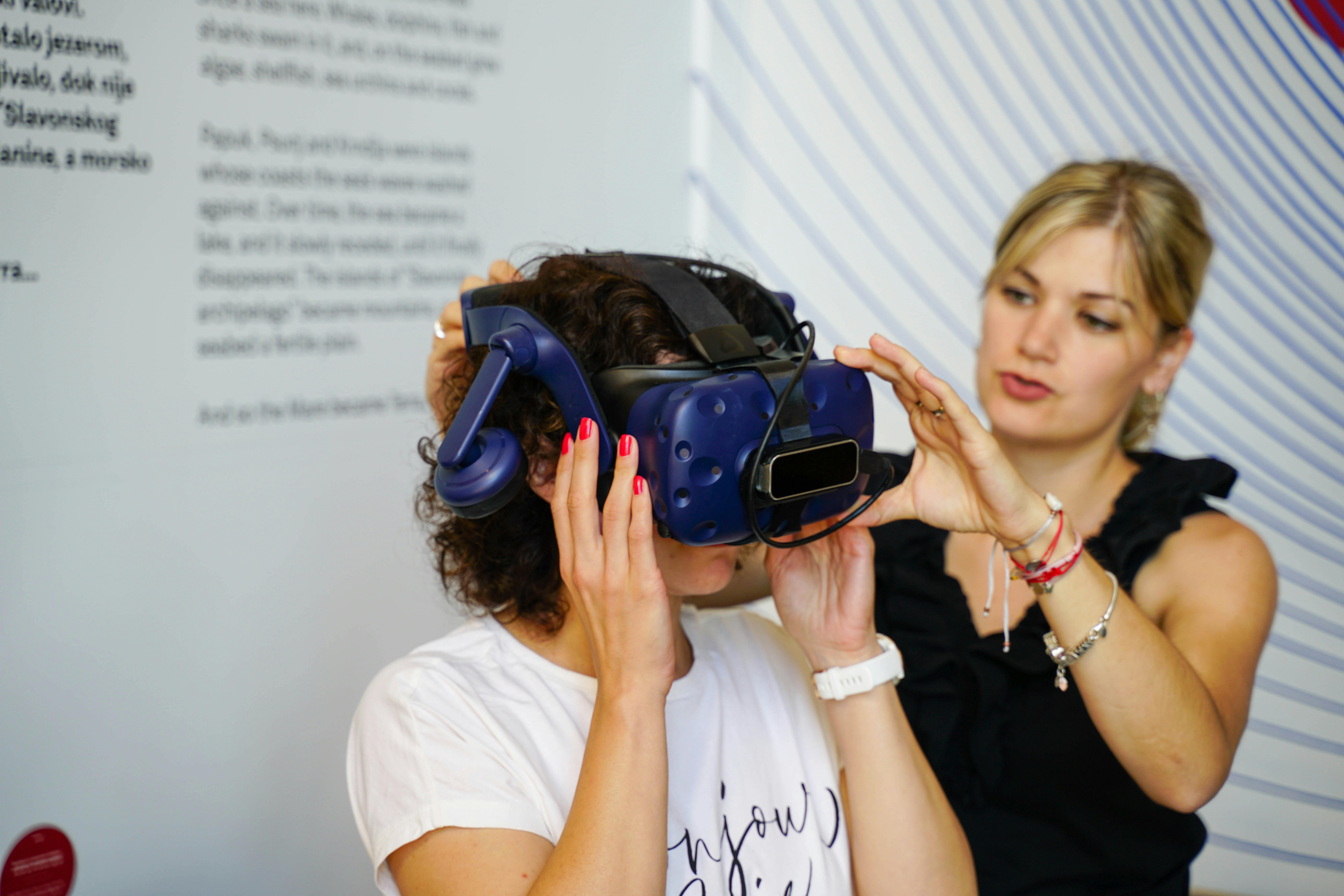
Wearable AR devices, currently in early development stages, promise hands-free interaction and more natural integration of augmented content into learning activities. As these devices become more sophisticated and affordable, they may become standard educational tools, as common in classrooms as calculators or computers are today.
Global Collaboration Through AR
Future AR platforms will facilitate international collaboration, allowing students from different countries to work together in shared augmented spaces. This global perspective enriches STEM education by exposing learners to diverse approaches and cultural perspectives on scientific inquiry and technological innovation.
🎯 Strategies for Successful AR Integration
Schools and educators looking to integrate AR into STEM curricula should adopt strategic approaches that maximize benefits while managing challenges effectively.
Start small with pilot programs in specific subjects or grade levels, gathering feedback and refining approaches before broader implementation. Involve teachers from the beginning, ensuring they have input into technology selection and adequate preparation time. Create professional learning communities where educators share experiences, troubleshoot problems, and exchange effective practices.
Partner with technology companies and educational organizations that provide implementation support, training resources, and ongoing technical assistance. These partnerships can significantly reduce the burden on school staff and increase the likelihood of successful adoption.
Transforming Assessment and Evaluation
Augmented reality doesn’t just change how students learn—it transforms how educators assess understanding. AR enables dynamic assessment where students demonstrate knowledge through interaction and problem-solving rather than static tests. Teachers can observe how students manipulate virtual objects, troubleshoot systems, and apply concepts in simulated scenarios.
This authentic assessment provides deeper insights into student understanding and reveals misconceptions that traditional testing might miss. It also reduces test anxiety for many students who perform better when demonstrating skills through active engagement rather than written exams.
Building a Foundation for Lifelong Learning
Perhaps the most profound impact of AR-enhanced STEM education is cultivating curiosity and self-directed learning habits. When students discover they can explore complex topics independently using AR tools, they develop confidence and motivation to pursue learning beyond classroom requirements.
This empowerment is particularly crucial in STEM fields where rapid technological change requires continuous learning throughout one’s career. Students who grow comfortable with AR-assisted learning develop adaptability and technological fluency that serves them well in any future they choose.
💡 Moving Forward with Purpose and Vision
The revolution in STEM education through augmented reality is well underway, but realizing its full potential requires continued commitment from educators, administrators, policymakers, and technology developers. Investment in infrastructure, teacher training, and quality content development must remain priorities.
Equally important is maintaining focus on educational outcomes rather than technological novelty. AR is a powerful tool, but like any tool, its value depends on how thoughtfully and purposefully it’s used. The goal must always be enhancing student learning, understanding, and preparation for meaningful participation in an increasingly technological world.
As we stand at this intersection of education and technology, the opportunity to transform STEM learning is unprecedented. Augmented reality offers pathways to understanding that previous generations could barely imagine. By embracing this innovation thoughtfully and equitably, we can unlock limitless learning potential for all students, regardless of their background or circumstances.
The future of STEM education is not just about teaching scientific facts or technical skills—it’s about inspiring wonder, fostering curiosity, and empowering the next generation of innovators, problem-solvers, and critical thinkers who will shape our collective future. Augmented reality provides the tools to make this vision a reality, one immersive experience at a time.