
Remote learning is undergoing a dramatic transformation through augmented reality technology, creating unprecedented opportunities for students and educators to interact with digital content in ways previously confined to science fiction.

🚀 The Dawn of a New Educational Era
The traditional boundaries of remote education are dissolving as augmented reality (AR) reshapes how we approach distance learning. What once seemed like a futuristic concept has now become an accessible reality, enabling students worldwide to experience interactive, three-dimensional learning environments from the comfort of their homes. This technological revolution isn’t just about adding bells and whistles to existing educational models—it’s about fundamentally reimagining how knowledge transfer occurs in virtual spaces.
The COVID-19 pandemic accelerated the adoption of remote learning technologies, exposing both the limitations of conventional video conferencing and the vast potential of immersive educational experiences. As educators and institutions scrambled to maintain educational continuity, many discovered that AR technology offered solutions to problems they didn’t even realize existed. Students who struggled with abstract concepts in traditional online classes suddenly found themselves manipulating molecular structures in mid-air or walking through historical landmarks as if they were physically present.
Understanding Augmented Reality in Educational Contexts
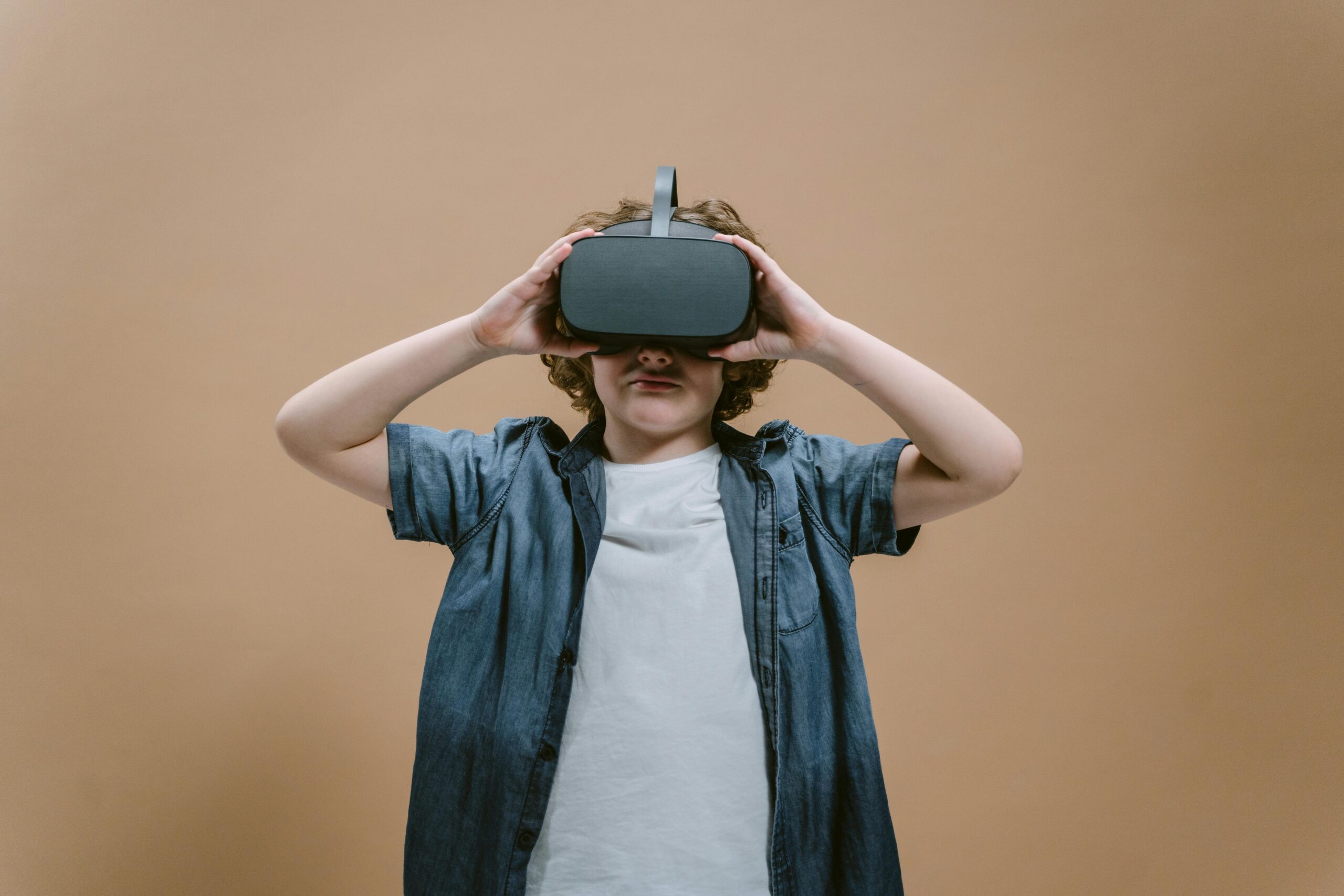
Augmented reality differs fundamentally from virtual reality by overlaying digital information onto the real world rather than creating entirely synthetic environments. This distinction matters enormously for education because it allows students to remain grounded in their physical learning spaces while simultaneously accessing rich digital content. Unlike VR headsets that isolate users from their surroundings, AR experiences can be delivered through smartphones, tablets, or specialized glasses that maintain awareness of the real environment.
The educational applications of AR technology span across multiple dimensions. Visual learners benefit from seeing complex systems rendered in three dimensions, where they can rotate, zoom, and dissect objects that would otherwise remain static images in textbooks. Kinesthetic learners engage through gesture-based interactions, physically manipulating digital objects to understand their properties and relationships. Even auditory learners gain advantages as AR experiences incorporate spatial audio that provides contextual information based on where students direct their attention.
Breaking Down Geographic Barriers
One of AR’s most powerful contributions to remote learning is its ability to democratize access to experiences that were previously limited by geography or resources. A student in a rural community can now examine artifacts from the British Museum, conduct virtual chemistry experiments with equipment their school cannot afford, or explore the surface of Mars alongside classmates scattered across different continents. This leveling of the educational playing field represents a significant step toward educational equity.
The technology enables collaborative learning experiences where students from different locations can interact with the same AR objects simultaneously. Imagine a biology class where students in three different countries collaboratively dissect a virtual frog, with each student responsible for examining different organ systems. These shared experiences foster not only academic learning but also cultural exchange and global citizenship skills that are increasingly vital in our interconnected world.
Transforming Abstract Concepts Into Tangible Experiences 🎓
Abstract concepts have always posed challenges in education, particularly in remote learning environments where physical demonstrations are impossible. AR technology excels at making the invisible visible and the abstract concrete. Mathematical functions transform from equations on a screen into three-dimensional graphs that students can walk around and examine from multiple perspectives. Physics concepts like electromagnetic fields become visible patterns that students can manipulate by adjusting virtual variables and immediately observing the results.
In language learning, AR creates immersive environments where vocabulary and grammar come alive. Students can point their devices at objects in their homes to see labels in their target language, complete with pronunciation guides and usage examples. Historical and cultural contexts become accessible through AR overlays that transform ordinary spaces into windows onto different times and places. A bedroom wall might become a portal to ancient Rome, where students practice Latin with virtual native speakers while exploring accurately reconstructed forums and temples.
Science Education Reimagined
The sciences benefit tremendously from AR’s ability to visualize phenomena at scales and in contexts impossible to recreate in traditional classrooms. Astronomy students can hold planets in their hands, observing rotation speeds, atmospheric compositions, and orbital mechanics with intuitive gestures. Chemistry becomes less abstract when molecular bonds aren’t just lines on paper but interactive structures that students can build, break apart, and recombine while observing energy changes in real-time.
Biology education gains new dimensions as students zoom into cellular structures, watching mitosis unfold or following the path of oxygen molecules through the respiratory system. These experiences aren’t merely more engaging than textbook diagrams—they’re pedagogically superior because they leverage spatial reasoning and muscle memory alongside visual processing, creating multiple neural pathways for information retention.
Practical Implementation Strategies for Educators
Successfully integrating AR into remote learning requires more than simply adopting new technology. Educators need frameworks for designing experiences that enhance rather than distract from learning objectives. The most effective AR educational experiences follow several key principles: they’re purposeful rather than novelty-driven, they provide scaffolding for students at different skill levels, and they include assessment mechanisms that measure genuine comprehension rather than technological engagement.
Teachers beginning their AR journey should start with existing platforms and applications before attempting to create custom content. Numerous educational AR apps offer ready-made experiences across subject areas, allowing educators to experiment with the medium while learning its pedagogical strengths and limitations. As comfort levels increase, teachers can progress to customizing experiences or creating original content using increasingly accessible AR development tools.
Essential Technical Considerations
While AR technology has become more accessible, educators must still address practical technical challenges. Internet bandwidth requirements vary significantly between AR applications, with marker-based AR typically requiring less data than location-based or cloud-anchored experiences. Schools and educators should survey student access to devices and internet connectivity before committing to AR-dependent curricula, ensuring that technological choices don’t inadvertently create new barriers to participation.
Device compatibility represents another crucial consideration. iOS and Android devices support AR differently, and older hardware may struggle with computationally intensive experiences. Educators should test AR applications on the range of devices their students use, preparing alternative activities for students whose hardware cannot support specific experiences. This inclusive planning ensures that AR enhances rather than limits educational access.
Measuring Learning Outcomes and Engagement 📊
The novelty of AR can create surface-level engagement that doesn’t necessarily translate to deeper learning. Rigorous assessment strategies help educators distinguish between entertainment and education. Effective AR learning experiences incorporate formative assessments throughout the activity, checking comprehension at key points rather than waiting until completion. These embedded assessments can take advantage of AR’s interactive nature, asking students to demonstrate understanding by manipulating objects or solving spatial puzzles rather than answering multiple-choice questions.
Research on AR learning outcomes continues to grow, with studies generally showing positive effects on engagement, motivation, and knowledge retention compared to traditional remote learning methods. However, effectiveness varies considerably based on implementation quality, subject matter, and student characteristics. Educators should approach AR as one tool among many, appropriate for certain learning objectives but not a universal solution for all educational challenges.
Data-Driven Insights and Analytics
Many AR educational platforms now incorporate analytics that provide insights impossible in traditional learning environments. Teachers can track not just whether students completed activities but how they approached problems, which concepts required multiple attempts, and how long students spent examining different elements. This granular data enables personalized feedback and identifies struggling students earlier than traditional assessment methods.
Privacy considerations accompany these powerful analytics capabilities. Educators and institutions must establish clear policies about what data gets collected, how it’s used, and who has access. Students and parents deserve transparency about data practices, and schools should implement the minimum data collection necessary for educational purposes rather than comprehensive surveillance simply because technology makes it possible.
Fostering Social Presence in Virtual Spaces 🤝
One critique of remote learning is its potential to create isolation and reduce the social dimensions of education. AR addresses this challenge through collaborative experiences that create shared contexts for interaction. When students simultaneously interact with the same AR objects, they develop a sense of co-presence that pure video conferencing struggles to achieve. This shared focus provides natural conversation starters and collaboration opportunities that feel more organic than forced breakout room discussions.
AR can also humanize remote interactions by giving students avatars or representations that convey body language and spatial relationships. When student avatars gather around a virtual lab table or stand beside each other examining a historical artifact, the experience more closely mimics in-person collaboration than faces in grid patterns on a screen. These spatial relationships matter because human cognition evolved for physical environments, and AR leverages those evolved capabilities even in remote contexts.
Accessibility and Universal Design Principles ♿
AR technology offers unique opportunities to address accessibility challenges in remote education. Students with mobility limitations can explore environments—from coral reefs to mountain peaks—that might be physically inaccessible. Visual impairments can be accommodated through audio descriptions and haptic feedback, while hearing impairments benefit from visual representations of audio information. The key is designing AR experiences with accessibility as a core consideration rather than an afterthought.
Universal design principles suggest creating experiences usable by the widest range of people without requiring adaptation. In AR contexts, this means providing multiple means of representation, engagement, and expression. An AR history lesson might offer information through visual models, audio narration, and text captions simultaneously, allowing students to engage through their preferred or most effective modality. Interaction methods should accommodate various physical capabilities, offering alternatives to gestures that require fine motor control or extensive physical movement.
The Economic Equation: Costs and Benefits 💰
Implementing AR in remote learning involves costs that extend beyond technology acquisition. Educator training represents a significant investment, as teachers need both technical skills to operate AR platforms and pedagogical knowledge to design effective experiences. Content creation or licensing adds ongoing expenses, particularly for institutions wanting custom experiences aligned with their specific curricula. Technical support infrastructure must expand to troubleshoot AR-specific issues that general IT staff may not initially understand.
However, these costs should be weighed against potential benefits and avoided expenses. AR can reduce or eliminate costs associated with physical materials, lab equipment, and field trips while providing superior or equivalent educational experiences. Schools in areas where qualified teachers are scarce can leverage AR to deliver specialized instruction remotely, potentially reducing the need for expensive traveling educators or relocations. Long-term, as AR technology matures and competition increases, costs continue declining while capabilities expand, improving the economic proposition over time.
Preparing Students for AR-Enhanced Futures 🔮
Beyond immediate educational benefits, AR literacy represents an increasingly valuable skill as the technology proliferates across industries. Students learning through AR experiences develop intuitions about spatial computing that will serve them in careers from medicine to manufacturing, architecture to entertainment. Early exposure to AR interfaces helps students become comfortable with gestural controls, spatial reasoning in mixed reality environments, and collaboration through shared digital-physical spaces.
The professional landscape is rapidly incorporating AR for training, remote assistance, design visualization, and countless other applications. Students graduating without exposure to these technologies face disadvantages in workforce readiness compared to peers who’ve integrated AR into their learning throughout their educational journeys. Educational institutions have responsibilities not just to teach current knowledge but to prepare students for technological contexts they’ll inhabit professionally.
Overcoming Resistance and Building Buy-In 🌟
Successful AR implementation requires stakeholder buy-in from administrators, teachers, students, and parents. Each group has legitimate concerns that deserve addressing. Administrators worry about costs, technical challenges, and whether innovations will deliver promised benefits or become expensive distractions. Teachers fear additional workload, inadequate training, and pressure to adopt technologies before they’re ready. Parents question whether AR represents genuine educational advancement or trendy gimmickry that distracts from fundamentals.
Building support requires transparent communication about objectives, realistic timelines, and evidence-based expectations. Pilot programs allow institutions to test AR implementations on small scales, gathering data and refining approaches before full deployment. Involving skeptics in pilot planning transforms critics into informed contributors whose concerns shape more robust implementations. Success stories from similar institutions provide external validation, while internal champions who’ve experienced benefits firsthand offer authentic testimonials that resonate more than vendor marketing materials.
Looking Forward: The Evolving AR Landscape
AR technology continues evolving rapidly, with improvements in hardware, software, and network capabilities expanding what’s possible in educational contexts. Upcoming developments in 5G connectivity will enable more sophisticated cloud-based AR experiences with minimal latency, removing current limitations on complexity and interactivity. Artificial intelligence integration will personalize AR learning experiences in real-time, adjusting difficulty, pacing, and content based on individual student responses and learning patterns.
The boundary between AR and virtual reality continues blurring as mixed reality headsets offer seamless transitions between augmented and fully immersive experiences. Educational applications will leverage these capabilities, allowing students to shift between modes depending on learning objectives. A history lesson might begin with AR overlays in the student’s room, transition to a fully immersive VR reconstruction of a historical event, then return to AR for collaborative discussion with classmates who appear as avatars in the student’s physical space.
The revolution in remote learning through AR represents more than technological innovation—it’s a fundamental reimagining of education’s possibilities. By making abstract concepts tangible, distant experiences accessible, and collaborative learning natural even across vast distances, AR addresses longstanding challenges in distance education while creating entirely new opportunities. As the technology matures and educational communities develop best practices, AR-enhanced remote learning will shift from experimental novelty to expected standard, preparing students not just with knowledge but with the spatial computing literacy that will define their professional futures.