
Digital twins paired with augmented reality are transforming industries by bridging the physical and digital worlds, enabling real-time insights, predictive maintenance, and immersive user experiences like never before.

The convergence of digital twin technology and augmented reality (AR) represents one of the most significant technological breakthroughs of our era. This powerful combination is reshaping how organizations design, monitor, and optimize their operations across manufacturing, healthcare, smart cities, and beyond. By overlaying virtual replicas onto physical environments, businesses can now visualize complex data, simulate scenarios, and make informed decisions with unprecedented precision.
As enterprises worldwide embrace digital transformation, the integration of AR with digital twins has emerged as a critical enabler of innovation. This synergy creates immersive experiences that allow stakeholders to interact with virtual models in real-world contexts, fundamentally changing how we understand and manipulate our environment. The implications extend far beyond visualization—they touch upon efficiency, sustainability, collaboration, and competitive advantage in an increasingly data-driven marketplace.
🔄 Understanding the Digital Twin Foundation
Digital twins are virtual representations of physical objects, processes, or systems that mirror their real-world counterparts in real time. These sophisticated models continuously receive data from sensors embedded in physical assets, creating a dynamic digital replica that evolves alongside the actual entity. The concept originated in manufacturing and aerospace industries but has since expanded into healthcare, urban planning, energy management, and retail sectors.
The foundation of effective digital twin implementation rests on three critical pillars: comprehensive data collection, robust analytics capabilities, and seamless connectivity. IoT sensors capture operational parameters such as temperature, pressure, vibration, and performance metrics. Advanced algorithms process this information to identify patterns, predict failures, and optimize operations. Cloud computing infrastructure ensures that stakeholders can access insights from anywhere, facilitating collaboration across geographical boundaries.
What distinguishes digital twins from simple simulations is their bidirectional communication with physical assets. Changes in the physical world immediately reflect in the digital model, while modifications to the virtual twin can inform adjustments to the real-world counterpart. This feedback loop creates opportunities for continuous improvement and proactive management that traditional monitoring systems cannot match.
🥽 Augmented Reality as the Visual Interface
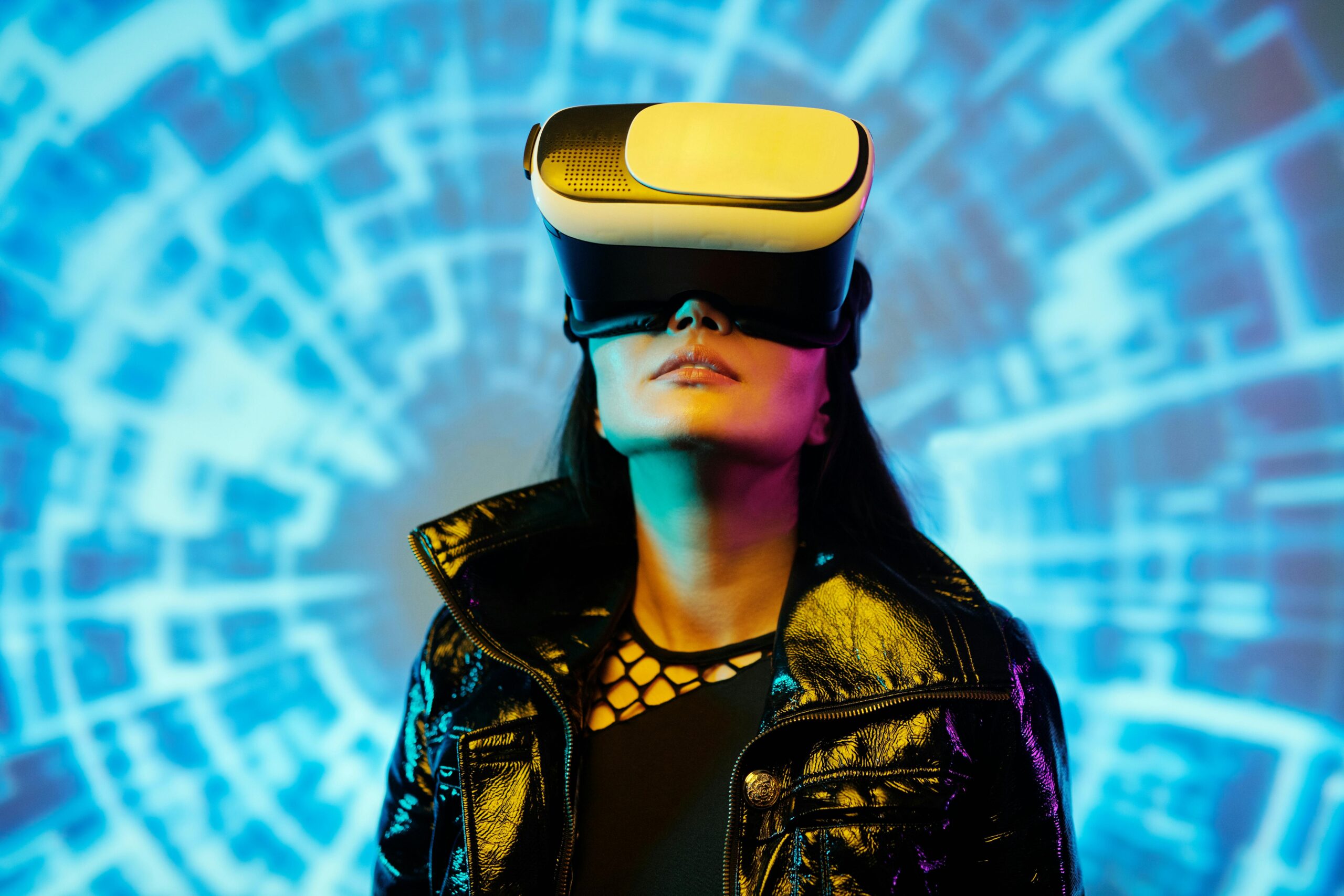
Augmented reality serves as the perfect visualization layer for digital twin data, transforming abstract information into intuitive, spatial experiences. Rather than viewing dashboards on flat screens, AR enables users to see digital twin information overlaid directly onto physical objects through smart glasses, tablets, or smartphones. This contextual presentation makes complex data immediately understandable and actionable.
The marriage between AR and digital twins addresses a fundamental challenge in data visualization: how to present multidimensional information in ways that humans can quickly comprehend and act upon. Traditional interfaces require users to mentally map screen-based data to physical equipment, creating cognitive load and potential for error. AR eliminates this translation step by placing information exactly where it’s needed, in the user’s field of vision, aligned with the relevant physical components.
Modern AR platforms leverage spatial computing to understand the physical environment and accurately anchor digital content. Computer vision algorithms identify objects, track user position, and maintain stable holographic overlays even as users move through spaces. This technological maturity has transformed AR from a novelty into a practical tool for industrial applications, field service, training, and remote collaboration.
💼 Industrial Applications Driving Business Value
Manufacturing facilities represent perhaps the most mature application area for AR-enabled digital twins. Factory floors equipped with sensors feed data to digital replicas of production lines, quality control systems, and individual machines. Technicians wearing AR headsets can see real-time performance metrics, maintenance histories, and troubleshooting guides overlaid directly onto equipment, dramatically reducing downtime and improving first-time fix rates.
Predictive maintenance capabilities illustrate the transformative potential of this technology combination. Digital twins analyze operational data to predict when components will fail, while AR guides maintenance personnel to the exact location and provides step-by-step repair instructions. This proactive approach prevents costly unplanned shutdowns and extends asset lifespan. Leading manufacturers report maintenance cost reductions of 20-30% and productivity improvements exceeding 25% after implementing these systems.
Beyond maintenance, AR-powered digital twins optimize production processes themselves. Engineers can visualize material flows, identify bottlenecks, and test process modifications in the virtual environment before implementing changes on the factory floor. This simulation-before-execution approach minimizes risks and accelerates continuous improvement initiatives that drive operational excellence.
🏥 Transforming Healthcare Through Immersive Visualization
Healthcare applications of AR-enabled digital twins are revolutionizing patient care, medical training, and facility management. Surgeons can now view patient-specific digital twins—created from CT scans, MRIs, and other diagnostic imaging—overlaid directly onto the patient’s body during procedures. This augmented vision provides unprecedented precision, helping practitioners navigate complex anatomies and avoid critical structures.
Medical device manufacturers leverage digital twins to monitor deployed equipment in real time. When combined with AR, biomedical engineers can visualize device performance, receive maintenance alerts, and access technical documentation without leaving the bedside. This capability is particularly valuable for critical care equipment where downtime directly impacts patient safety and outcomes.
Training represents another transformative application in healthcare. Medical students interact with AR-enhanced digital twins of human anatomy, manipulating organs, exploring systems, and practicing procedures in risk-free environments. These immersive learning experiences create deeper understanding than traditional textbooks or even cadaver-based instruction, preparing the next generation of healthcare professionals more effectively.
🌆 Building Smarter Cities with Spatial Intelligence
Urban planners and city administrators are deploying AR-enhanced digital twins to manage increasingly complex metropolitan environments. Comprehensive city digital twins integrate data from traffic systems, utilities, emergency services, environmental sensors, and building management systems into unified virtual models. AR interfaces allow decision-makers to visualize this information in context, whether planning new developments or responding to emergencies.
Infrastructure management benefits enormously from this spatial intelligence. Utility workers accessing underground infrastructure can use AR to see digital representations of pipes, cables, and conduits overlaid onto streets before excavating. This prevents costly accidents, reduces project timelines, and minimizes disruption to residents. Cities implementing these systems report significant reductions in infrastructure damage incidents and associated costs.
Public safety applications showcase the life-saving potential of AR-enabled digital twins. Emergency responders can access building layouts, hazardous material locations, and real-time sensor data through AR displays while approaching incident scenes. Fire commanders visualize structural integrity information and occupant locations, enabling faster, safer rescue operations that save lives and protect first responders.
⚡ Energy Sector Optimization and Sustainability
Energy companies are leveraging AR-powered digital twins to optimize generation, transmission, and distribution systems while advancing sustainability goals. Power plants create comprehensive digital twins that monitor thousands of parameters across turbines, boilers, and control systems. AR enables operators to visualize system performance, identify inefficiencies, and implement improvements that increase output while reducing emissions.
Renewable energy installations particularly benefit from this technology convergence. Wind farms and solar arrays spanning vast geographical areas require efficient monitoring and maintenance. Digital twins aggregate performance data from distributed assets, while AR guides field technicians to underperforming units and provides diagnostic information that speeds repairs. This combination maximizes energy capture and improves return on investment for clean energy projects.
Grid modernization initiatives incorporate AR-enhanced digital twins to manage increasingly complex distribution networks. As distributed energy resources, electric vehicles, and demand response programs create bidirectional power flows, utility operators need sophisticated tools to maintain stability. AR visualization of grid digital twins helps operators understand system states, predict contingencies, and coordinate resources effectively.
🔧 Implementation Strategies for Maximum Impact
Successful deployment of AR-enabled digital twins requires thoughtful planning and phased implementation. Organizations should begin by identifying high-value use cases where the technology can deliver measurable benefits quickly. Pilot projects focused on specific assets or processes allow teams to develop expertise, refine workflows, and demonstrate value before scaling enterprise-wide.
Data infrastructure represents the foundation upon which everything else builds. Ensuring comprehensive sensor coverage, reliable connectivity, and robust data management systems is essential before layering AR experiences on top. Many organizations underestimate the data quality requirements for effective digital twins, leading to disappointing results. Investing in data governance, validation processes, and integration capabilities pays dividends throughout the implementation journey.
User adoption depends on delivering genuine value through intuitive experiences. AR interfaces must be designed with end users in mind, providing relevant information without overwhelming operators with unnecessary details. Training programs should emphasize practical applications and benefits rather than technical specifications. Organizations that involve frontline workers in design processes create solutions that people actually want to use, maximizing return on technology investments.
🚀 Emerging Technologies Amplifying Capabilities
Artificial intelligence and machine learning are amplifying the capabilities of AR-enabled digital twins exponentially. AI algorithms analyze patterns in digital twin data to generate insights that would be impossible for humans to discover manually. When presented through AR interfaces, these insights enable predictive decision-making that anticipates problems before they occur and identifies optimization opportunities that drive continuous improvement.
5G connectivity is removing bandwidth constraints that previously limited AR experiences. The low latency and high throughput of next-generation networks enable real-time streaming of complex 3D models and instantaneous updates to digital twins. This connectivity breakthrough makes remote collaboration through shared AR experiences practical, allowing experts to guide field personnel from anywhere in the world as if they were standing side by side.
Edge computing complements 5G by processing data closer to where it’s generated, reducing latency further and enabling responses in milliseconds rather than seconds. For time-critical applications like autonomous systems or emergency response, this speed advantage can be literally lifesaving. Edge-processed digital twin data presented through AR creates responsive experiences that feel natural and intuitive rather than lagged or disconnected.
🌐 Overcoming Adoption Challenges
Despite compelling benefits, organizations face significant challenges when implementing AR-enabled digital twins. Initial investment costs can be substantial, requiring hardware, software, connectivity infrastructure, and integration with existing systems. Building comprehensive business cases that quantify benefits across multiple dimensions—productivity gains, cost reductions, risk mitigation, and revenue opportunities—helps justify expenditures and secure executive support.
Skills gaps represent another barrier to adoption. Few professionals possess expertise spanning IoT, data analytics, 3D modeling, and AR development. Organizations must invest in training existing staff while recruiting specialists with relevant capabilities. Partnerships with technology vendors and system integrators can accelerate deployments by providing access to experienced teams that have navigated implementation challenges previously.
Interoperability concerns arise when integrating diverse systems from multiple vendors. Digital twins require data from various sources, while AR platforms must work across different devices and environments. Adopting open standards and API-first architectures facilitates integration and prevents vendor lock-in. Industry collaboration on common frameworks accelerates the entire ecosystem’s maturity and reduces implementation complexity for individual organizations.
🔮 The Future Landscape of Immersive Digital Experiences
The trajectory of AR-enabled digital twins points toward increasingly seamless blending of physical and digital realities. Future interfaces will leverage brain-computer interfaces and haptic feedback systems to create multisensory experiences that engage more human faculties than vision alone. These immersive interactions will feel natural and intuitive, eliminating the learning curves that currently slow adoption.
Autonomous systems represent perhaps the most transformative application on the horizon. Self-driving vehicles, automated warehouses, and robotic manufacturing systems all rely on digital twins to understand their environments and make decisions. AR provides the human oversight layer, allowing supervisors to monitor autonomous operations, intervene when necessary, and continuously improve system performance through observation and adjustment.
The democratization of these technologies through accessible platforms and intuitive tools will expand applications beyond large enterprises into small businesses and consumer contexts. Just as smartphones brought computing power to billions, next-generation AR devices and simplified digital twin platforms will empower individuals to create virtual replicas of their homes, vehicles, and personal assets for optimization and enjoyment.
💡 Realizing the Promise of Connected Intelligence
The convergence of digital twins and augmented reality represents more than technological innovation—it embodies a fundamental shift in how humans interact with information and make decisions. By spatializing data and contextualizing insights, this combination transforms abstract numbers into actionable intelligence that anyone can understand and use effectively. The result is smarter operations, faster problem-solving, and innovations that were previously impossible.
Organizations that embrace AR-enabled digital twins position themselves at the forefront of their industries, gaining competitive advantages through operational excellence, enhanced customer experiences, and accelerated innovation cycles. The technology has matured beyond experimental stages into proven solutions delivering measurable business value across diverse sectors. Early adopters are already reaping rewards while establishing expertise that will compound over time.
As these technologies continue evolving and converging with AI, 5G, edge computing, and other innovations, their impact will only intensify. The immersive, intelligent, and interconnected future they enable promises to address some of humanity’s most pressing challenges—from sustainable development and healthcare access to climate change and resource optimization. The revolution is not coming—it has already begun, and the opportunities for those who engage thoughtfully are virtually limitless.